Kirk and Cathy will be back posting soon. But today, as promised, ed (from Yuma) is finishing up his report on the Somerton Tamale Festival. It will begin with the following line:
I mentioned in the first part of this post that well over 5000 people must have attended this year's event. And it seemed like all of them were standing in one line — the line leading to last year's favorite meat tamale:
 The line went straight forward and then turned right toward the vendor. Yes, the guy in the red cap with his daughter, the young lady scratching the back of her pink sweater, the follicly challenged gentleman in brown, and everyone in front of him were all part of the line. And this picture doesn't show the very front of the line or those poor souls standing behind Tina and I. Notice also that the line is two and three people wide for its entire length.
One of the many great things about attending an event like this with a friend is that standing in line (even for over an hour) did not mean that we were required to go hungry.
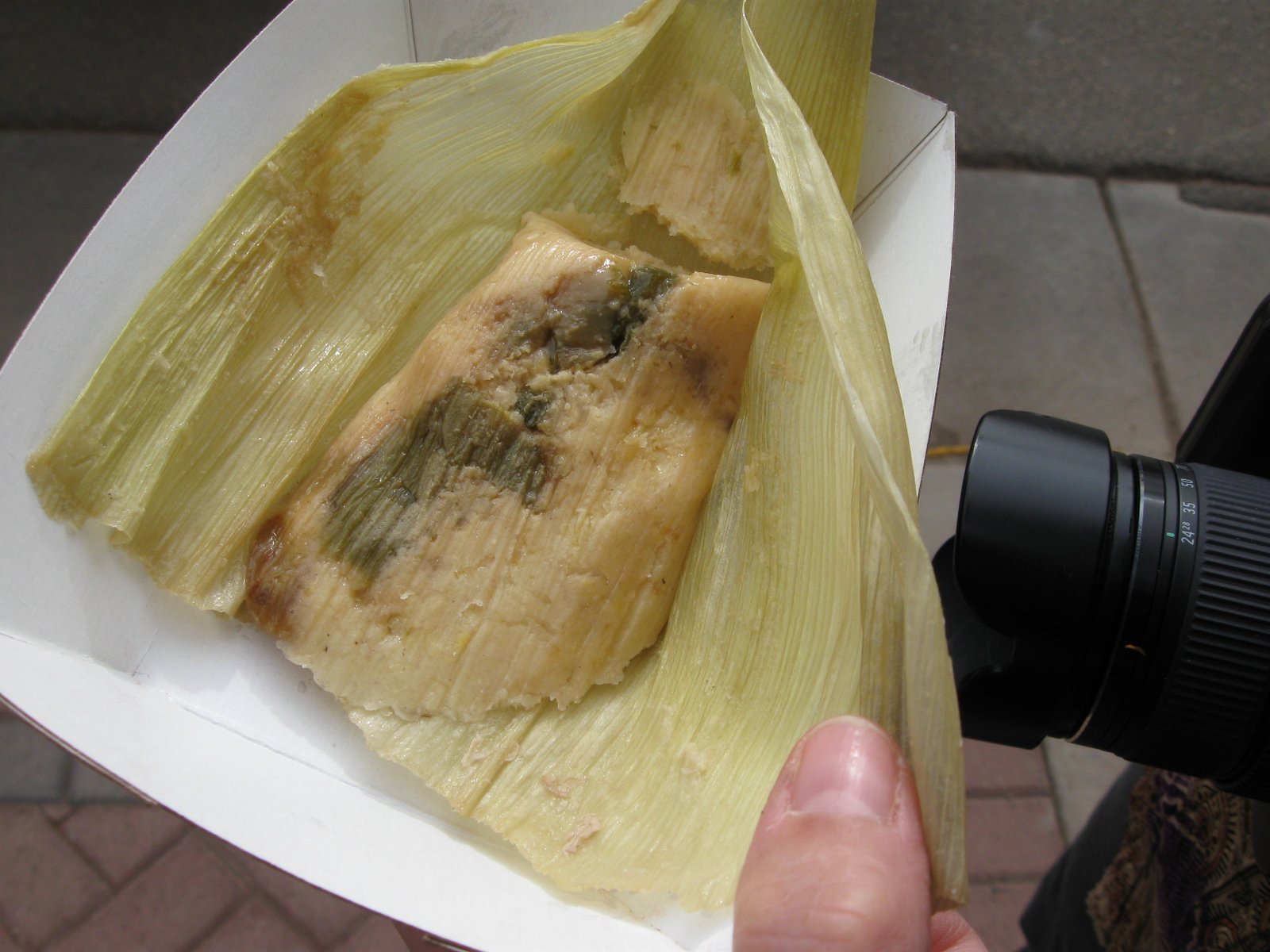
I soon showed up with a tamale de pollo: While not as rich and good as the chicken tamale at Pupuseria Cabanas (yeh I'm plugging my favorite Yuma restaurant – again), it did have a nice chicken flavor and good green chili spice. It also kept us from focusing on the very slow-moving line.
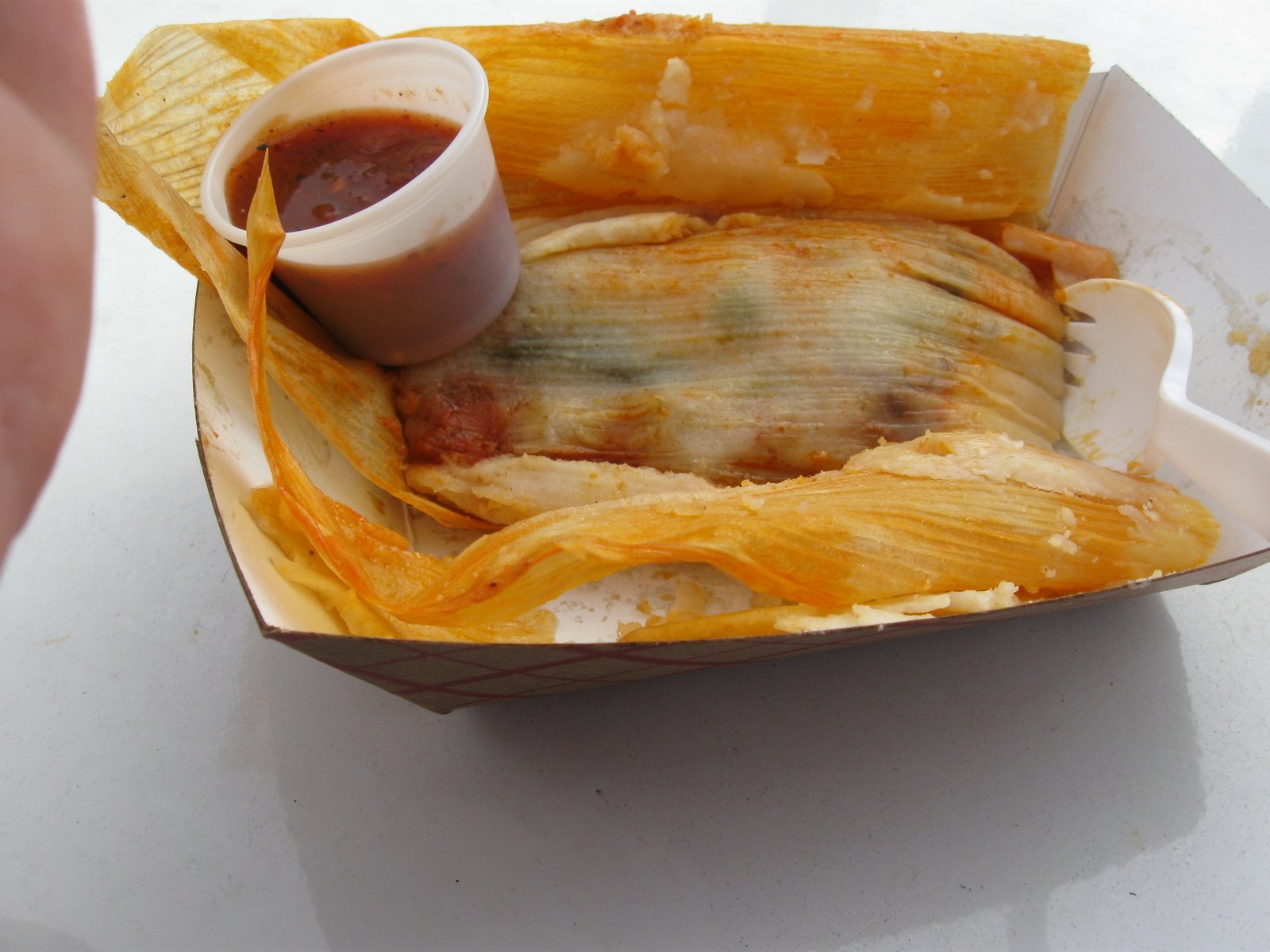
So a few minutes later, I was back with another beef tamale, from a vendor recommended by a friend: It was typically rich and beefy (there should have been a table with a cardiologist at this festival). Since I had spooned some tangy salsa from the same vendor beside the tamale, it added a slight sour note that contrast with the overall flavor:
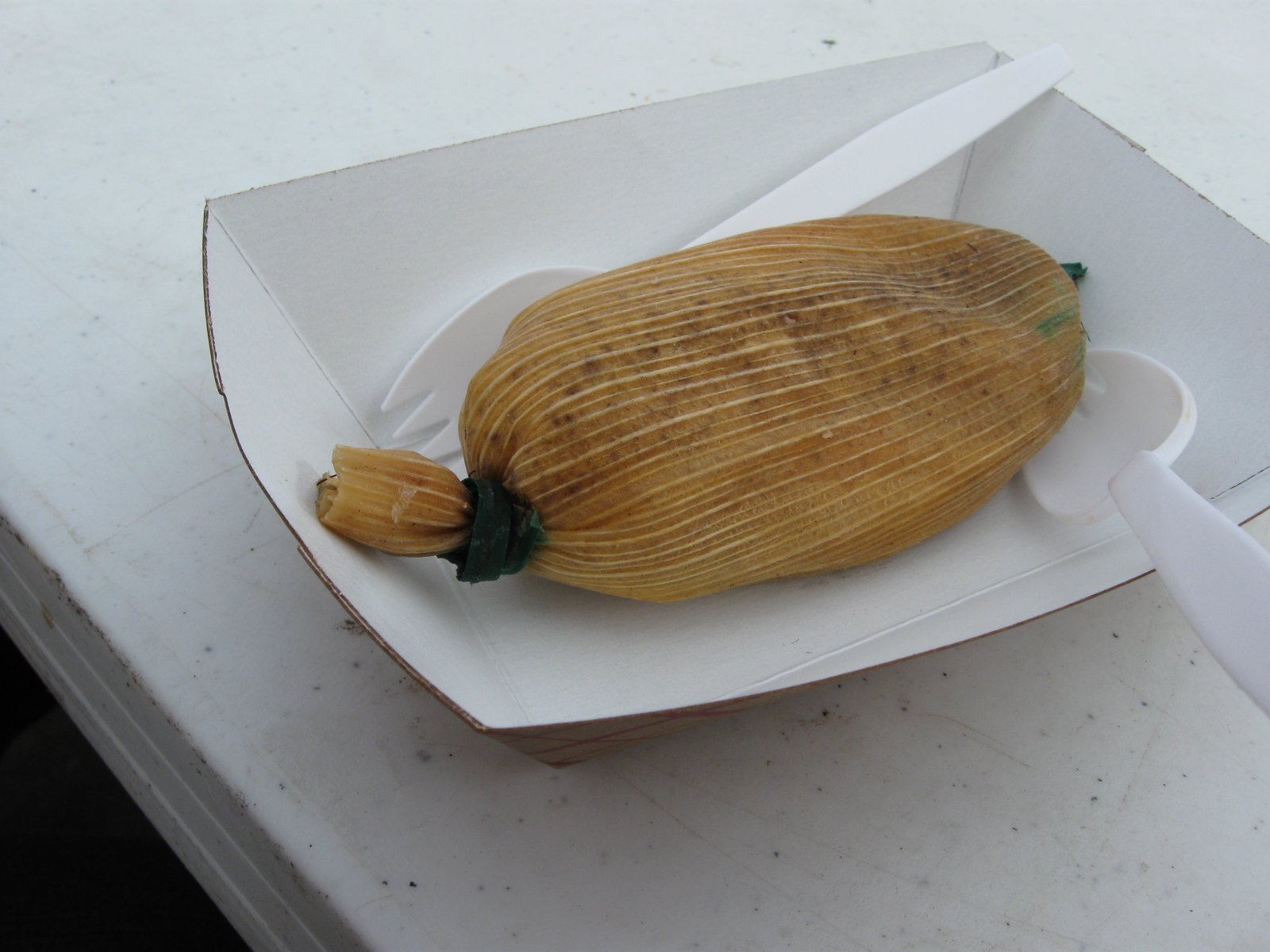
 Luckily our long wait in line was not in vain (and yes, we did have visions of them running out just as we got to the head of the line). When we got back to the table and opened up the tamale, this is what greeted our eyes:
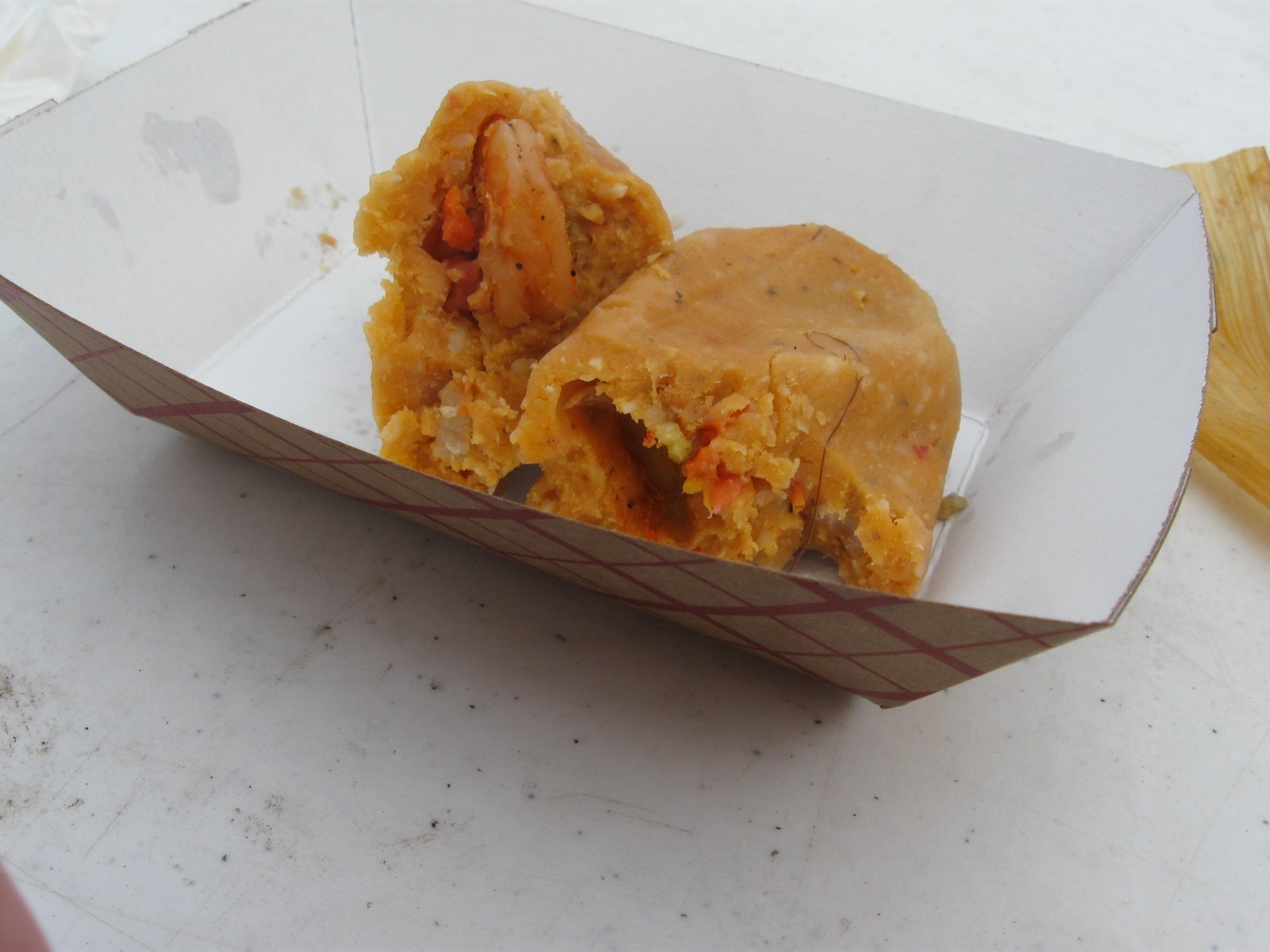
 Okay, we learned quickly that it didn't win last year's award because of its looks. The darn thing was more ugly and lumpy than I am. When we opened it up, we began to realize that it truly was a winner:
 In addition to all that rich flavorful beef, there was abundant green chili and the obligatory olive as well:
 And surprise, pickled carrot slices:
 Yeah, that's a good tamale.
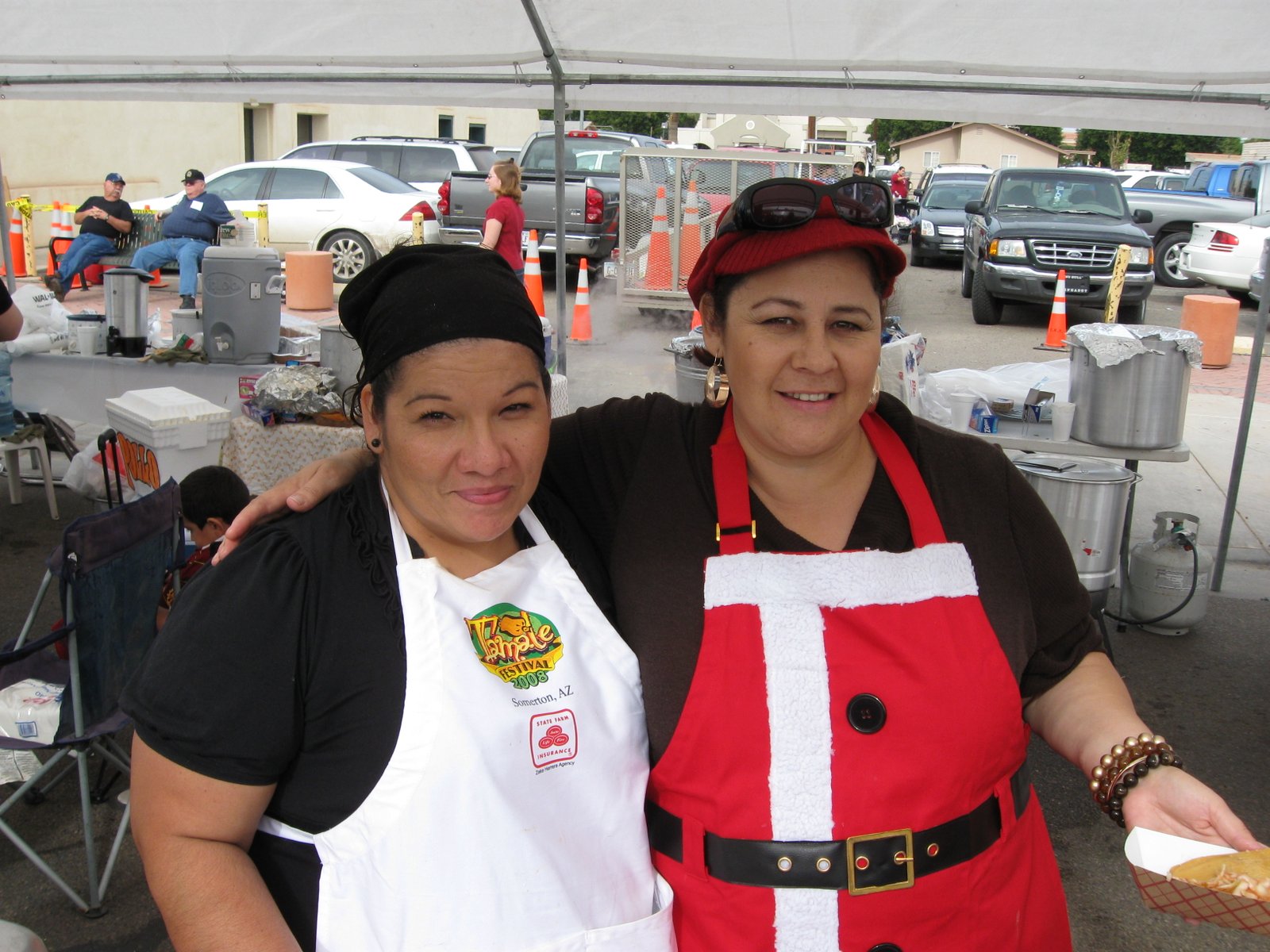
We saved for last the tamale of the wonderful woman whose picture at last year's festival has become a key part of the festival's website. Just as I remembered it was good and beefy:
 What else can I say? The tamales were $1.50 apiece. Plates with beans and salad were also available. It may look like we tried them all, but we didn't even make it to a third of the vendors – and many vendors had more than one tamale choice. We were also too full to finish with a desert tamal – such as pineapple or chocolate.
The Somerton Tamale Festival is truly festive. And flavorful. And muy rico. Next year, you be there too!



 you get at regular hotels.

 The Bowling Alley area (Red Rock Lanes) had the best prices, but not a huge selection. (Burgers, chili, fries, combinations thereof and whole pizzas.)

 Supposedly the restaurant by the water is even better. If I come back in the summer, I'll let you know.





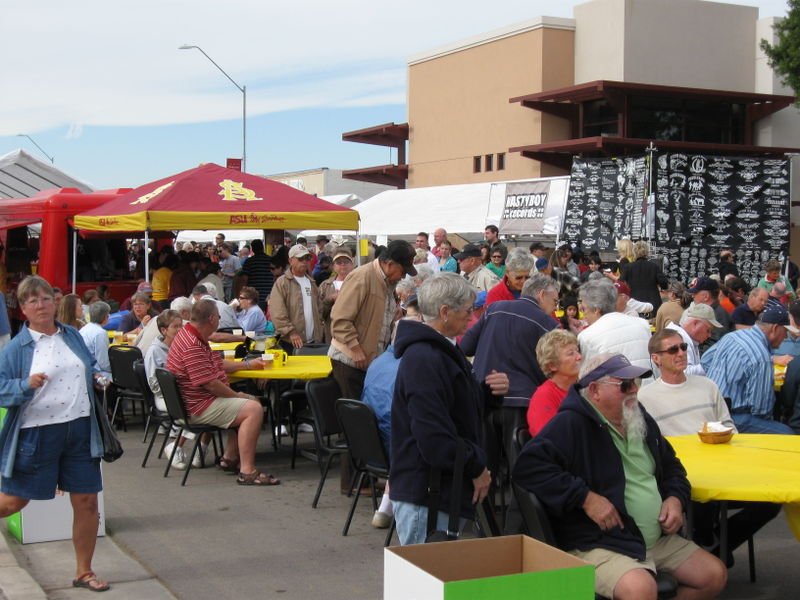 In addition to the worlds greatest collection of homemade tamales, those people also enjoyed the live musical entertainment, such as this spirited mariachi band: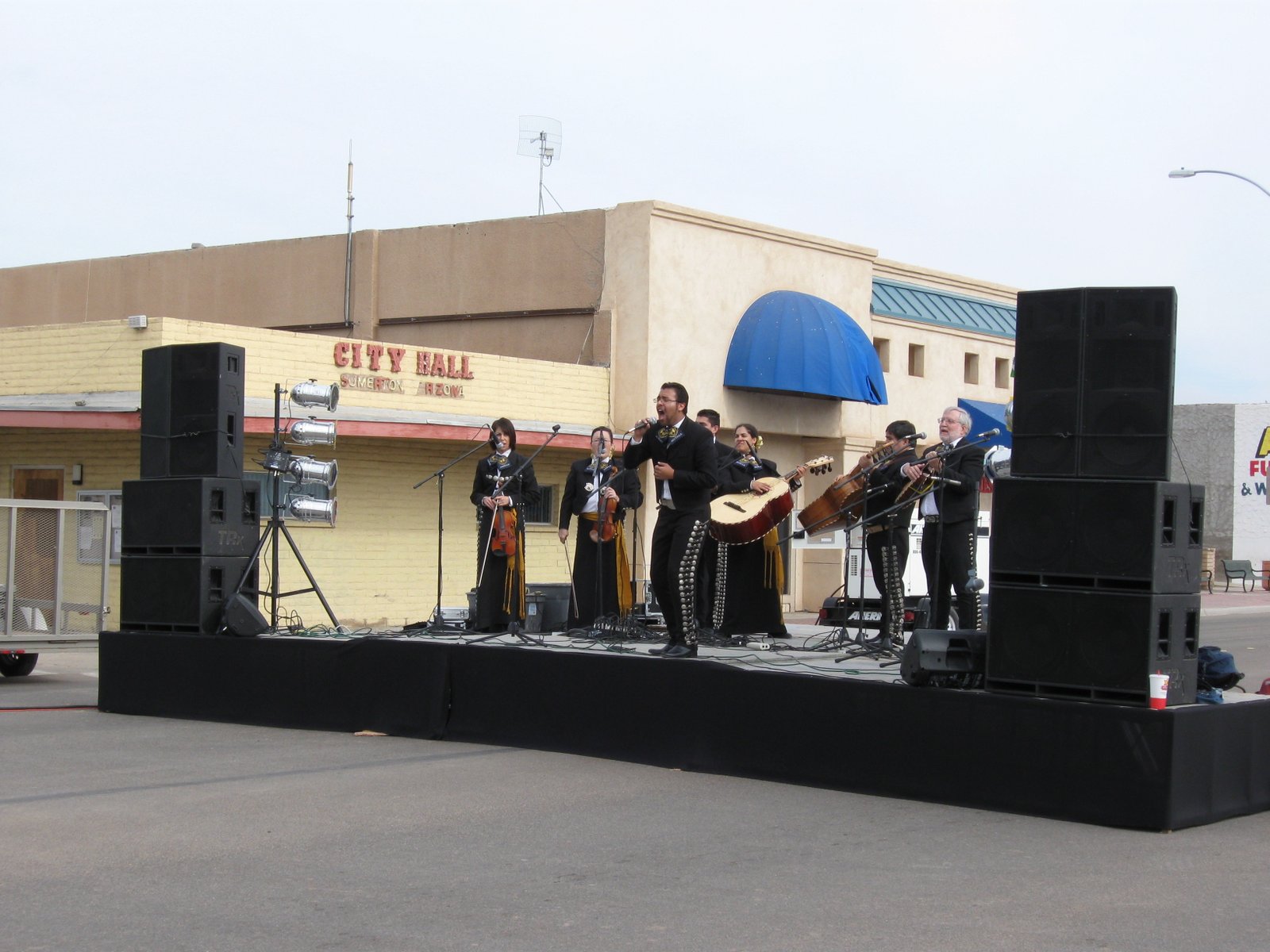
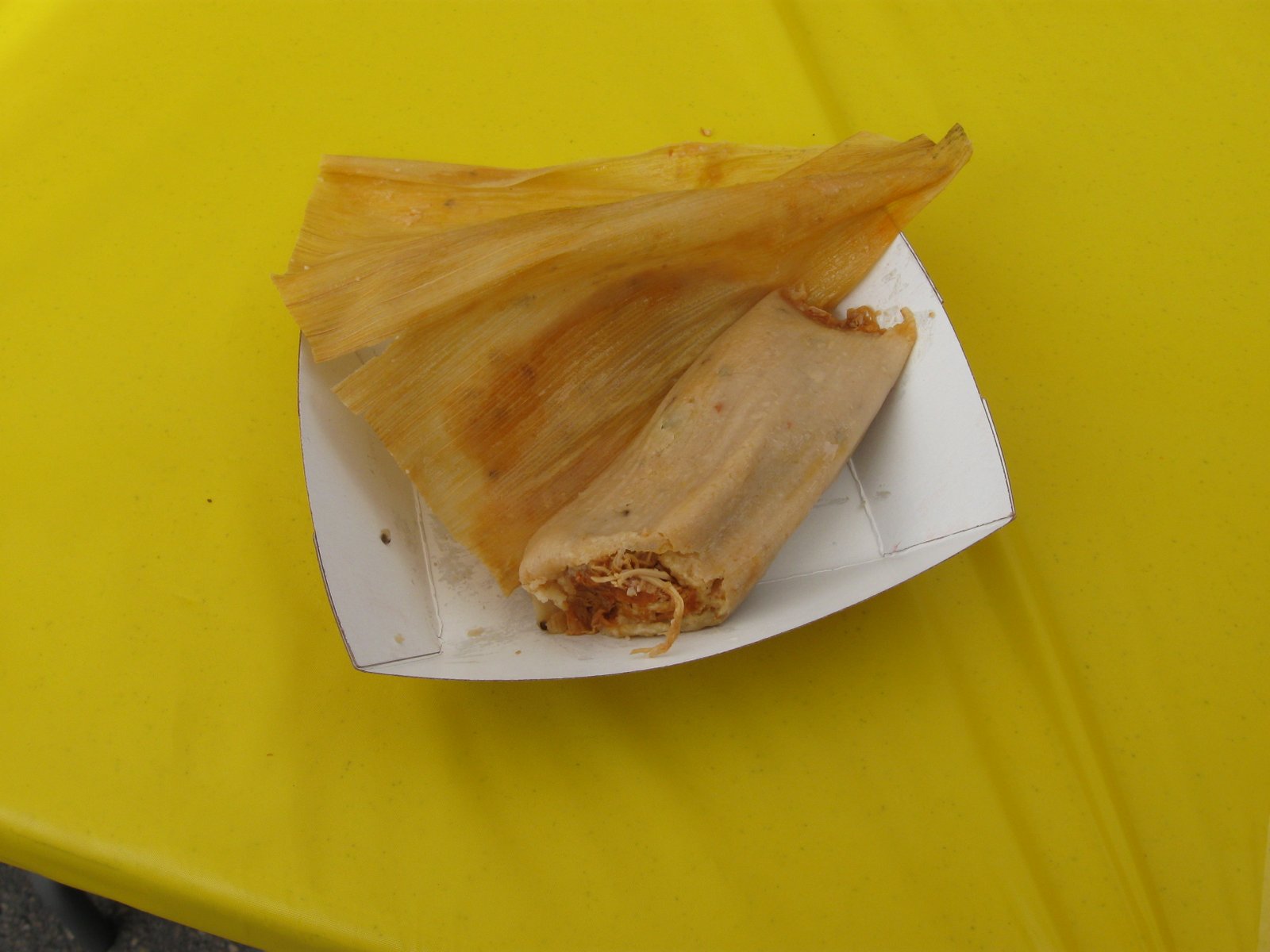
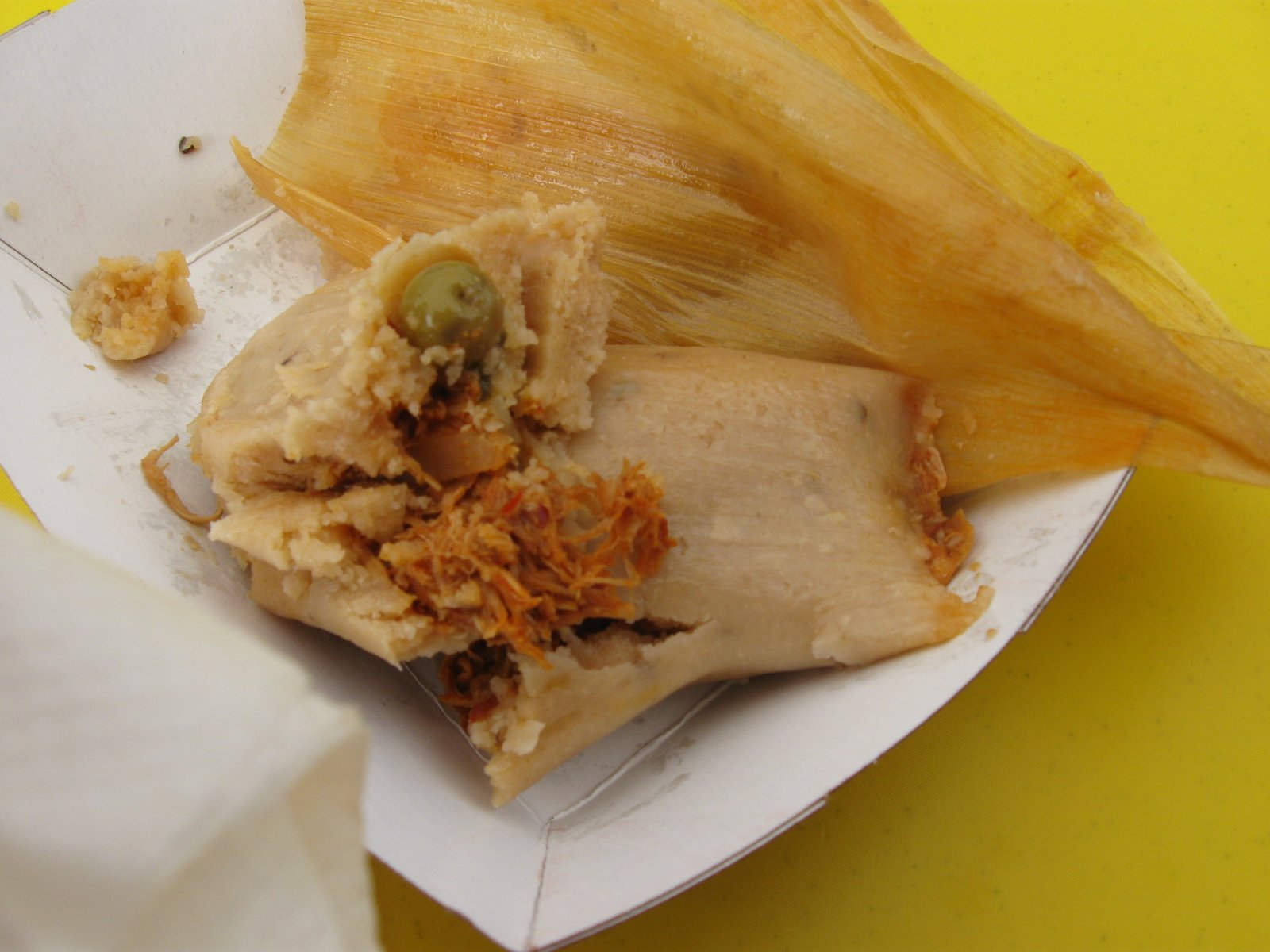
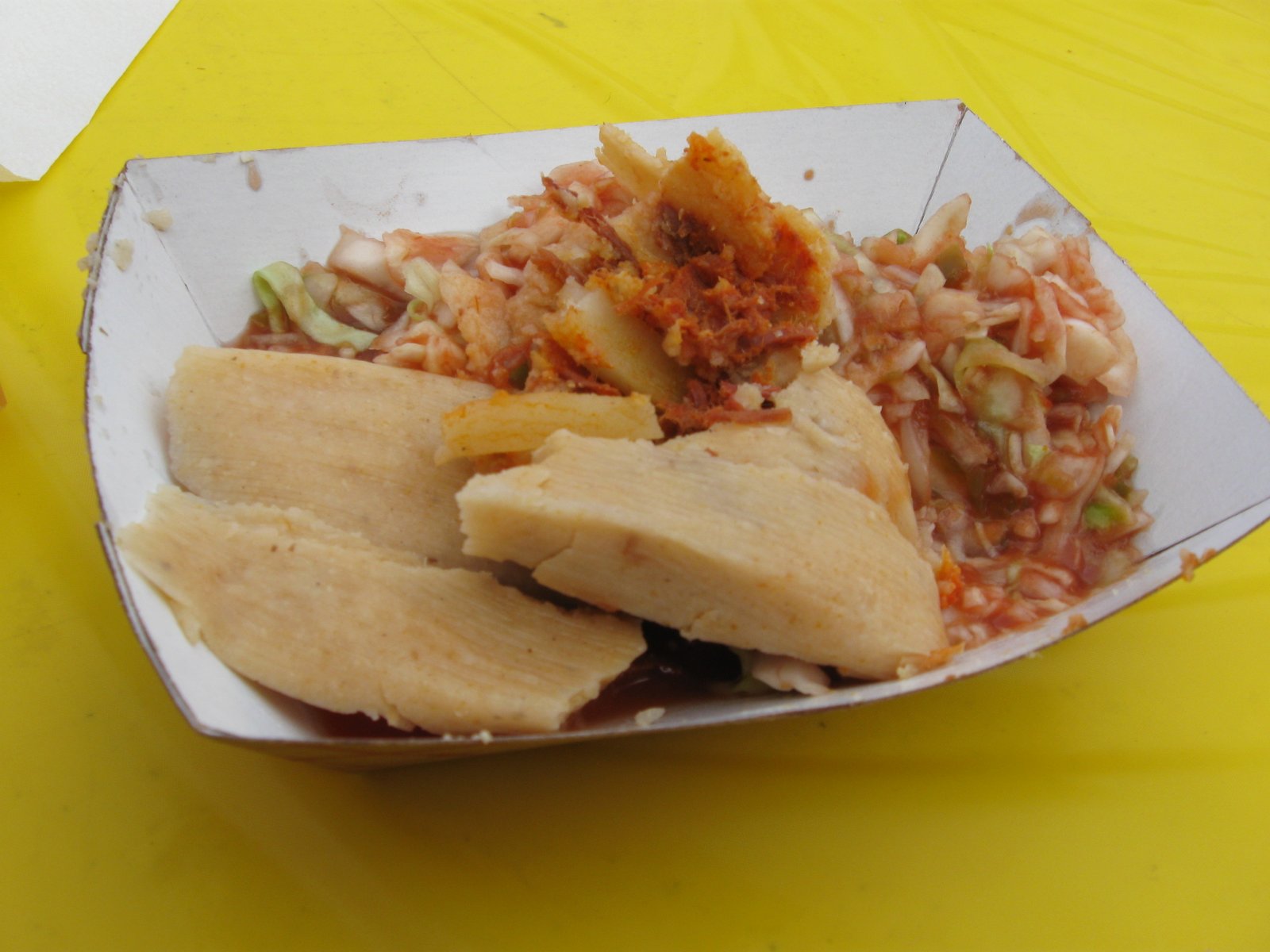
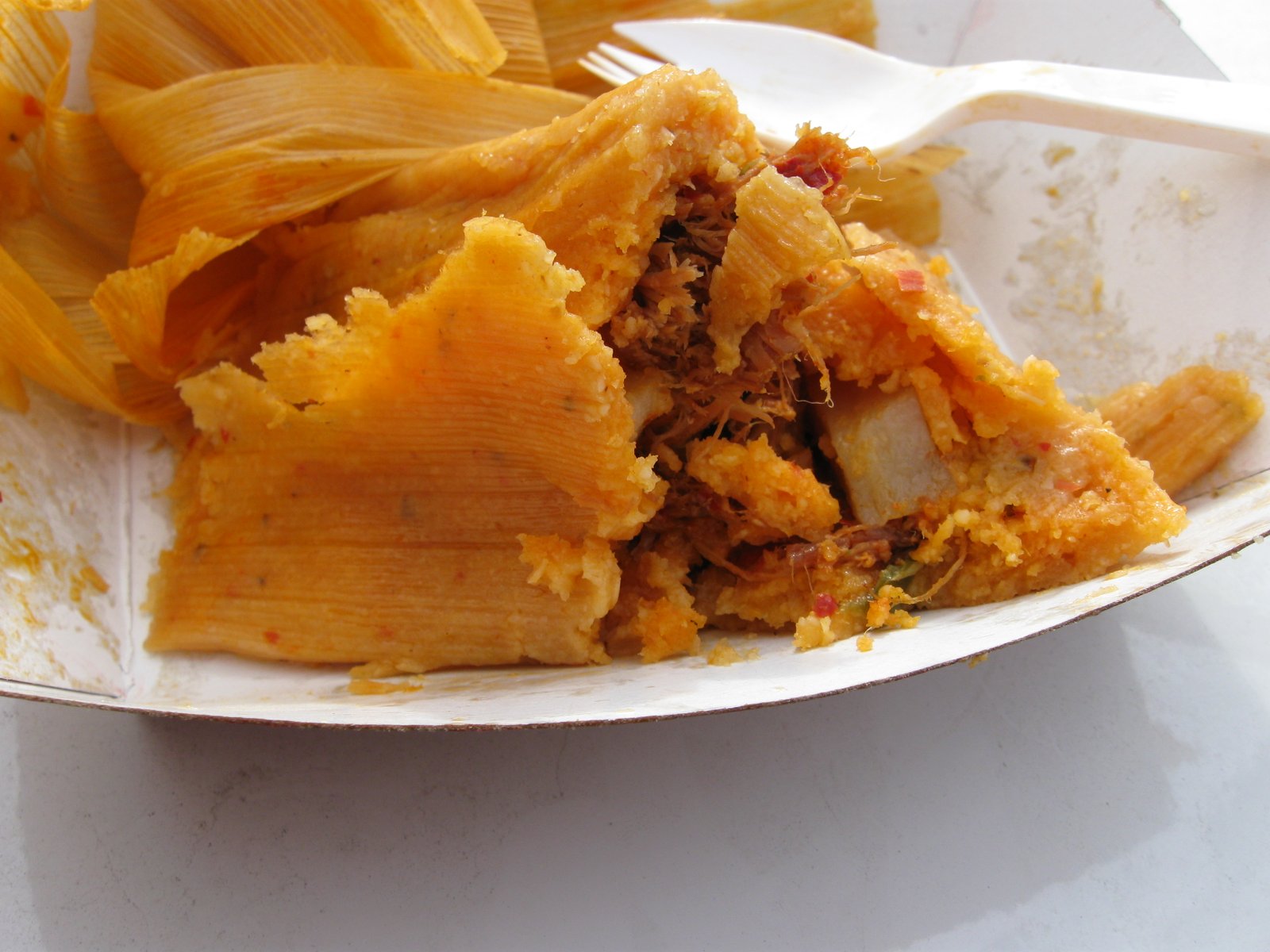
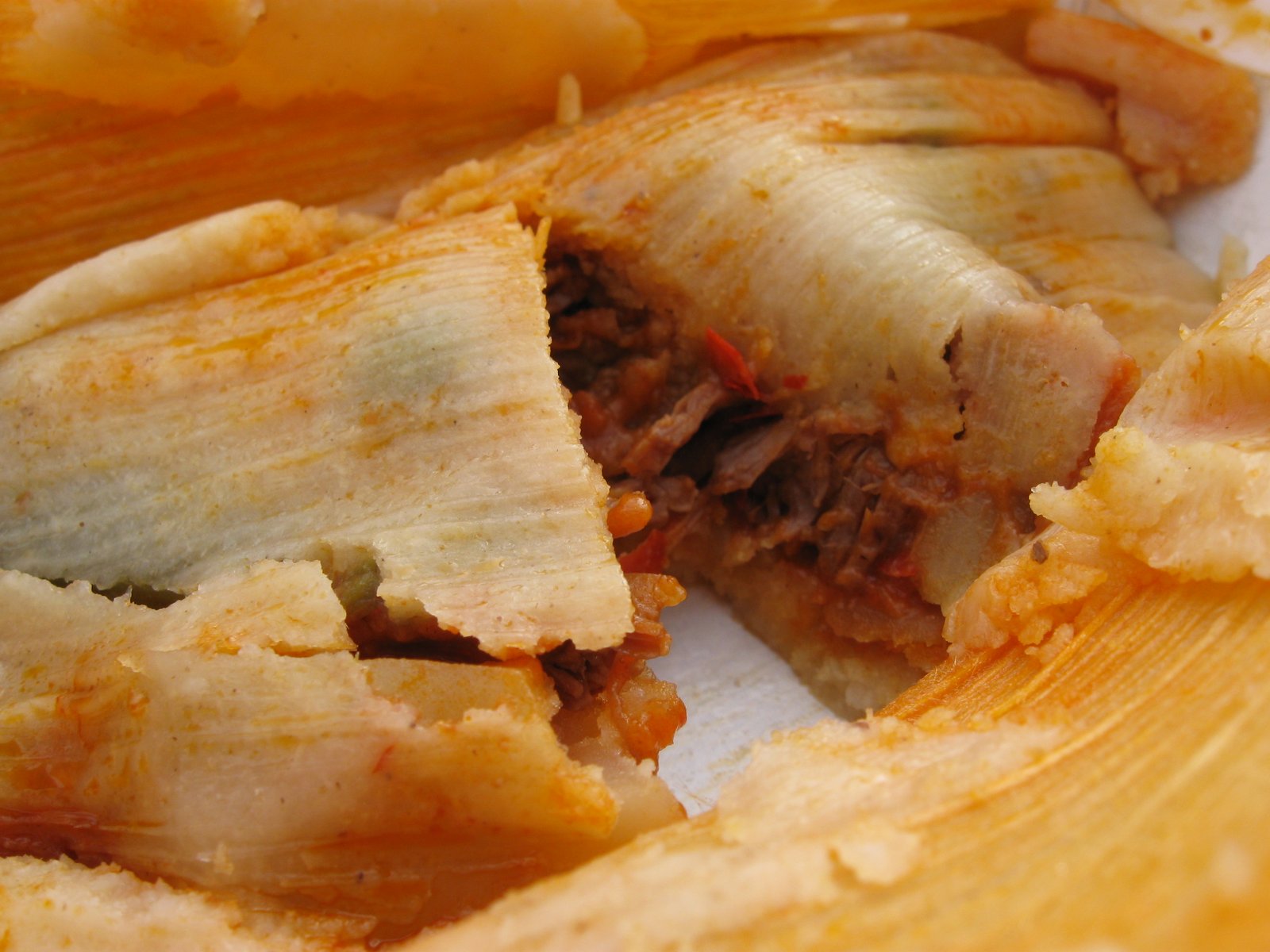
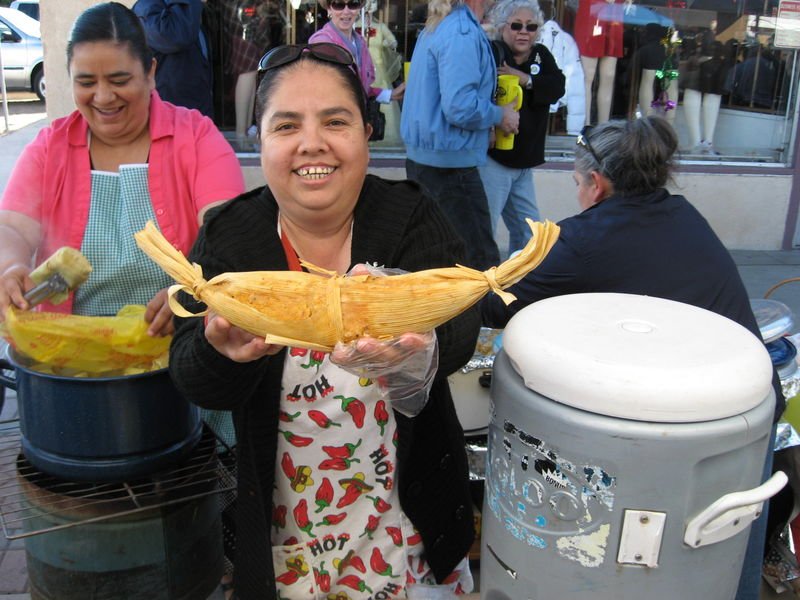
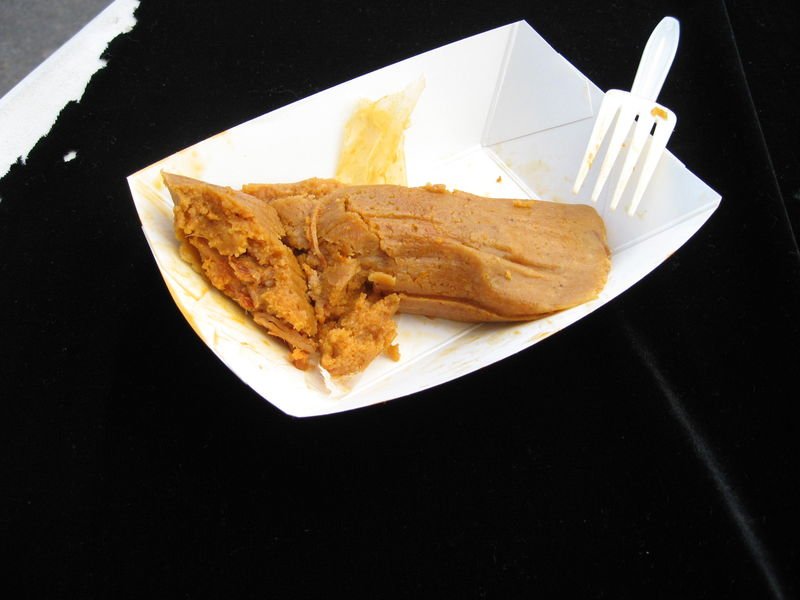 On the most basic level, a tamal is like an edible doll – a food nearly human, a small body wrapped in a cornhusk skin. The flesh is the dense and rich corn meal masa. The central filling can be seen, from a biological perspective, as like an alimentary canal, a digestive system. But seen from a different, less physical viewpoint, the center, the part that provides the uniquity of each particular tamal, is like each individual spirit, the distinct humanity possessed by every one of us.
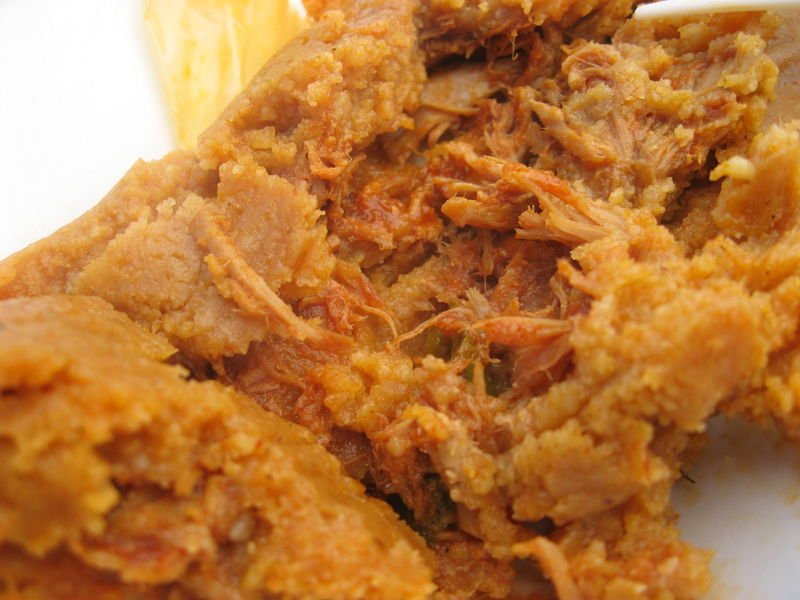 To traditional Christian believers, each tamale can be considered a metaphor or symbol for the Holy Virgin. After all, every real Mexican tamale must have an olive in it. On one level, that olive represents the Christ child waiting to be born — as he is every year at Christmas. And from a more new age viewpoint, the tamal can also represent any mother who carries seeds for the future within herself – as well as the fertility of the fields and the bounty of the harvest. So we can see this food as both the mother of God and the mother of us all. On still another level, the olive represents the promise of the new year which will be reborn with the passing of the winter solstice, as days start growing longer (right around the time of Christmas).
 The tamale, however, is also symbolic of Mexican culture. Just as the Virgin Mary has been transfigured into the Virgin of Guadalupe, so a tamal wonderfully blends and shapes new world and old world and transforms European traditions into something different and more complex. The key ingredient of tamales is, of course, maize. In the United States, we call it corn (the English term for all grains), because at first this Indian corn, this native ingredient, kept all the peoples in the New World, natives and invaders both, alive. Combined with this wonderful product of pre-Mexican agriculture is another New World addition, chilies. And most tamales add to those some bits of native tomato and another new world staple, potato:
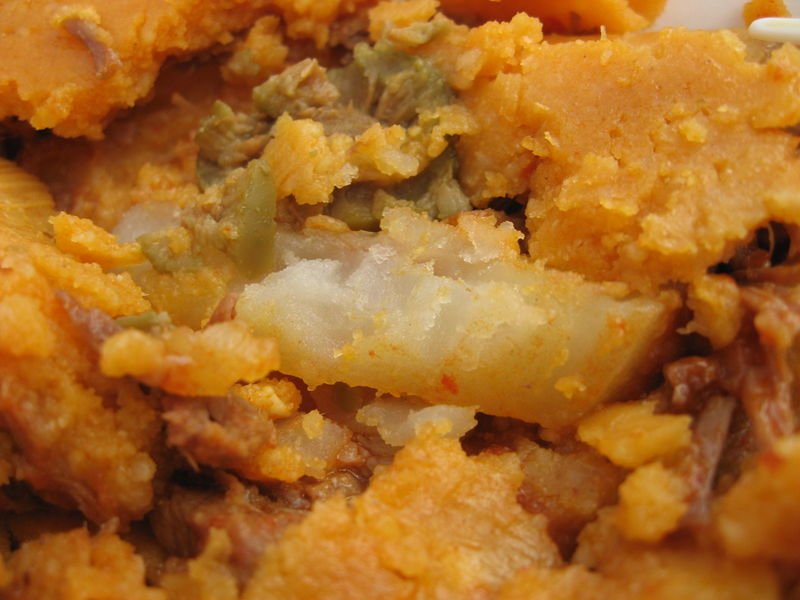 On the other hand, except for tamales made with turkey, the animal products in the dish are European. The olive, as well, is a product of Mediterranean civilizations. Whenever I think about this Spanish olive in the body of native corn masa, I am reminded about the Mexican legends of Cortez and his indigenous American girlfriends. In some very real and specific ways, the Mexican people and the Mexican culture are a combination of the Spanish and the native, just as is the tamale.
 In a way, tamales are a sacrificial dish as well. A friend learned how to make tamales. "So, I will get tamales every year?" I asked.


