The blog is mmm-yoso. Along with some other folks, Cathy, ed (from Yuma), and, of course, Kirk are the writers. You are a reader. Today, ed has an important announcement – followed by some pics and thoughts about tamales.
It is getting to be the season for tamales. While people can eat tamales year around, this rich and wonderful food is a centerpiece of the Mexican Christmas season. Right on time, mmm-yoso has learned that the small town of Somerton AZ (just a few minutes south of Yuma on Hwy 95) will be hosting its second annual tamale festival. Here's a link to the festival's website.
Regular readers of this blog will recognize a few things at the website. Not only is there a link to mmm-yoso's report on the first edition of this wonderful festival, but many of the pics at the site come from this blog. We are flattered.
Anyway, mark your calendars right now for Saturday, December 13, 2008. The festival begins at 11 am and will continue until 10 pm. OMG, 11 hours of tamales! You be there because mmm-yoso will be there too. Is the festival worth a three hour drive from San Diego or Phoenix? Heck yes – this is probably the greatest collection of various tamales available anywhere anytime in the United States. And they are all home-made. No restaurants represented. Christmas shopping can wait; this feastival (pun intended) is just for one day, December 13. Directions and more info can be found at the website.
* * * * * * * * * * *
The vital part of this blogpost is over, but ed (from Yuma) has been ruminating about tamales for a while, and wants to share with you regular readers of mmm-yoso his thoughts about the symbolism of this dish along with some pictures taken at last year's feastival. (And yeh, ed was an English major).
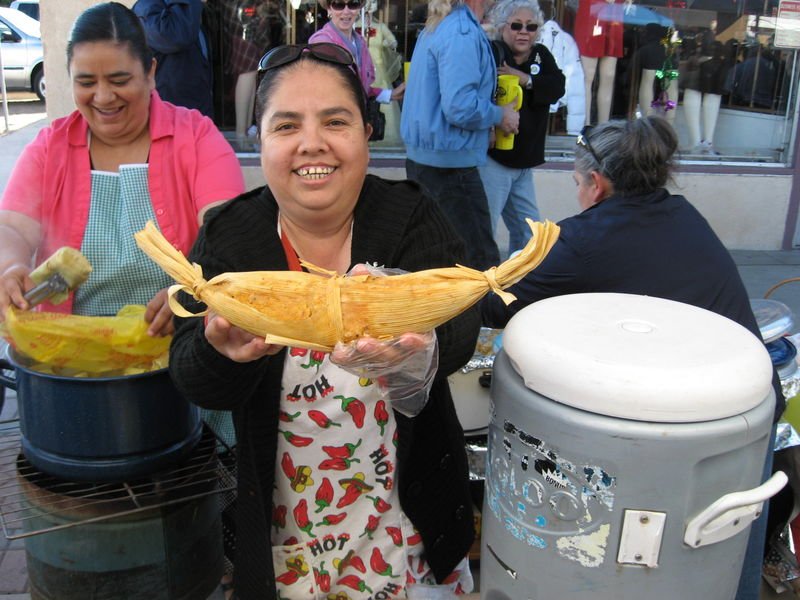
We know that most holiday foods have symbolic as well as culinary significance. Think about our Thanksgiving turkeys. We roast and serve this new world bird to commemorate the generosity of Native Americans and the wonderful harvests of our country and to remind us about the tribulations and rewards of the early European settlers. Tamales, too, are deeply symbolic (as well as tasty). Since I moved to Yuma, I have thought about the meaning of tamales during the Christmas season. I don't claim to have all the answers, but I think this favorite food carries many messages.
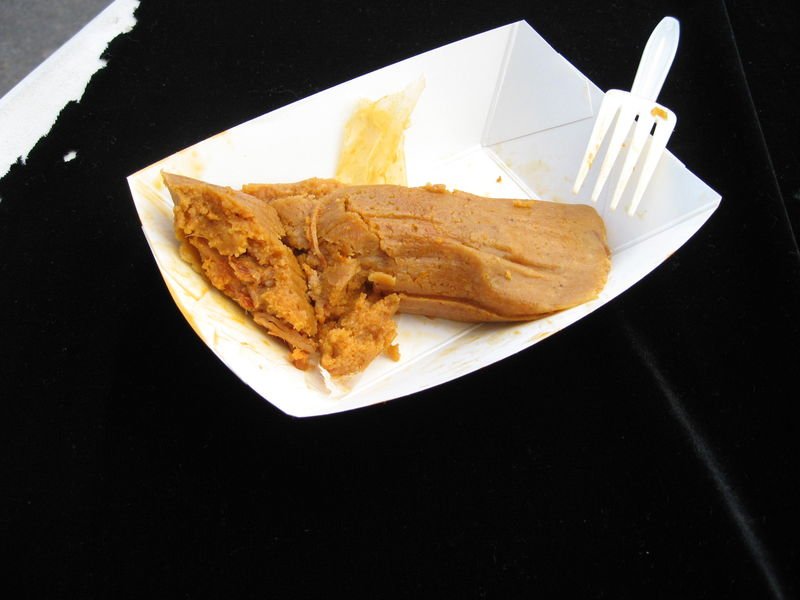 On the most basic level, a tamal is like an edible doll – a food nearly human, a small body wrapped in a cornhusk skin. The flesh is the dense and rich corn meal masa. The central filling can be seen, from a biological perspective, as like an alimentary canal, a digestive system. But seen from a different, less physical viewpoint, the center, the part that provides the uniquity of each particular tamal, is like each individual spirit, the distinct humanity possessed by every one of us.
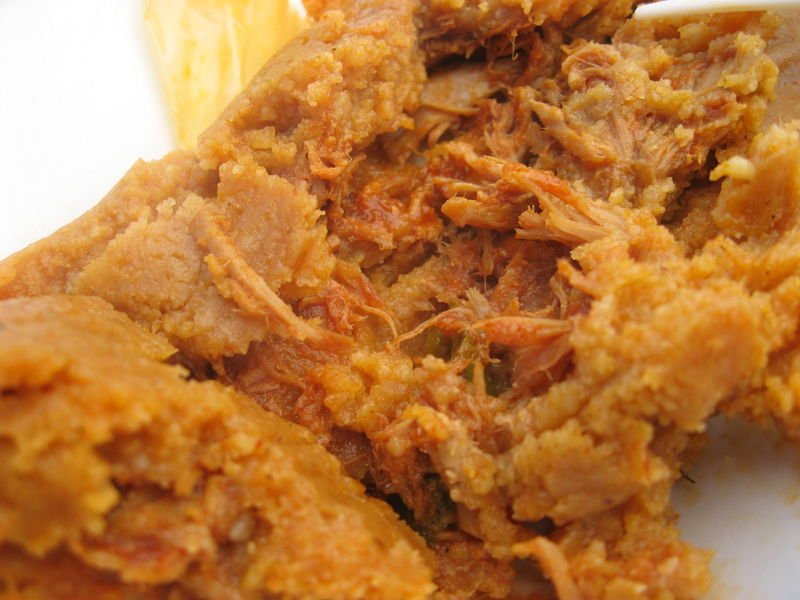 To traditional Christian believers, each tamale can be considered a metaphor or symbol for the Holy Virgin. After all, every real Mexican tamale must have an olive in it. On one level, that olive represents the Christ child waiting to be born — as he is every year at Christmas. And from a more new age viewpoint, the tamal can also represent any mother who carries seeds for the future within herself – as well as the fertility of the fields and the bounty of the harvest. So we can see this food as both the mother of God and the mother of us all. On still another level, the olive represents the promise of the new year which will be reborn with the passing of the winter solstice, as days start growing longer (right around the time of Christmas).
 The tamale, however, is also symbolic of Mexican culture. Just as the Virgin Mary has been transfigured into the Virgin of Guadalupe, so a tamal wonderfully blends and shapes new world and old world and transforms European traditions into something different and more complex. The key ingredient of tamales is, of course, maize. In the United States, we call it corn (the English term for all grains), because at first this Indian corn, this native ingredient, kept all the peoples in the New World, natives and invaders both, alive. Combined with this wonderful product of pre-Mexican agriculture is another New World addition, chilies. And most tamales add to those some bits of native tomato and another new world staple, potato:
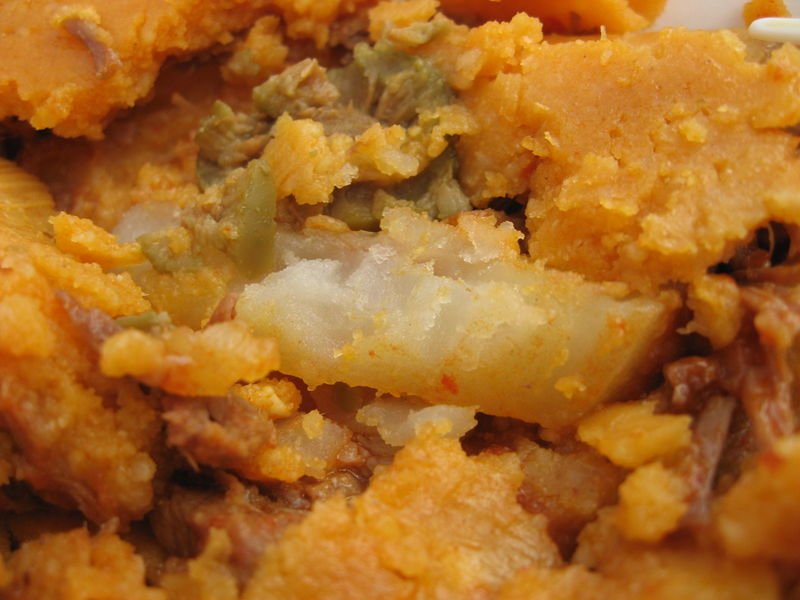 On the other hand, except for tamales made with turkey, the animal products in the dish are European. The olive, as well, is a product of Mediterranean civilizations. Whenever I think about this Spanish olive in the body of native corn masa, I am reminded about the Mexican legends of Cortez and his indigenous American girlfriends. In some very real and specific ways, the Mexican people and the Mexican culture are a combination of the Spanish and the native, just as is the tamale.
 In a way, tamales are a sacrificial dish as well. A friend learned how to make tamales. "So, I will get tamales every year?" I asked.
"Heck no, they're really hard to make." So every tamal represents the sacrifice of hours of the cooks' time. Not to mention that pigs and cattle have made the ultimate sacrifice.
Tamales then are truly a primal and deeply significant dish for the holidays. Holiday heritage and symbolism make it doubly important that you mosey on over to the Somerton Tamale Festival on December 13. It'll taste pretty good too!
Second Annual Somerton Tamale Festival, December 13, 2008, Downtown Somerton AZ
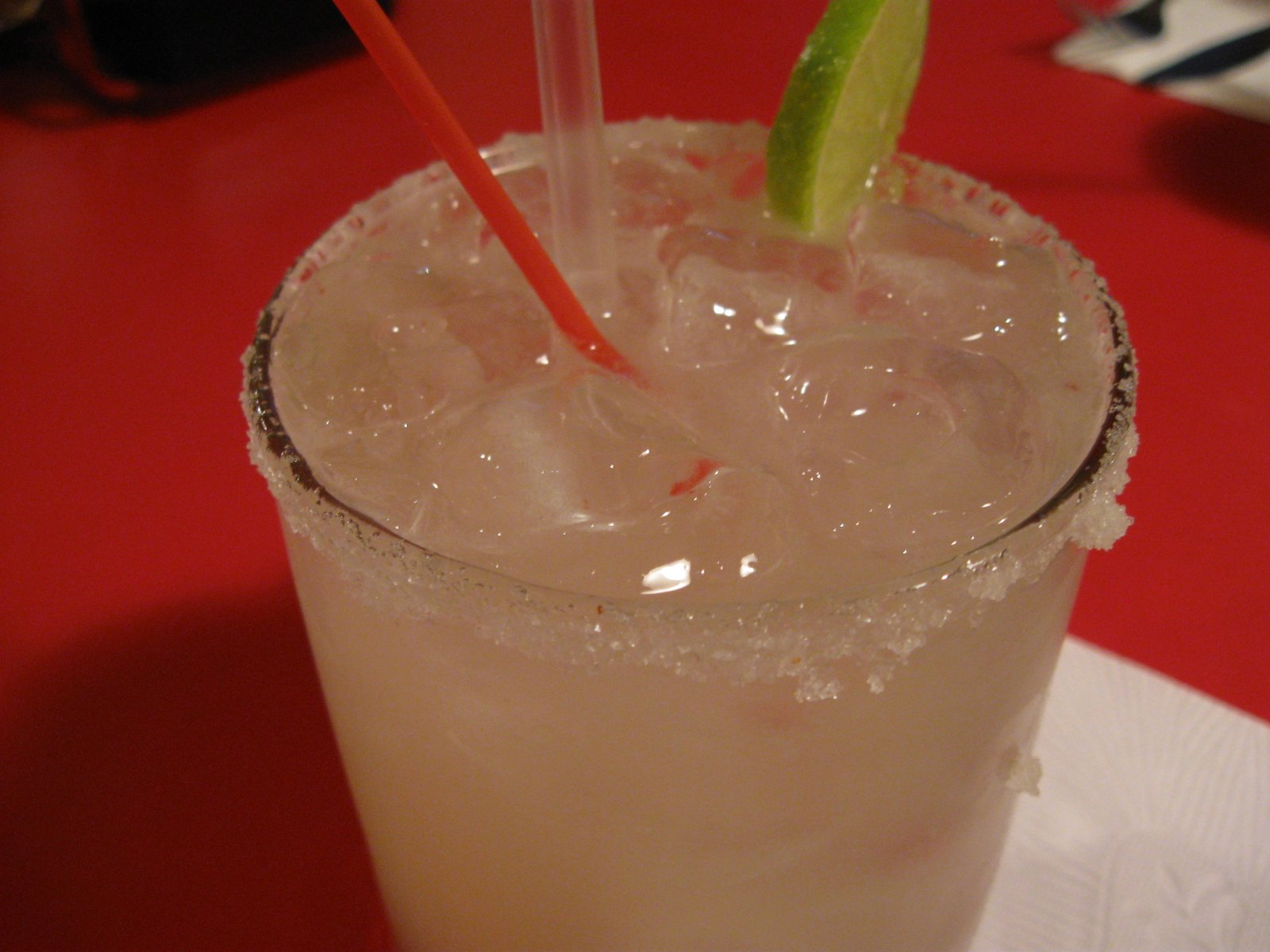
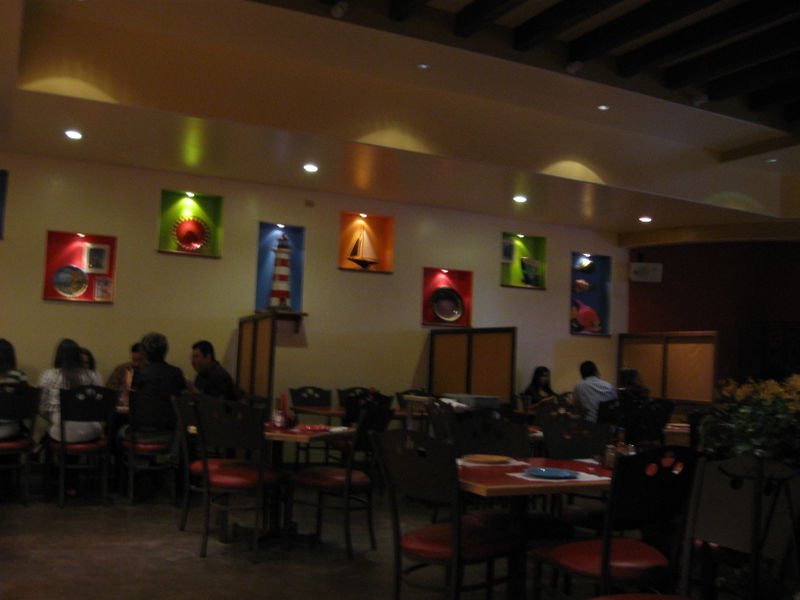 Using our best Spanglish (a pretty feeble excuse for communication) and a lot of pointing at the menu, we were able to order. We started with margaritas on the rocks:
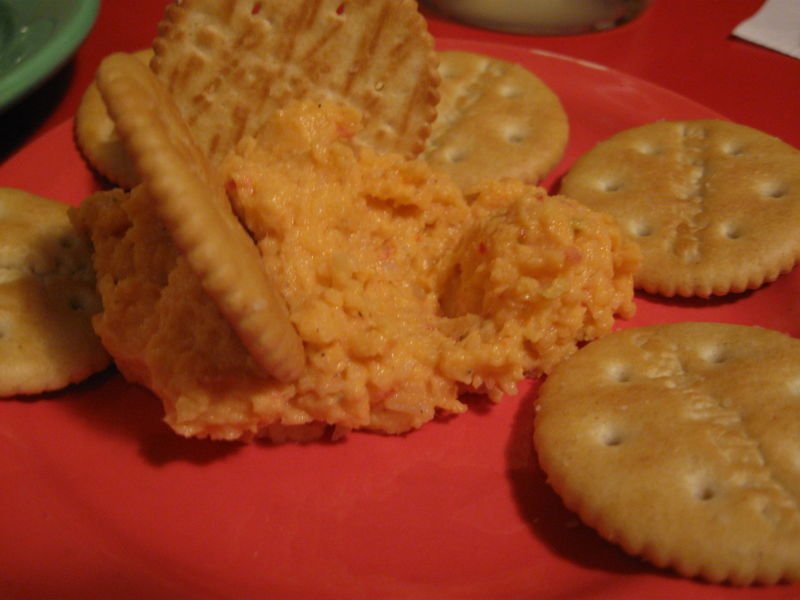
 Along with the drinks, arrived some rather ordinary yellow cheese spread thing and some rather good crackers:
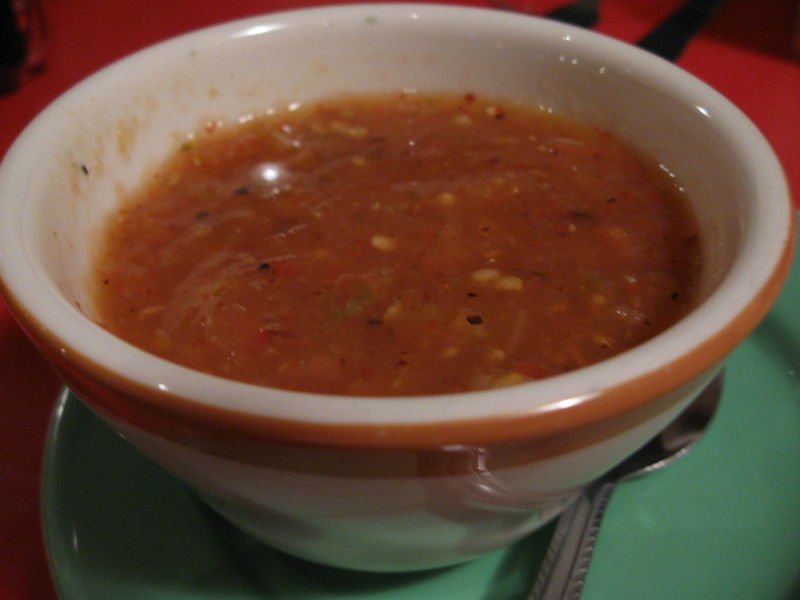
 Both Tina and I preferred dipping the crackers into the complex and spicy table salsa:
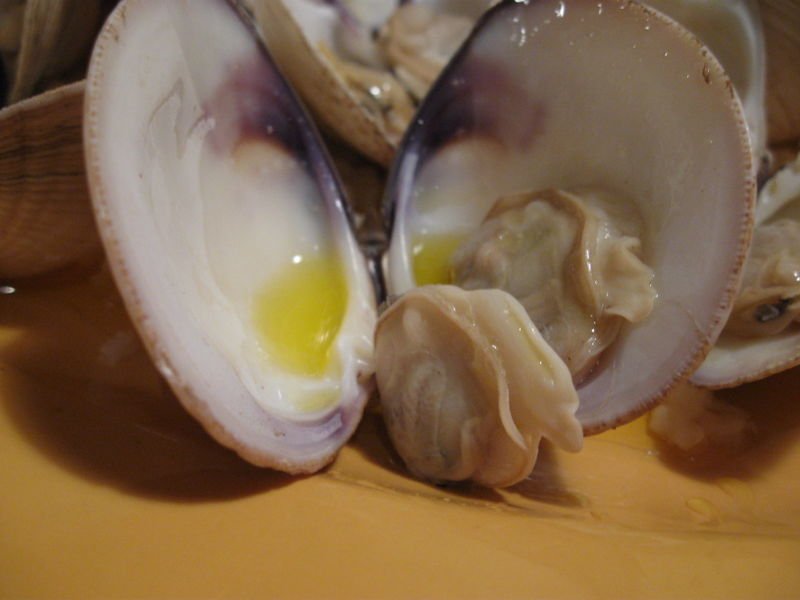
 For our first course, we decided on steamed clams. They arrived dripping in butter on top of some grains of rice on a large plate. This was a generous portion and the clams were fresh and balanced between tender and chewy:
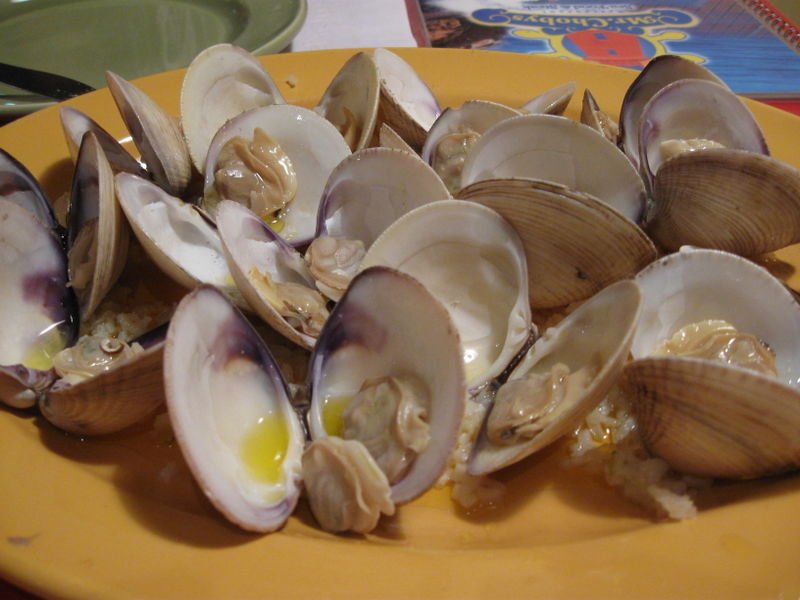 While not the best rendition of steamed clams that I have ever had (I would've liked a little garlic), they were quite serviceable and their flavor was enhanced by squeezes of lime juice:
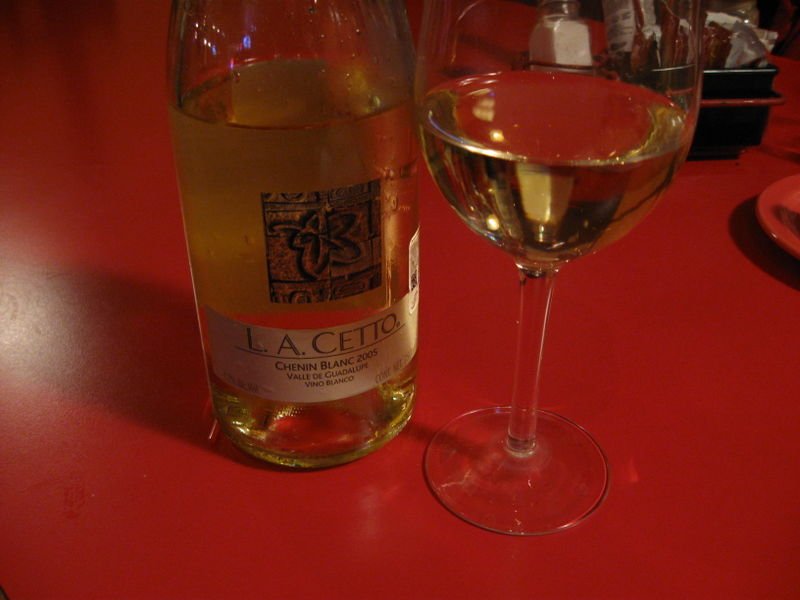
 Along with the clams came our bottle of L.A. Cetto chenin blanc. This dry and fruity white wine from the Guadalupe Valley, which we chose from the modest list of about a dozen Mexican wines, paired nicely with our meal:
 We then each had a marlin taco. While not much resembling the smoked marlin tacos at
 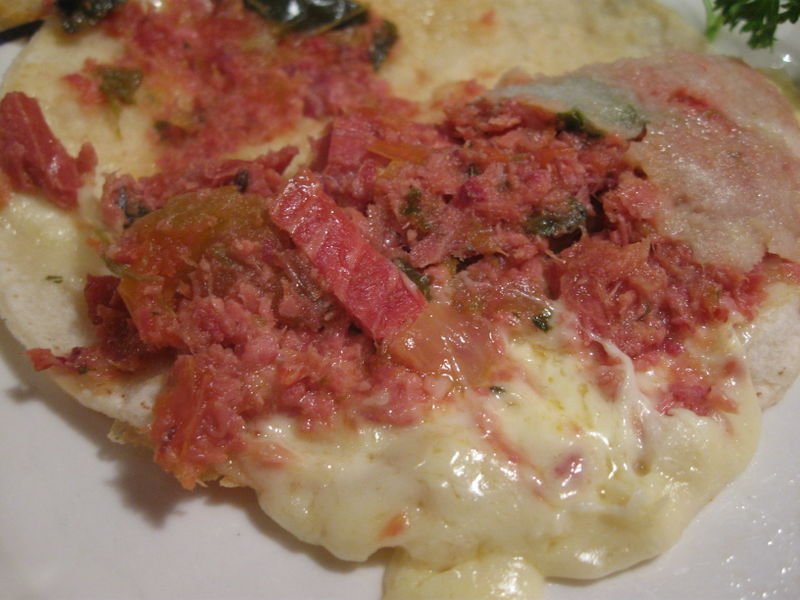 This taco was very good, but not "in your face" powerful. What I mean is that the flavor was complex, multilayered, and subtle, adjectives that I do not often use when describing Mexican food. The next time I have this, and I sure hope there is a next time, I will simply spoon salsa all over the taco and eat it as if it were a mini marlin quesadilla.
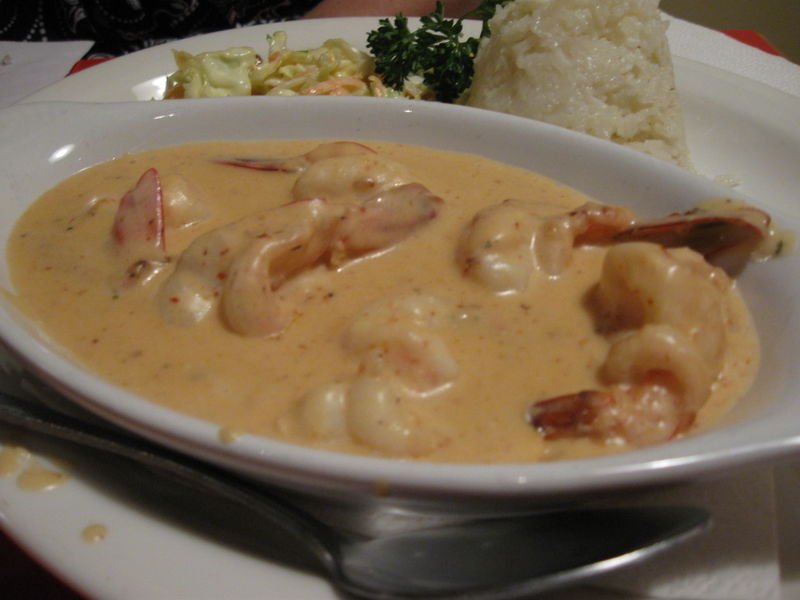 The shrimp were of excellent size and quality and perfectly cooked, and the sauce was a wonderful complement to them. The main courses were accompanied by okay coleslaw and a tasty truncated cone of buttery rice. We also received a basket of toasty bread, which was great dipped into the that great creamy chipotle sauce: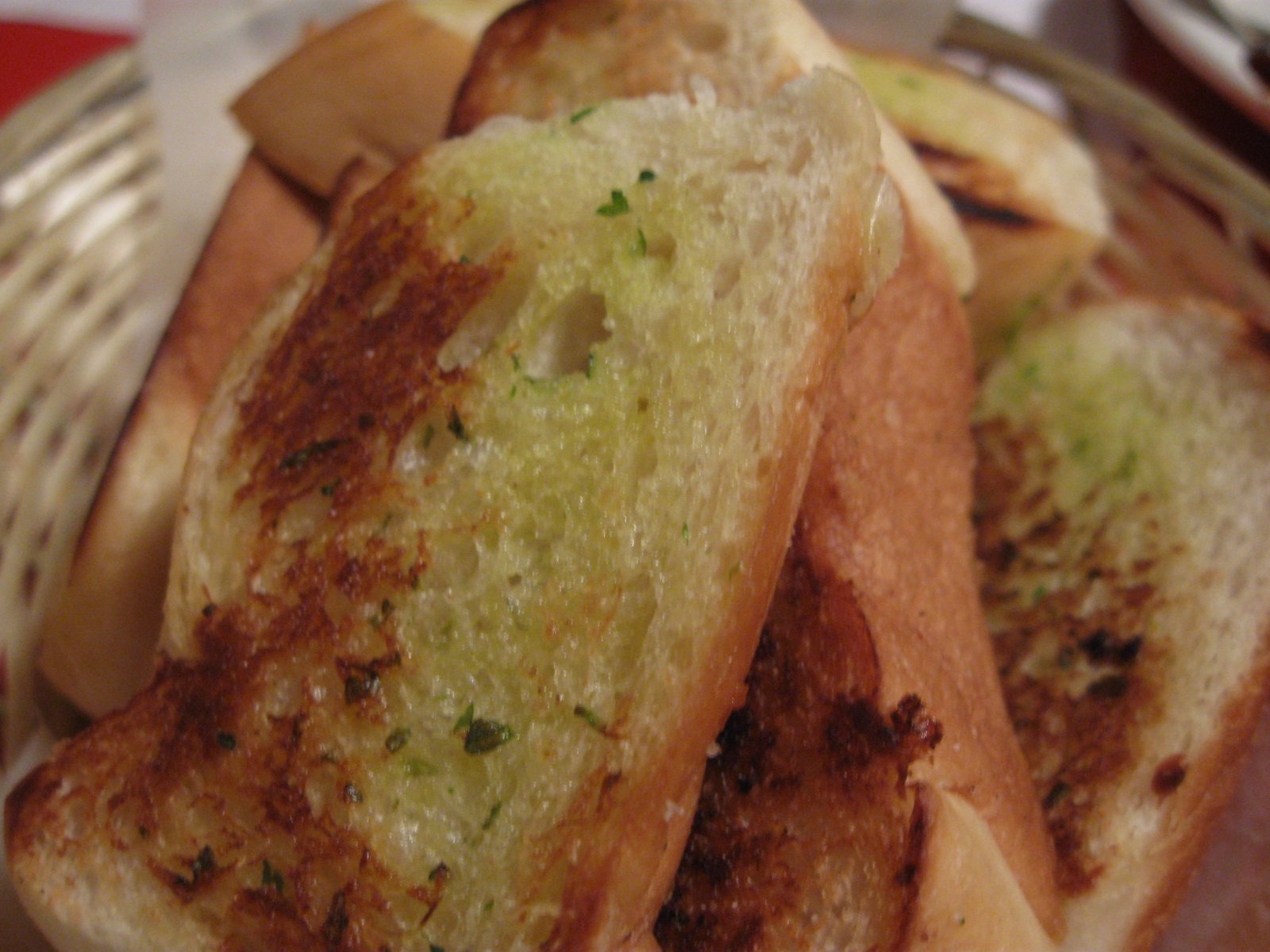
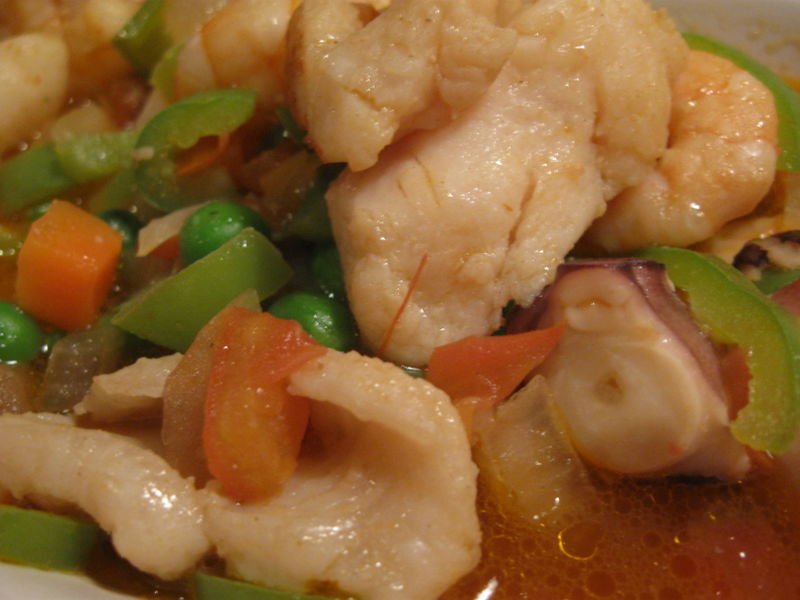
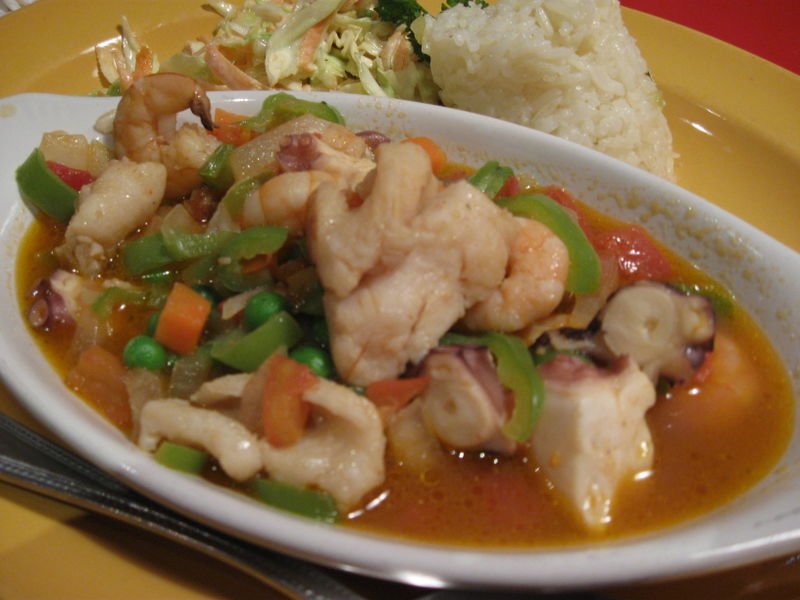 I was very impressed by both the look and the taste of this dish. Sometimes Veracruz sauces can be much like an Italian pasta sauce, with green peppers, olives, and capers in a thick tomato sauce. At Mr. Choby's, the chef had decided to present the mariscos integrated with an assortment of vegetables. The fish fillet pieces were fresh and tender as was the octopus, and the shrimp, while smaller than Tina's, were also very good. Fresh tomatoes, seafood juices, and olive oil were the basis of the brothy sauce. Even with the frozen peas and carrots, the collection of vegetables (in particular the seeded and deveined jalapeno slices) was excellent and provided color balance and textual variation as well as a variety of tastes. The jalapeno flavor, in particular, added a nice touch of picante spice and capsicum flavor without overwhelming the other ingredients:
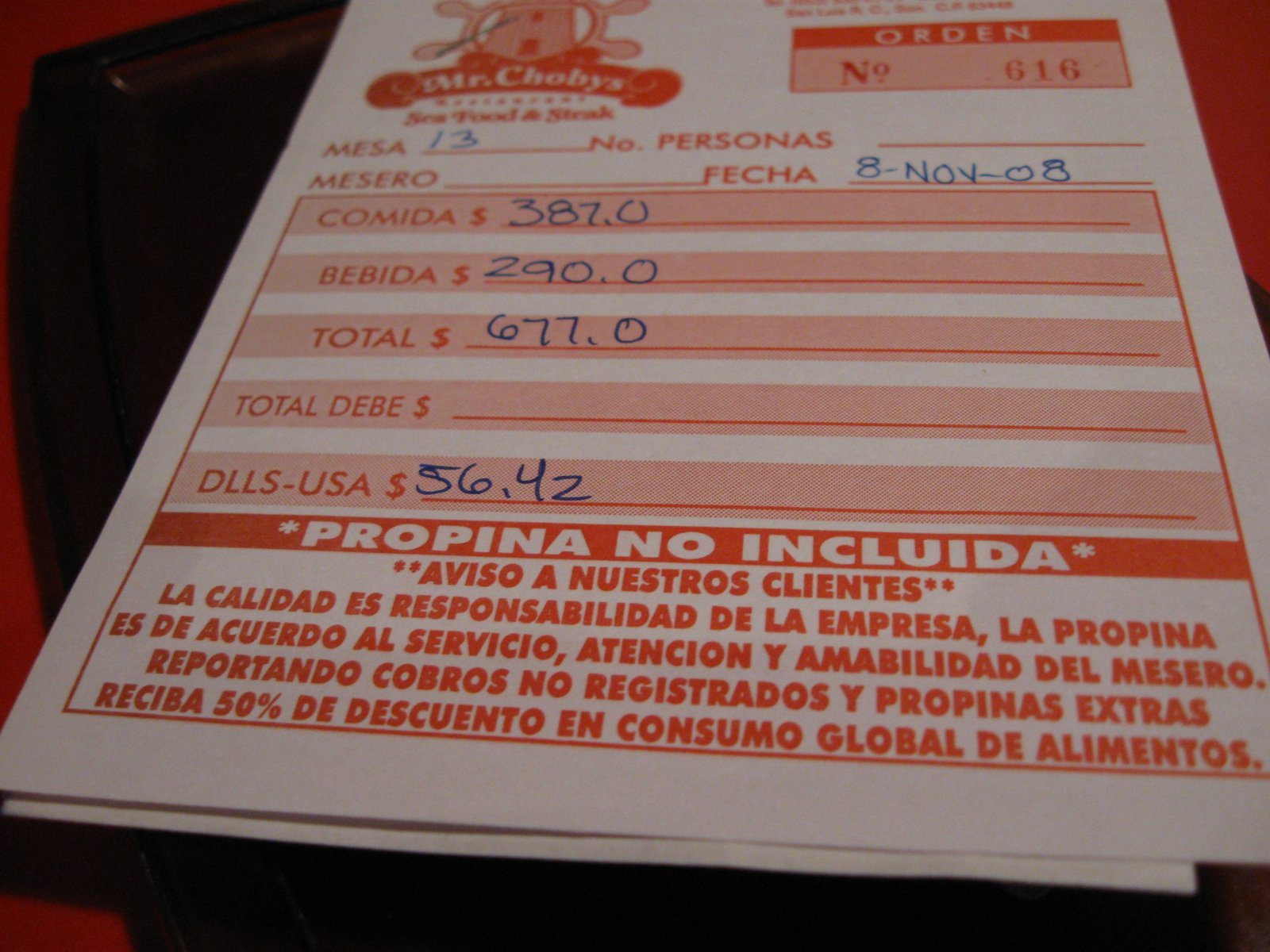
 We were happy. Our mouths were happy. And when we got the check, our pocketbooks were not too unhappy: