*** Mr Dumpling has closed
Ever since PedMa and MrC mentioned that a restaurant called Mr Dumpling was opening up, the Missus & I kept tabs on the place during our trips to 99 Ranch Market. We both found the location, on Convoy Court, away from Clairemont Mesa Boulevard to be a bit strange.
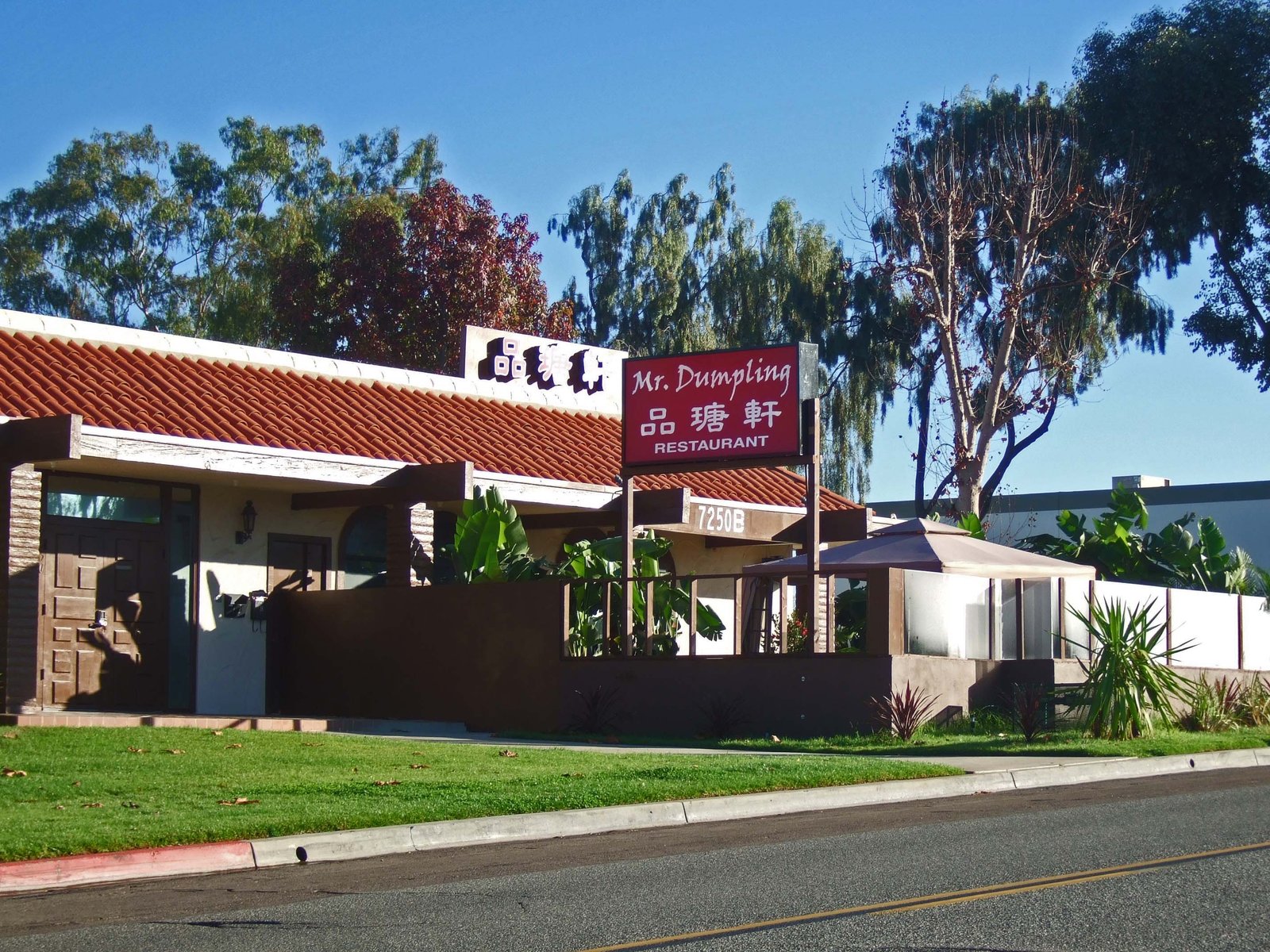
But the Owners have done a really nice job with the place, from the very clean and uncluttered interior, to the orchids adorning the patio. Mr Dumpling the restaurant, does not resemble what I'd imagine a "Mr Dumpling" to look like.

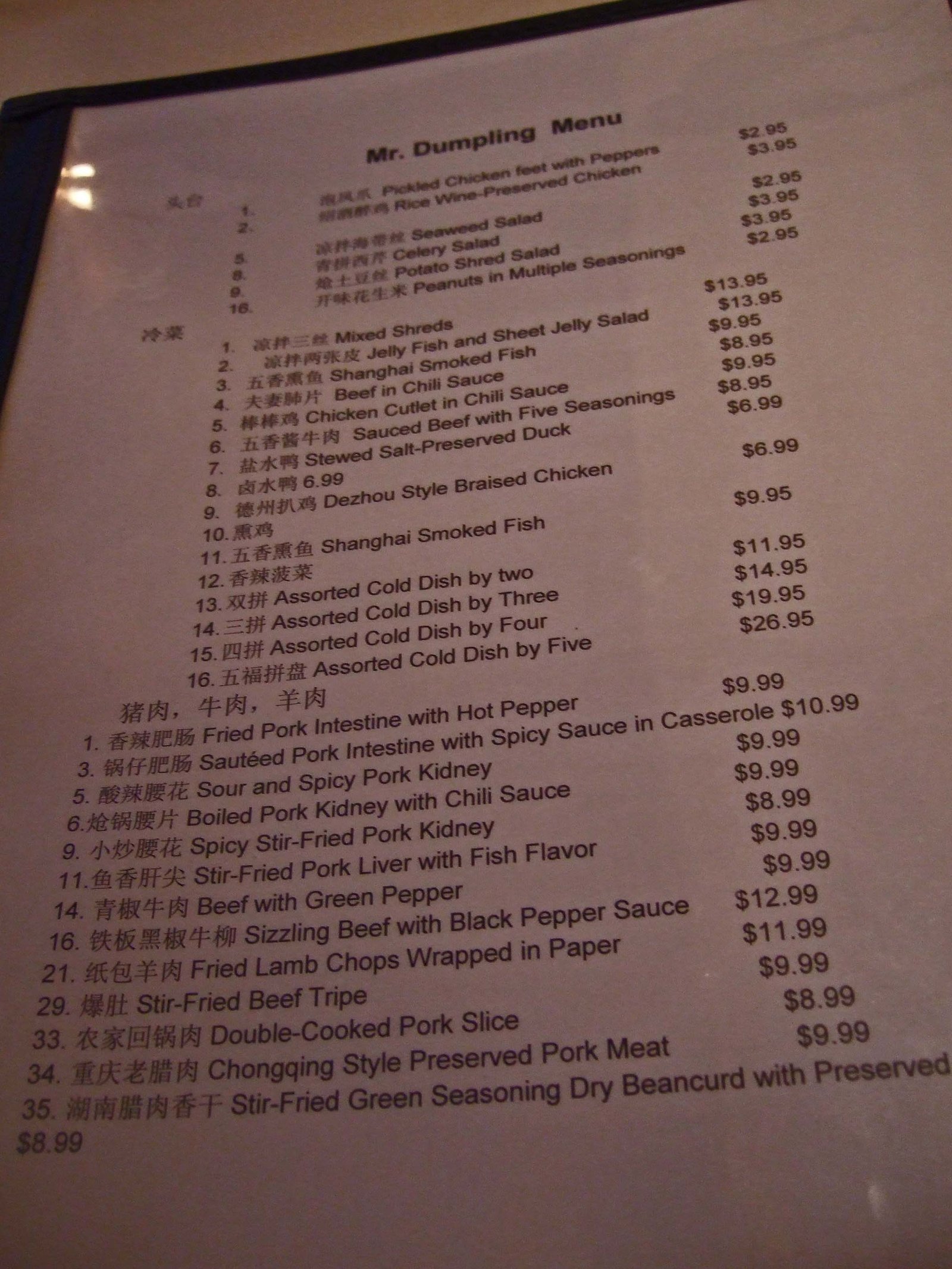 The tables are covered with crisp white tablecloths, and the earthy tones, are quite nice and relaxing. Of course, the Missus couldn't help but say, "of course it's nice, they just opened up….give it a couple of years."
The menu looked like a scattershot of various Mainland Chinese dishes, everything from Mapo Dofu and Hunan Dofu, to of course, Jiaozi. The array of offerings did cause some head-scratching, but we're pretty familiar with the Chinese clean-cafe-eatery, phenomenon in LA. Actually, this is not isolated to Chinese cuisine, FOYs, Beach, Chubbypanda, and I had discussed this with regards to Vietnamese Restaurants in Little Saigon as well. Even a brief discussion would take up several posts, so I'll pass on that subject this time around.
Back to Mr Dumpling. We were informed that the "Chef" is from Shandong, which helped to give the Missus and I bearings with regards to ordering. While perusing the menu, we encountered our first mildly disturbing "sign", our pot of tea was delivered….. with the tea bag label sticking out of the pot. That single teabag tag sticking out of the top of the teapot just seemed out of place, and in stark contrast with the surroundings.
We started with a dish that the Missus has been eating since a young child – The Shanghai style Smoked Fish (Su Shih Hsun Yuu ), the price ($9.95) was a bit startling, but it's a dish that we can't help but order everywhere we go. It is a Shanghainese dish, but one that is very popular in Shandong.
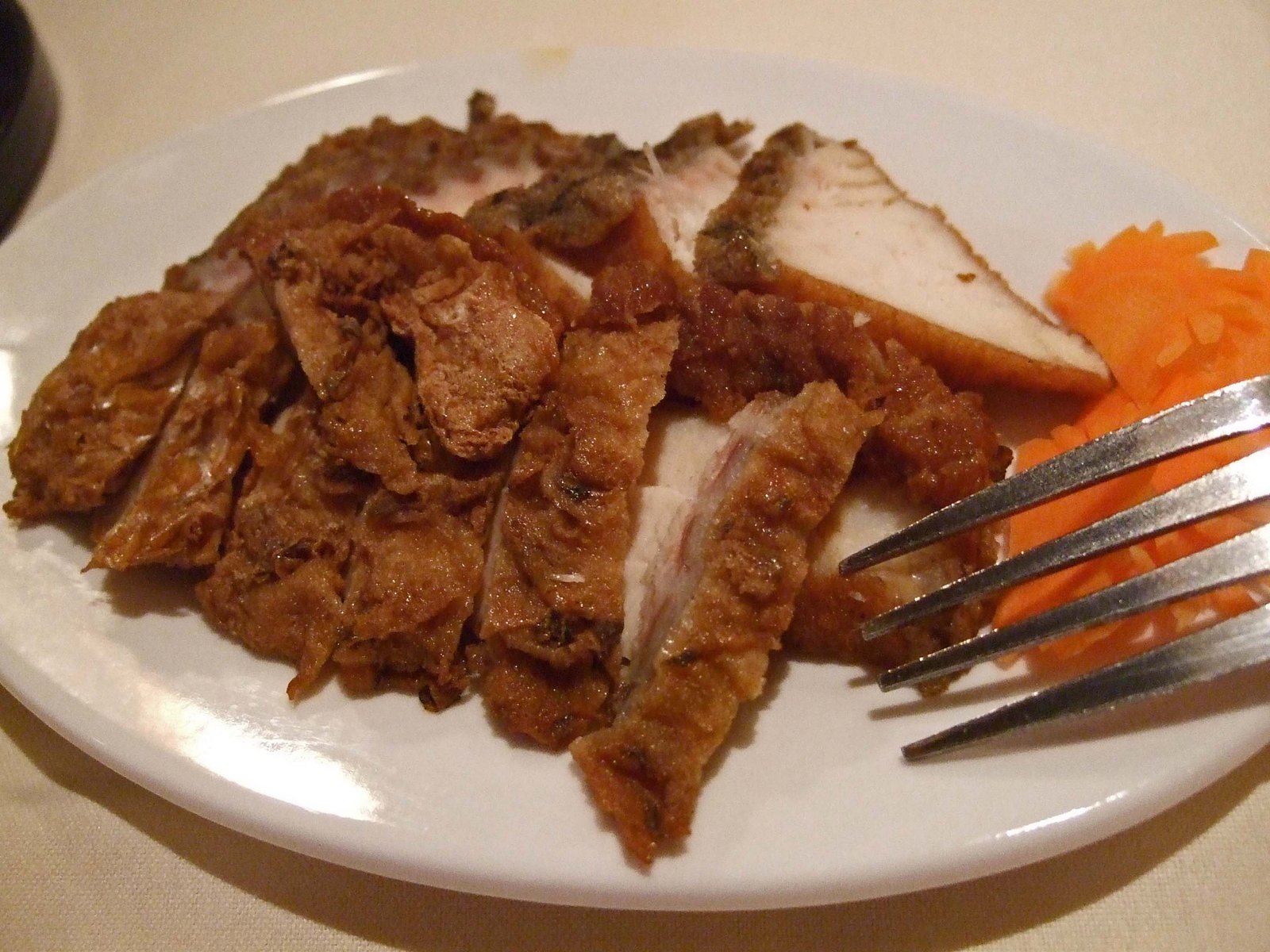
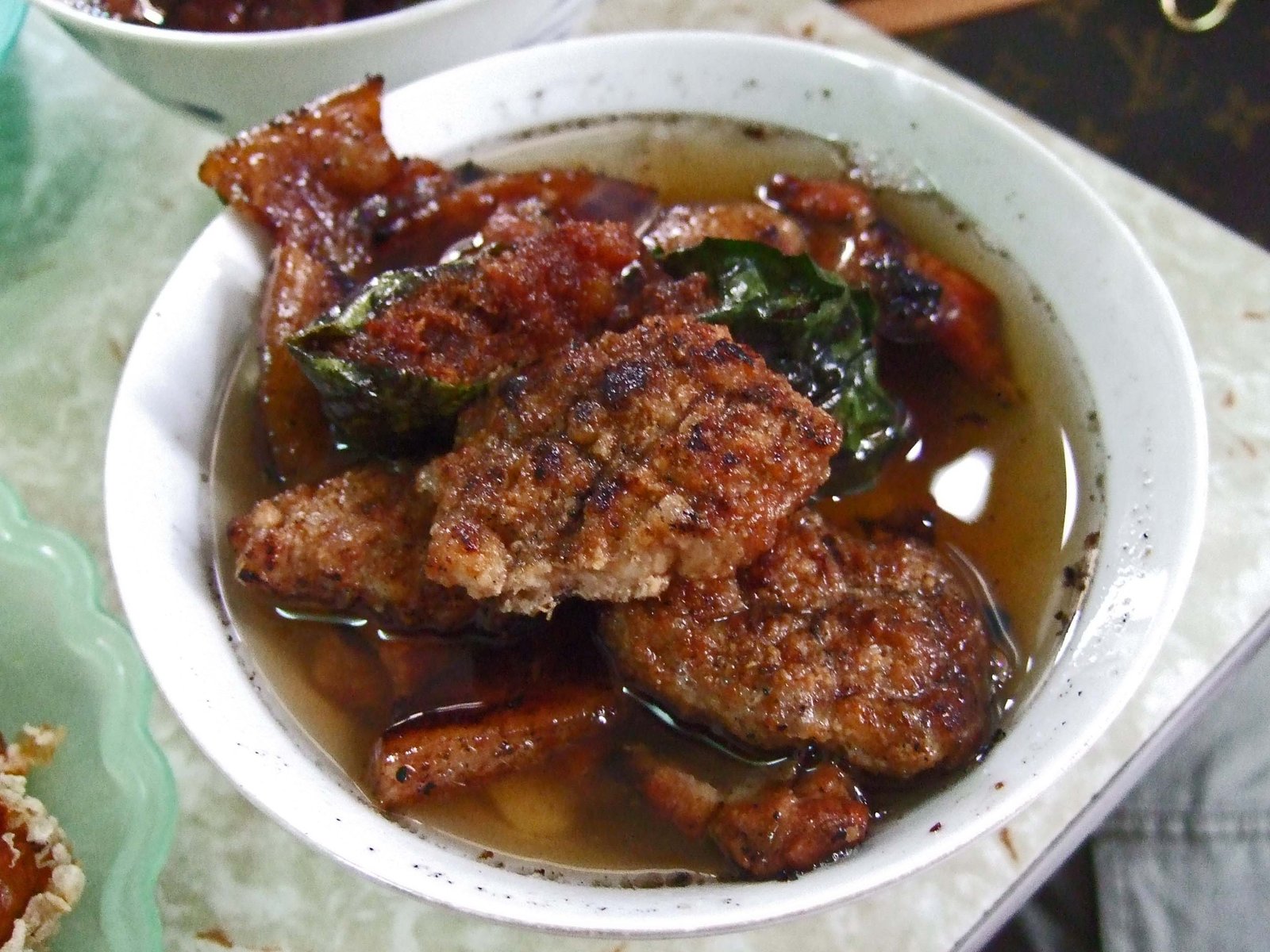
This was just wrong on so many levels; first, this was a very, very, small portion(for $10)….check out the tines of the fork for comparison. Second, there was none of that sweet-5 spice flavor that is the hallmark of his dish. Third, the type of fish was wrong….the texture was too meaty, and tasteless, like really bad albacore tuna. Click on any of the links above the photo, and you'll see what we were expecting. The Missus's maternal Grandmother was master of this dish, and Her Fifth Aunt, who is the best cook in the family, carries on the tradition. My Mother-In-Law believes the version at Chin's, is spot on. I dunno what this was, but it sure wasn't Shanghai Smoked Fish. We'd have been satisfied if this wasn't a classic rendition of the dish, and had some redeeming qualities, but this was plain bad.
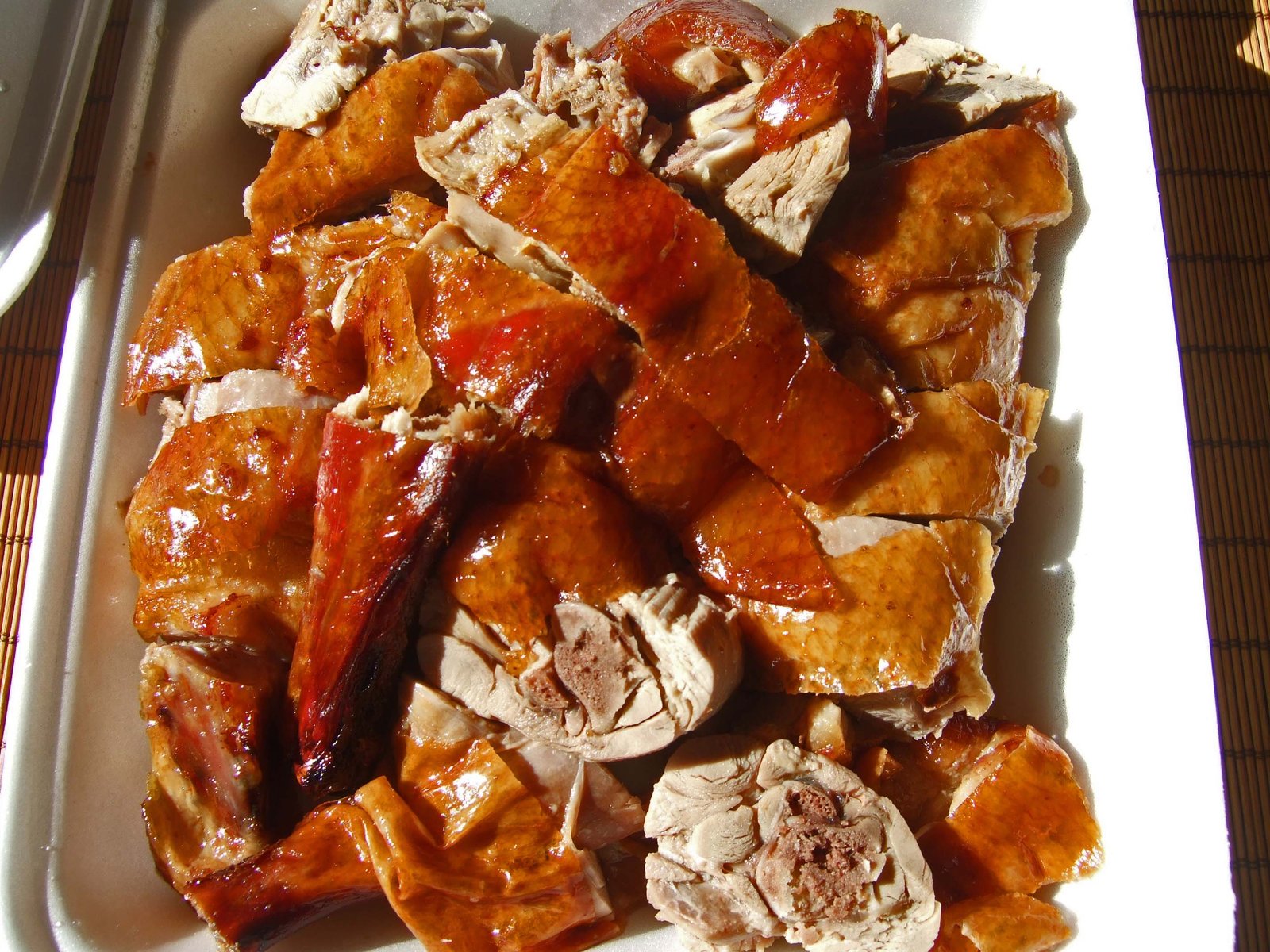
The next dish to arrive was something whose very mention can cause the Missus's mouth to water; Dezhou Pa Ji – (Dezhou Style Braised Chicken, $6.99). Dezhou a city located in Northwest Shandong, is well known for their braised chicken. This dish evokes so many deep-seated memories, that the Missus wrote Her one and only post on it.
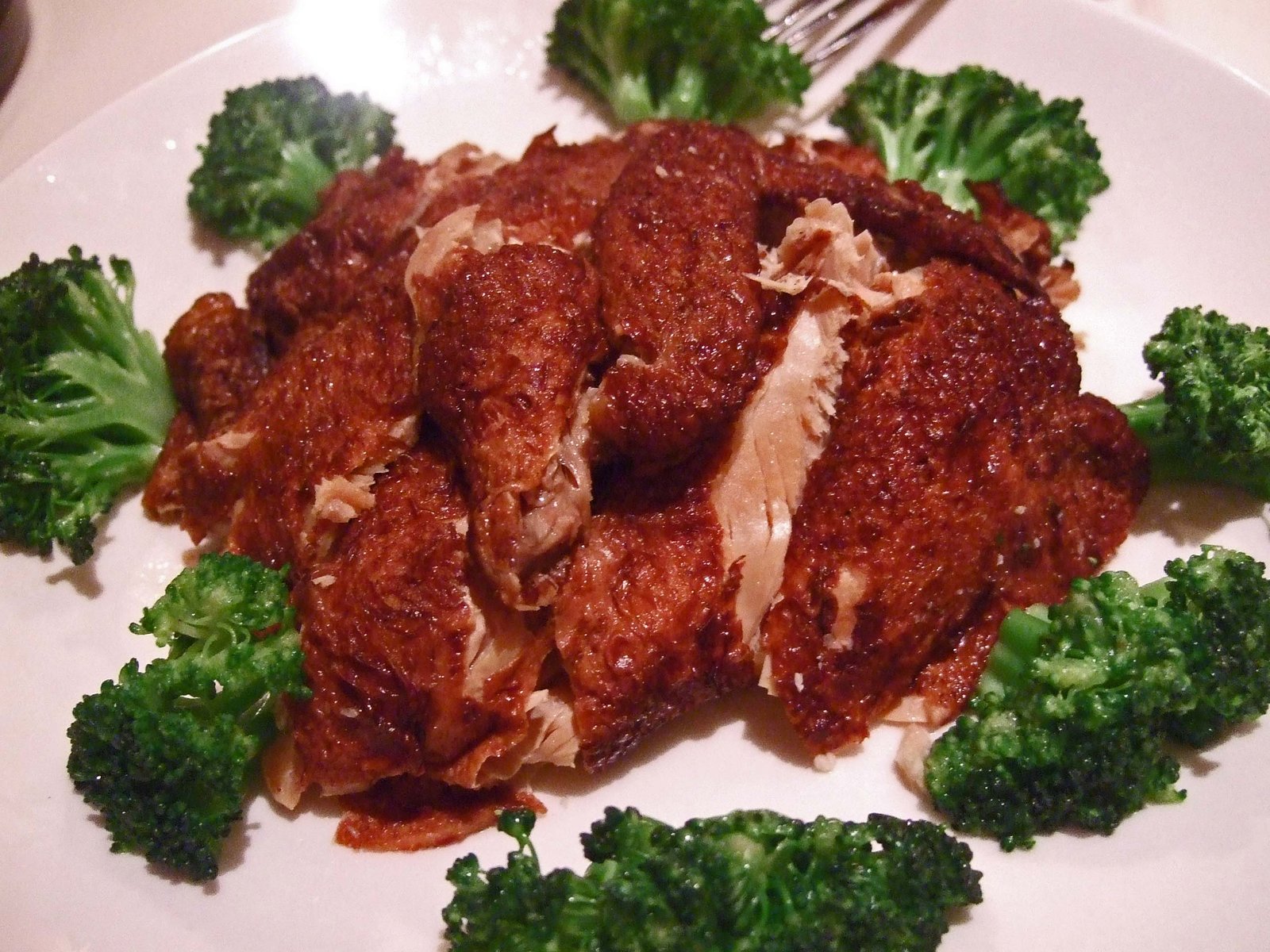
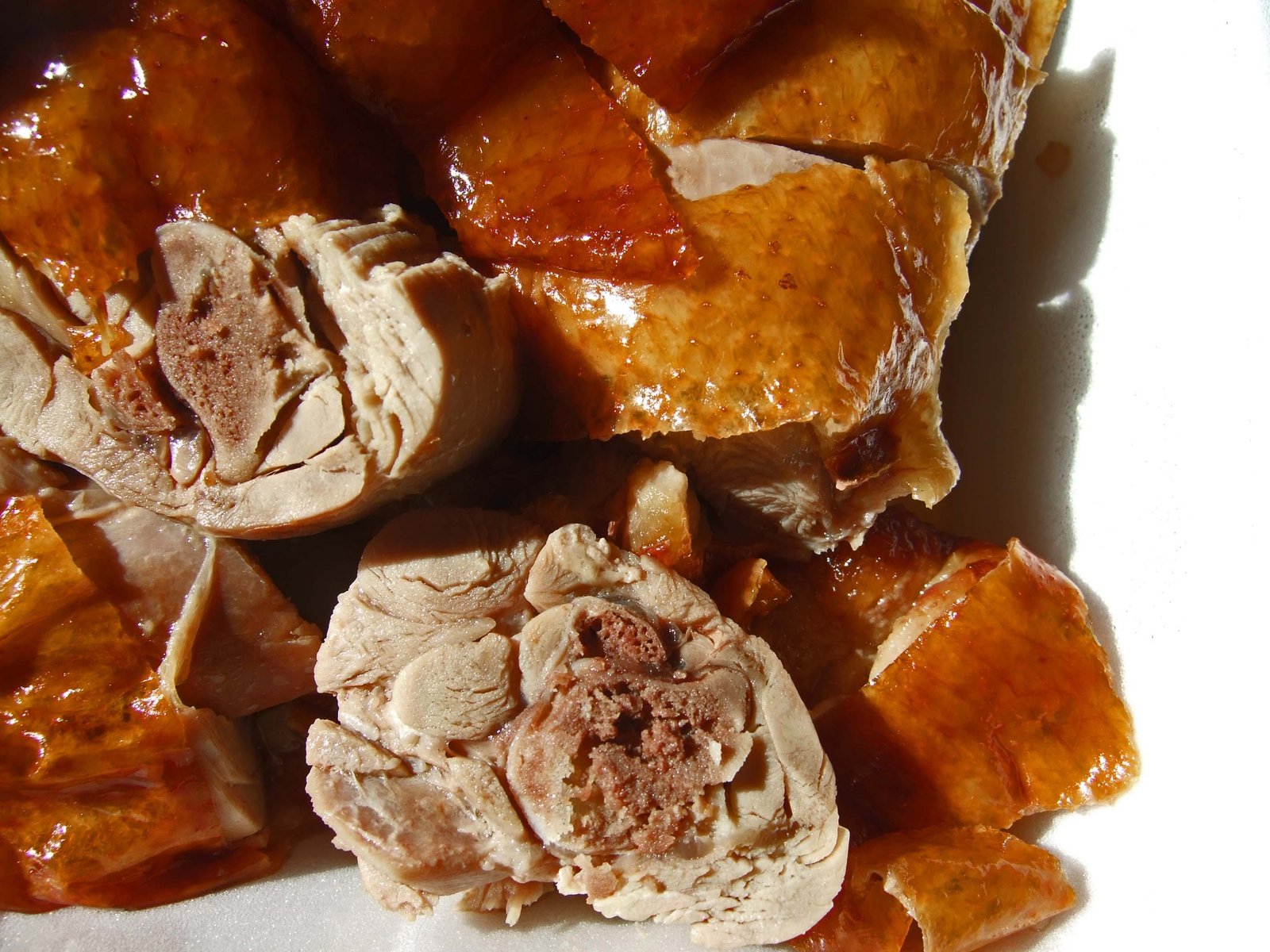
The dish arrived, steaming hot…..but the skin was dry…..microwaved perhaps? All the Missus's hopes were dashed after one bite. Again, this was bland, with just a hint of flavor, which was more like soy-sauce chicken than Dezhou Pa Ji.
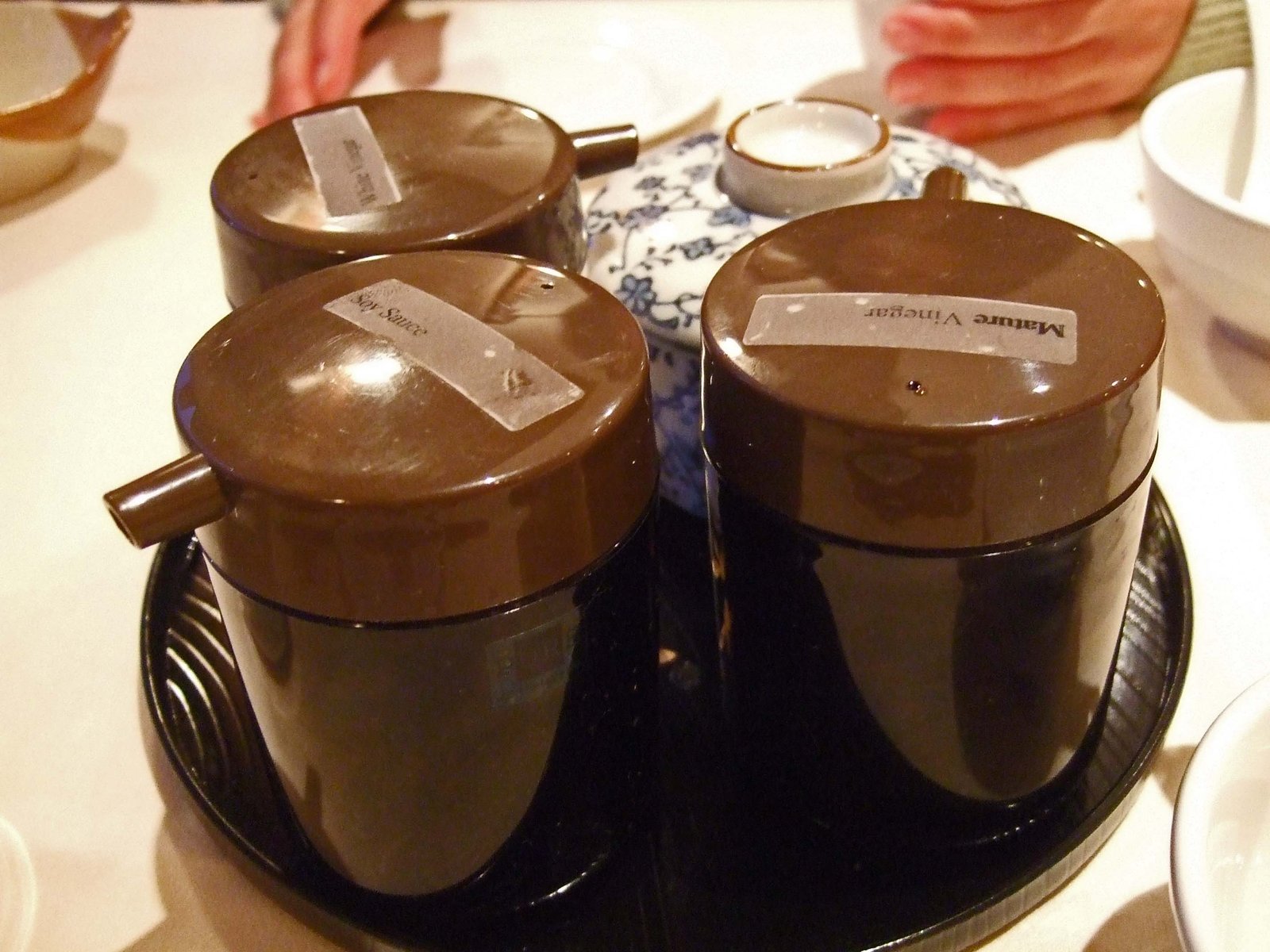 Alas, this meal was not going very well from the food standpoint. The service however, was very attentive, our plates changed, and our water refilled. Soon a tray of vinegar and soy sauce was placed at our table.
This last dish we ordered, if good, would make the entire meal worthwhile. If there is just one item that immediately comes to mind when the very word Shandong is uttered, it would be Jiaozi. Over the years, I've come to understand what an important role Jiaozi plays in the Northern Chinese household.
We ordered "Mr Dumpling's Special Dumplings" ($6.99).
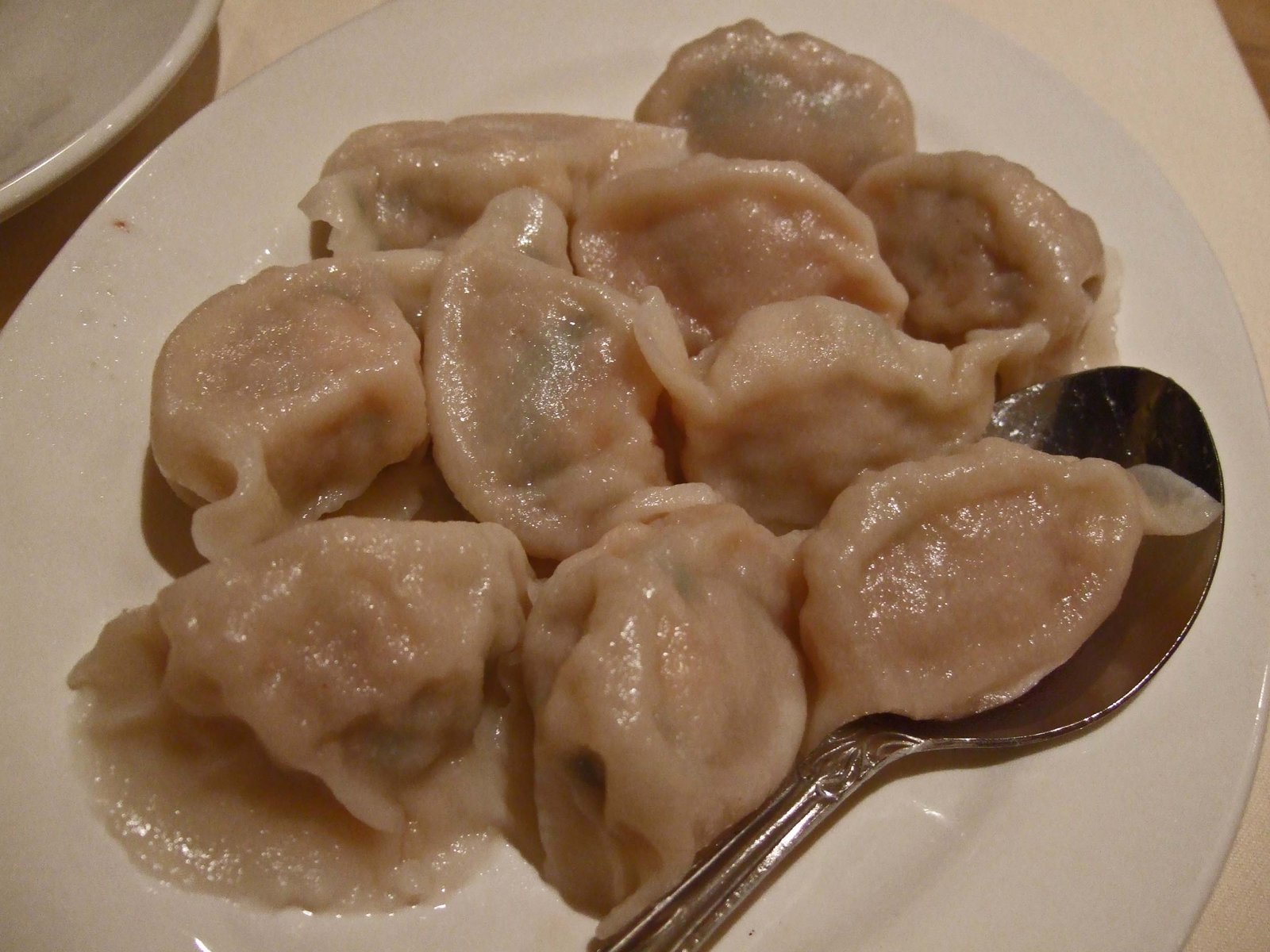
First off, these dumplings took 40 minutes to get to us. I really didn't mind, I had mental pictures of fresh dough being made, rolled out, and formed by hand to order, floating through my head. Well, this didn't quite deliver, the filling, a combination of pork-shrimp-chives, had decent flavor. But the dough was hard, noodle-like, tearing instead of having any pull. As the Missus says, "it's all about the wrapper". From that end, this was pretty mediocre. Again with the Missus: "this place makes Dumpling Inn seem more like Dumpling King."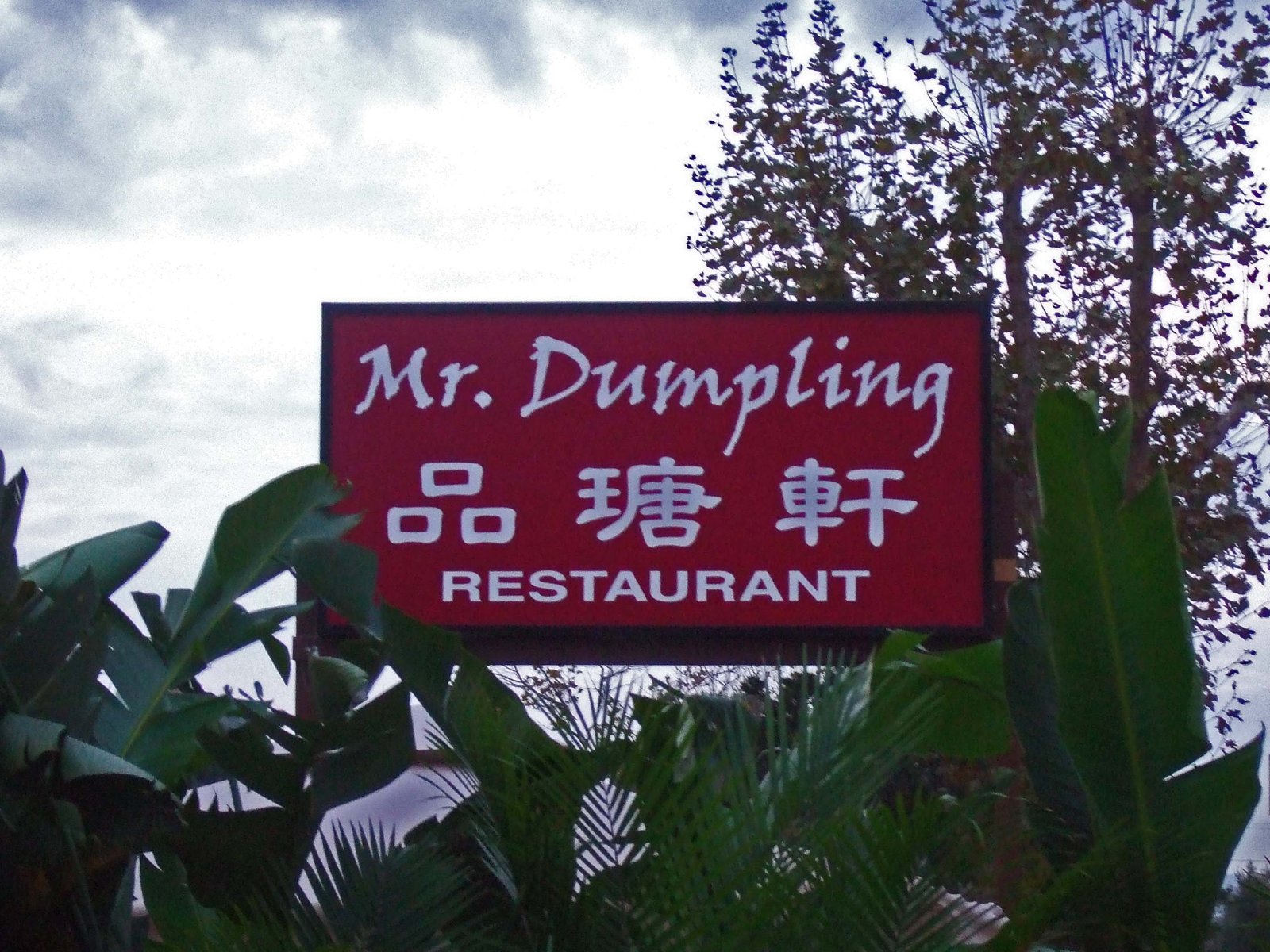 We had thoughts when initally looking over the menu, of seeing what the food was like, and than ordering more; a strategy that I'm glad we took.
For us, the food at Mr Dumpling didn't live up to the decor, service, and price. Driving home we were trying to figure out what was going on. Perhaps the Chef was new to the various ingredients sourced in the US? I'm going to give this place a long rest, I hope the food improves…..
Silver Lining Note: The Missus felt so bad for me after this meal. So She decided to come out of Her self-imposed Jiaozi "retirement". I had Shrimp and Chive dumplings the next day!!
Mr Dumpling
7250 Convoy Ct
San Diego, CA 92111
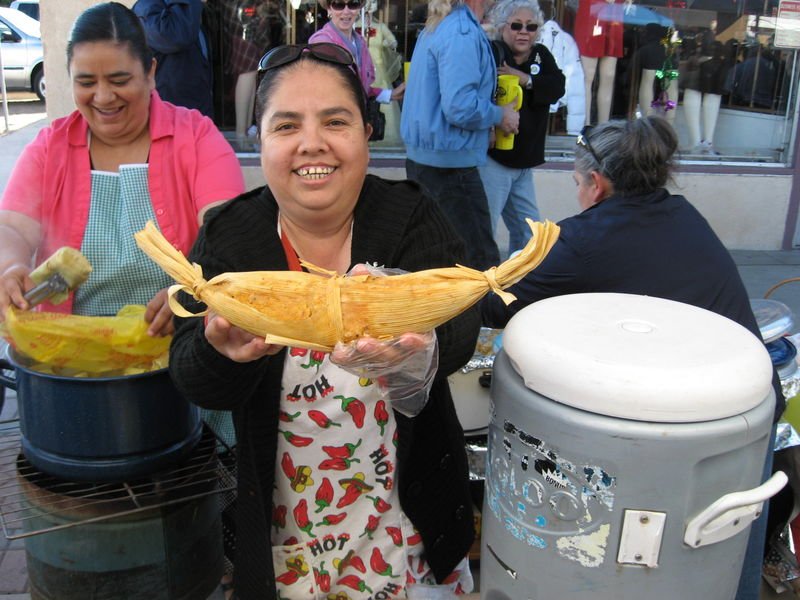
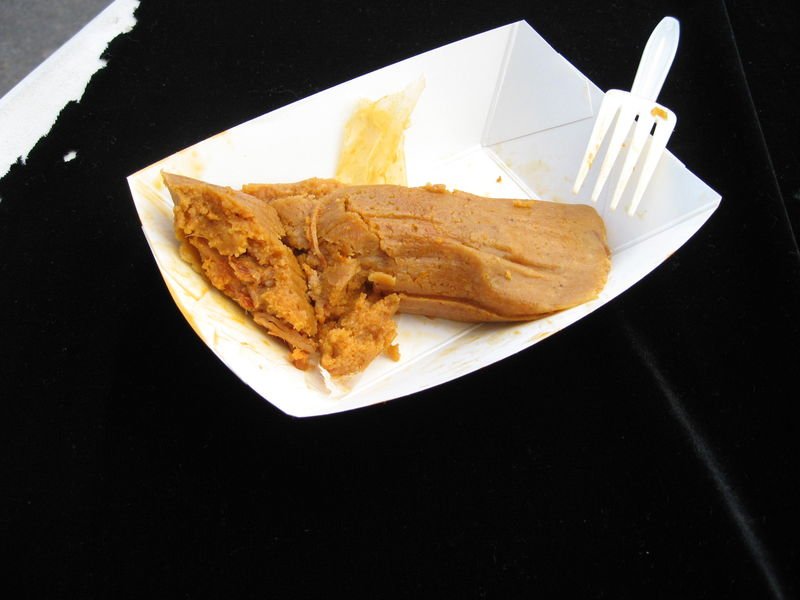 On the most basic level, a tamal is like an edible doll – a food nearly human, a small body wrapped in a cornhusk skin. The flesh is the dense and rich corn meal masa. The central filling can be seen, from a biological perspective, as like an alimentary canal, a digestive system. But seen from a different, less physical viewpoint, the center, the part that provides the uniquity of each particular tamal, is like each individual spirit, the distinct humanity possessed by every one of us.
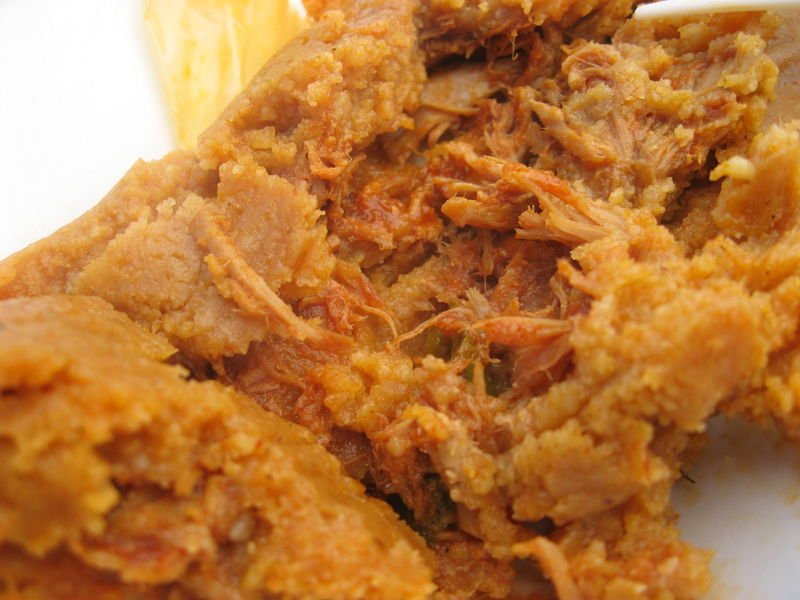 To traditional Christian believers, each tamale can be considered a metaphor or symbol for the Holy Virgin. After all, every real Mexican tamale must have an olive in it. On one level, that olive represents the Christ child waiting to be born — as he is every year at Christmas. And from a more new age viewpoint, the tamal can also represent any mother who carries seeds for the future within herself – as well as the fertility of the fields and the bounty of the harvest. So we can see this food as both the mother of God and the mother of us all. On still another level, the olive represents the promise of the new year which will be reborn with the passing of the winter solstice, as days start growing longer (right around the time of Christmas).
 The tamale, however, is also symbolic of Mexican culture. Just as the Virgin Mary has been transfigured into the Virgin of Guadalupe, so a tamal wonderfully blends and shapes new world and old world and transforms European traditions into something different and more complex. The key ingredient of tamales is, of course, maize. In the United States, we call it corn (the English term for all grains), because at first this Indian corn, this native ingredient, kept all the peoples in the New World, natives and invaders both, alive. Combined with this wonderful product of pre-Mexican agriculture is another New World addition, chilies. And most tamales add to those some bits of native tomato and another new world staple, potato:
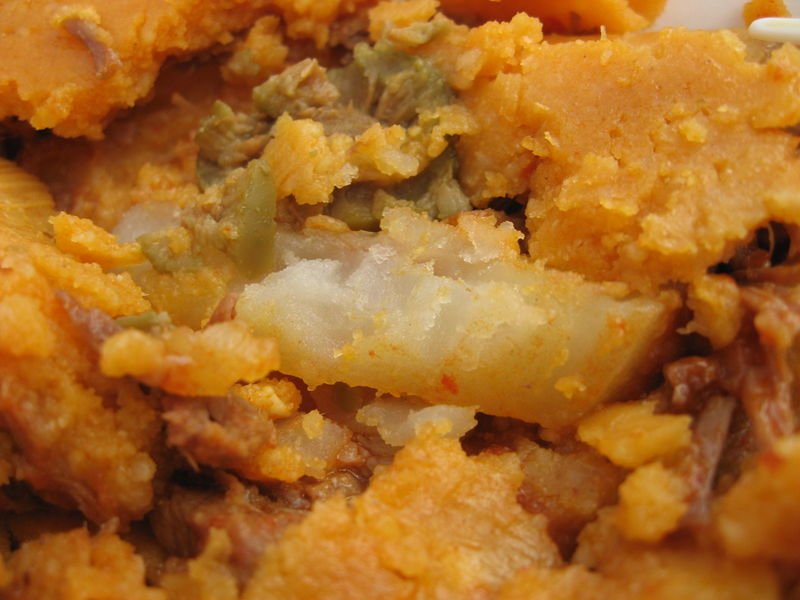 On the other hand, except for tamales made with turkey, the animal products in the dish are European. The olive, as well, is a product of Mediterranean civilizations. Whenever I think about this Spanish olive in the body of native corn masa, I am reminded about the Mexican legends of Cortez and his indigenous American girlfriends. In some very real and specific ways, the Mexican people and the Mexican culture are a combination of the Spanish and the native, just as is the tamale.
 In a way, tamales are a sacrificial dish as well. A friend learned how to make tamales. "So, I will get tamales every year?" I asked.






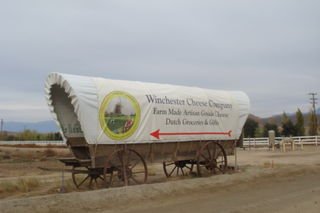
 I drove down a dirt road a short distance, seeing the Alta Dena milk cows on my right.
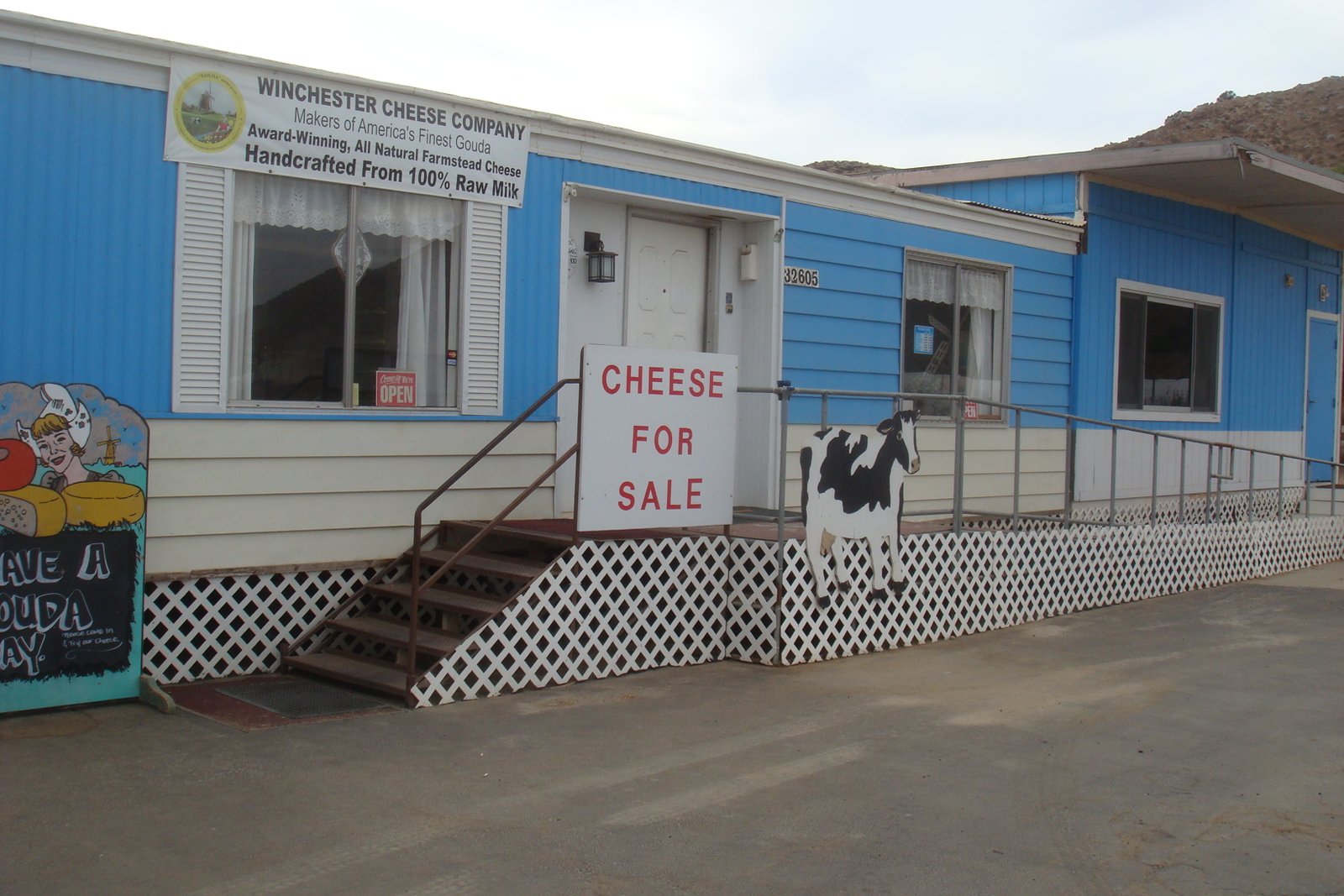

 I tasted all of the 'plain' Goudas and decided the least aged one had more depth of flavor to me, plus if I wanted to taste more aging, the edges are a bit dryer and should have a more aged flavor.








 See how easily the peels come off…