Thanks for coming back to read mmm-yoso!!! Today, Cathy is writing a short post. Kirk and Ed(from Yuma) will read it, as you are doing right now. You may or may not comment on it.
Well, it is a New Year and officially the Holidays are over. I was raised Catholic, The Mister is Lutheran and we have a few traditions which begin before Christmas Eve (when we decorate the house and tree and open cards and gifts) (that's a tradition). Another tradition that I have had since I was a child growing up in Detroit, is acquiring free advertising calendars -which are posted in just about every room as well as the garage work space in our home- from various merchants around town.
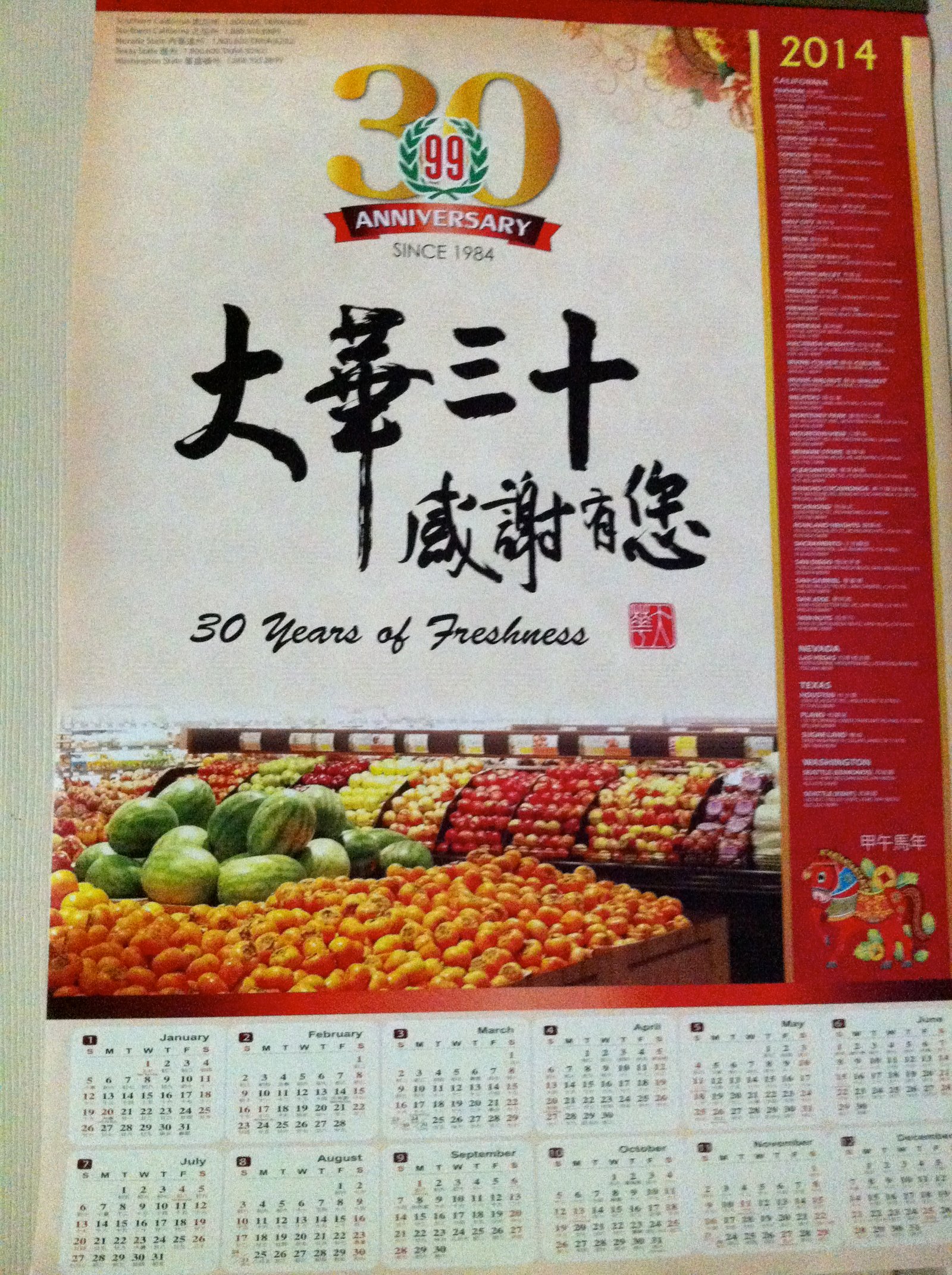
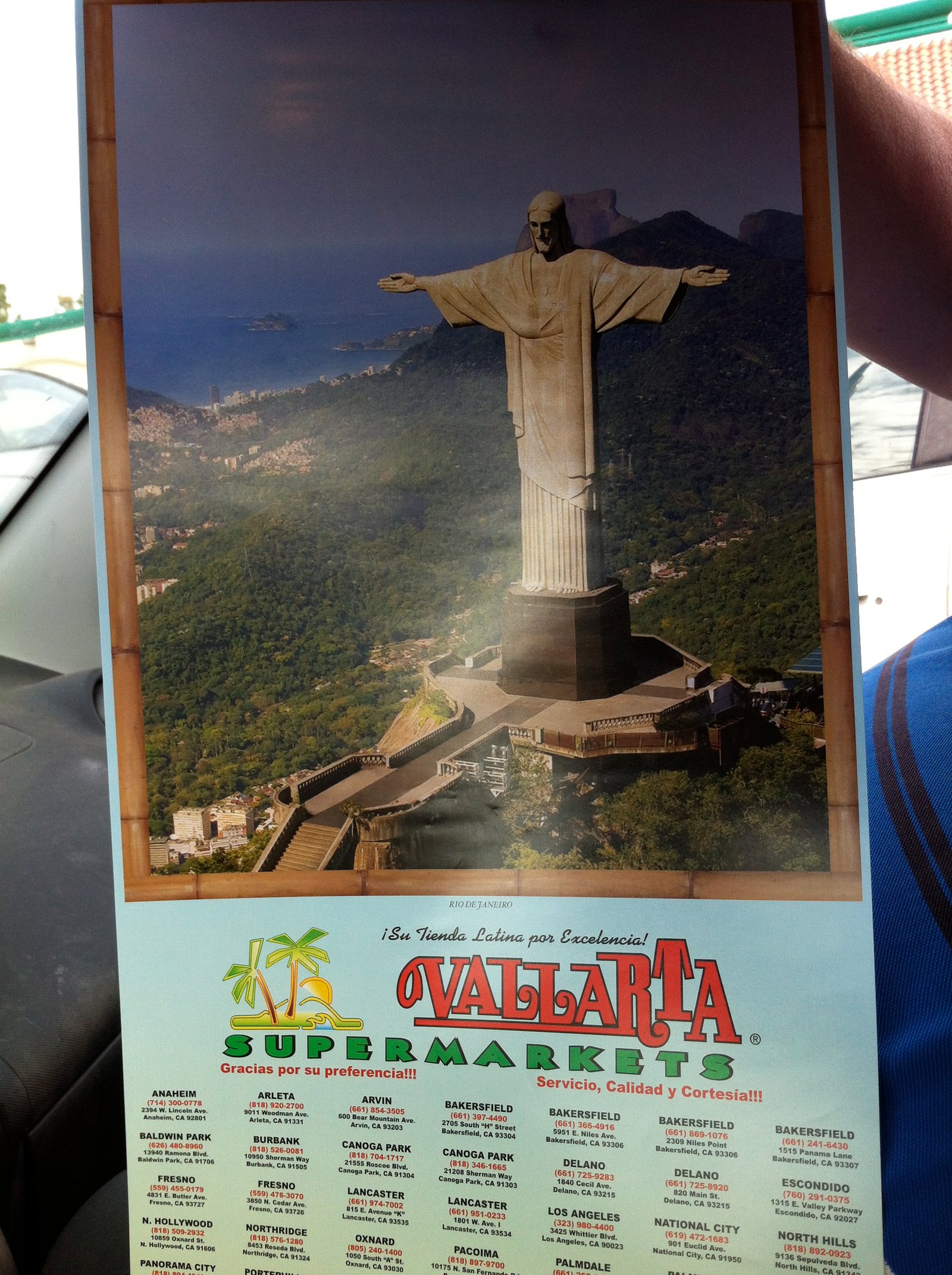
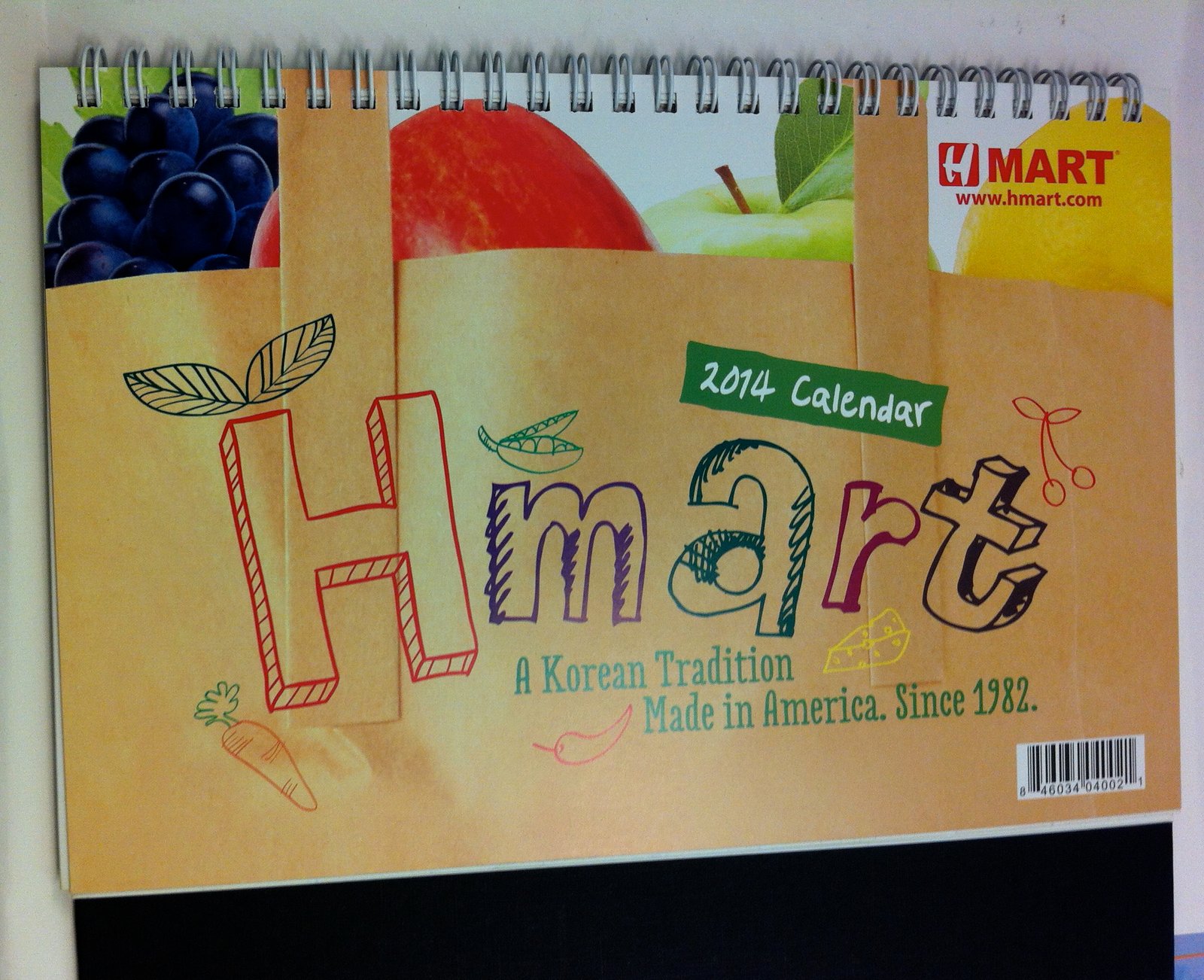
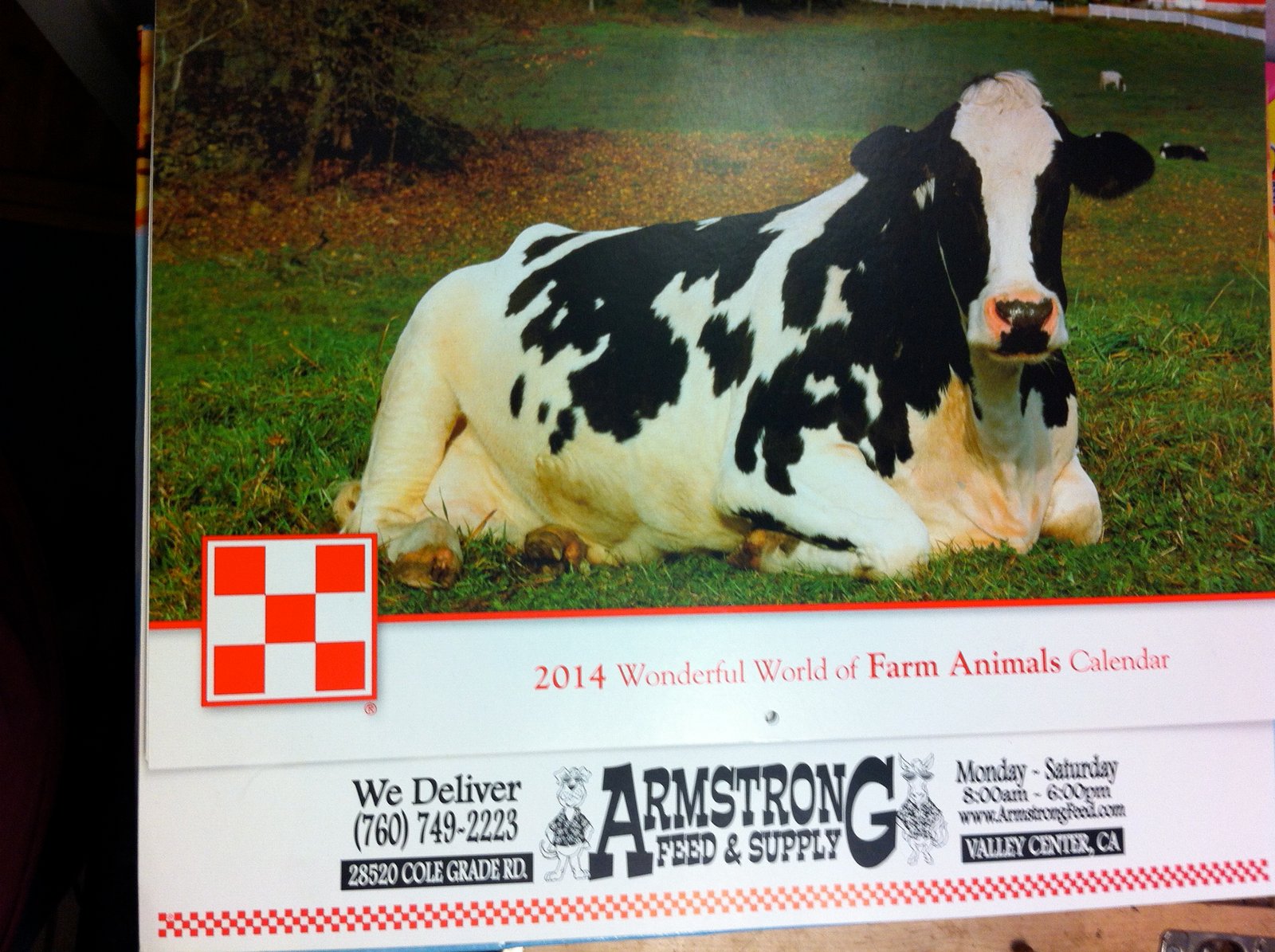
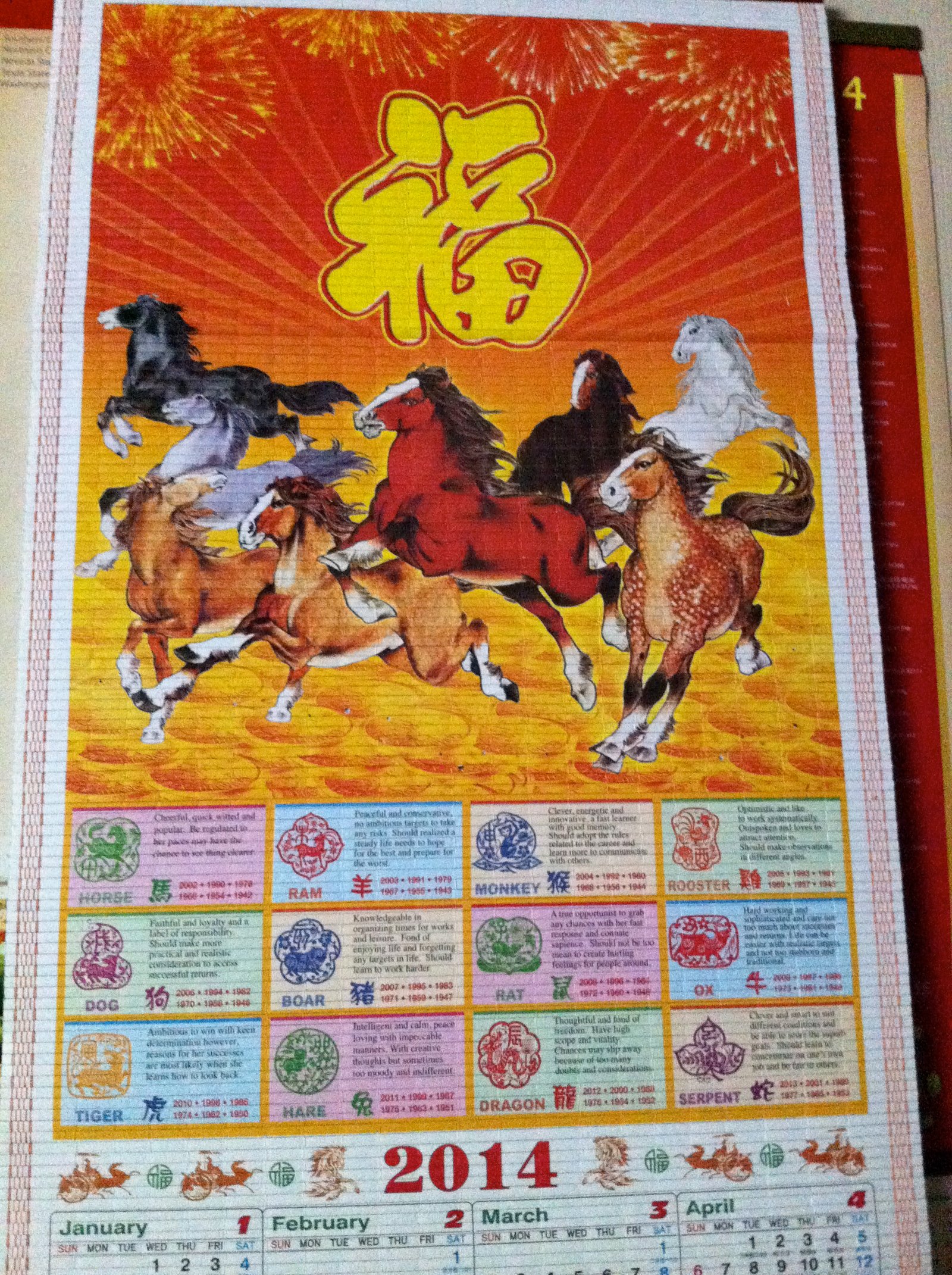
These are just five, I'll show you more in another post. The Mister and I have been under the weather and good friend and fellow blogger, caninecologne, of Pink Candles at Ridgemont High has been kind enough to pick up other calendars for me.
Another tradition, which is part of the Christian celebration of the arrival of Three Kings on the 12th Night following Christmas, January 6, (the first day of Epiphany, which celebrates the revelation that God's son is Jesus Christ) is celebrated in various ways with food.
In many countries, a King Cake is a popular food from Christmas until Epiphany. In the United States, King Cake can be acquired easily in the SouthWest areas along the Mississippi Gulf Coast from Epiphany until Fat Tuesday, the day before Lent begins.
In Portugal, a Bolo Rei is the traditional dessert (it's sold in several Portuguese bakeries in the Point Loma part of town) and looks like a small jeweled crown, topped with glaceed fruits and nuts. It's more cake-like.
In other countries (Italy, France, Germany, Switzerland, Peru and Malta), a panettone is the traditional food consumed before Christmas until Epiphany. It's a sweet bread shaped like a cupola and filled with various candied fruits and raisins.
In Spain, a Tortell is the common bread, also round shaped, marzipan filled and topped with jewel colored glazed fruit, with a paper crown in the center.
In Mexico, a Rosca de Reyes, their common food, is more of an egg bread dough interspersed with citrus peel and decorated with dried and candied fruit to resemble a beautiful jeweled ring. This day is also traditionally when children in Mexico receive their Christmas gifts. Mexico also has another seasonal, religious holiday based traditional bread, which I have posted about. There's also more to this tradition, which I'll show you at the end of this post.
Since we live close to Mexico, Rosca de Reyes (Literally "Ring of Kings") are seen in many grocers and Mexican bakeries before Christmas Day. Various packaging and decorating abounds, yet it's ubiquitous.
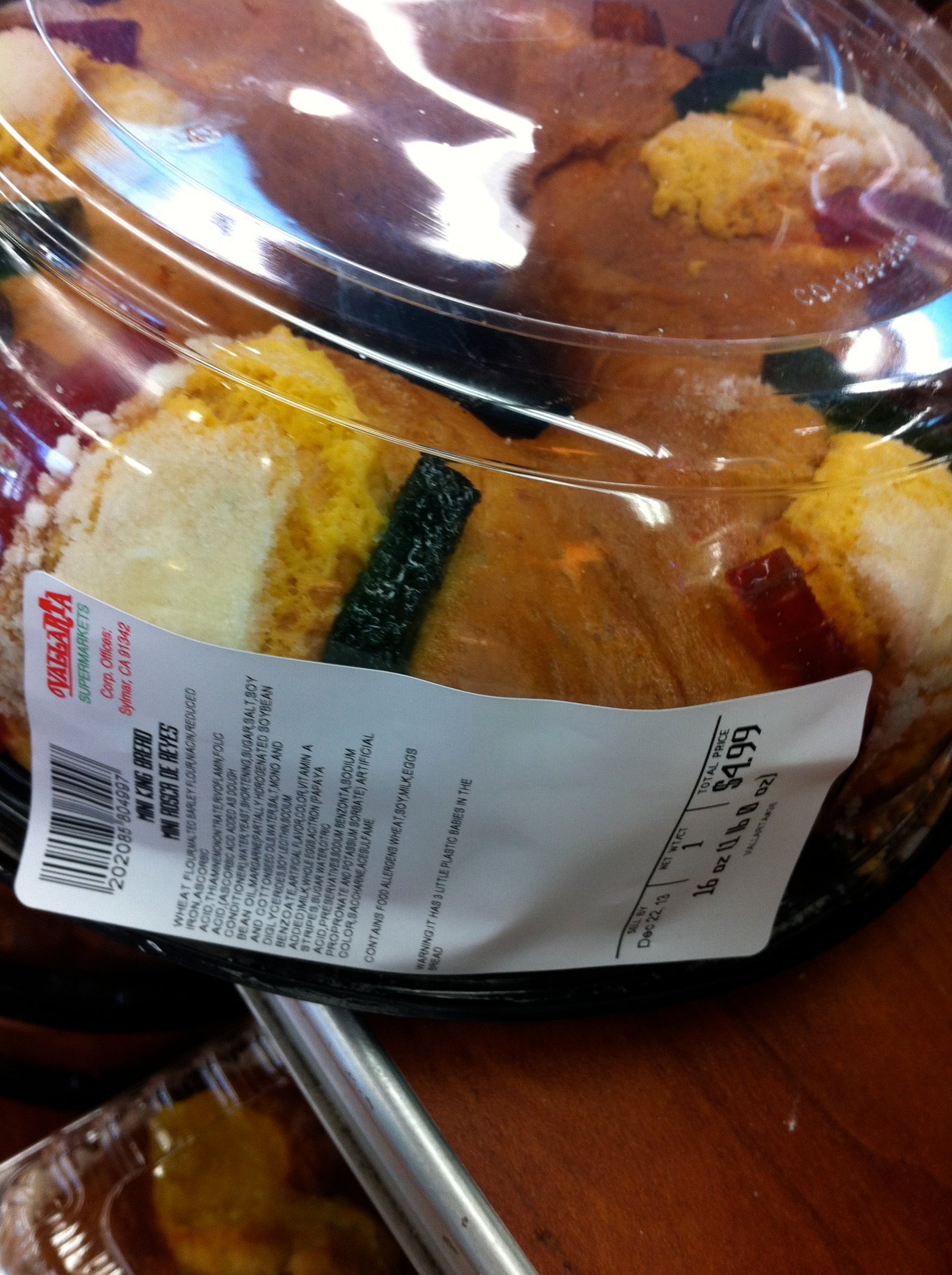

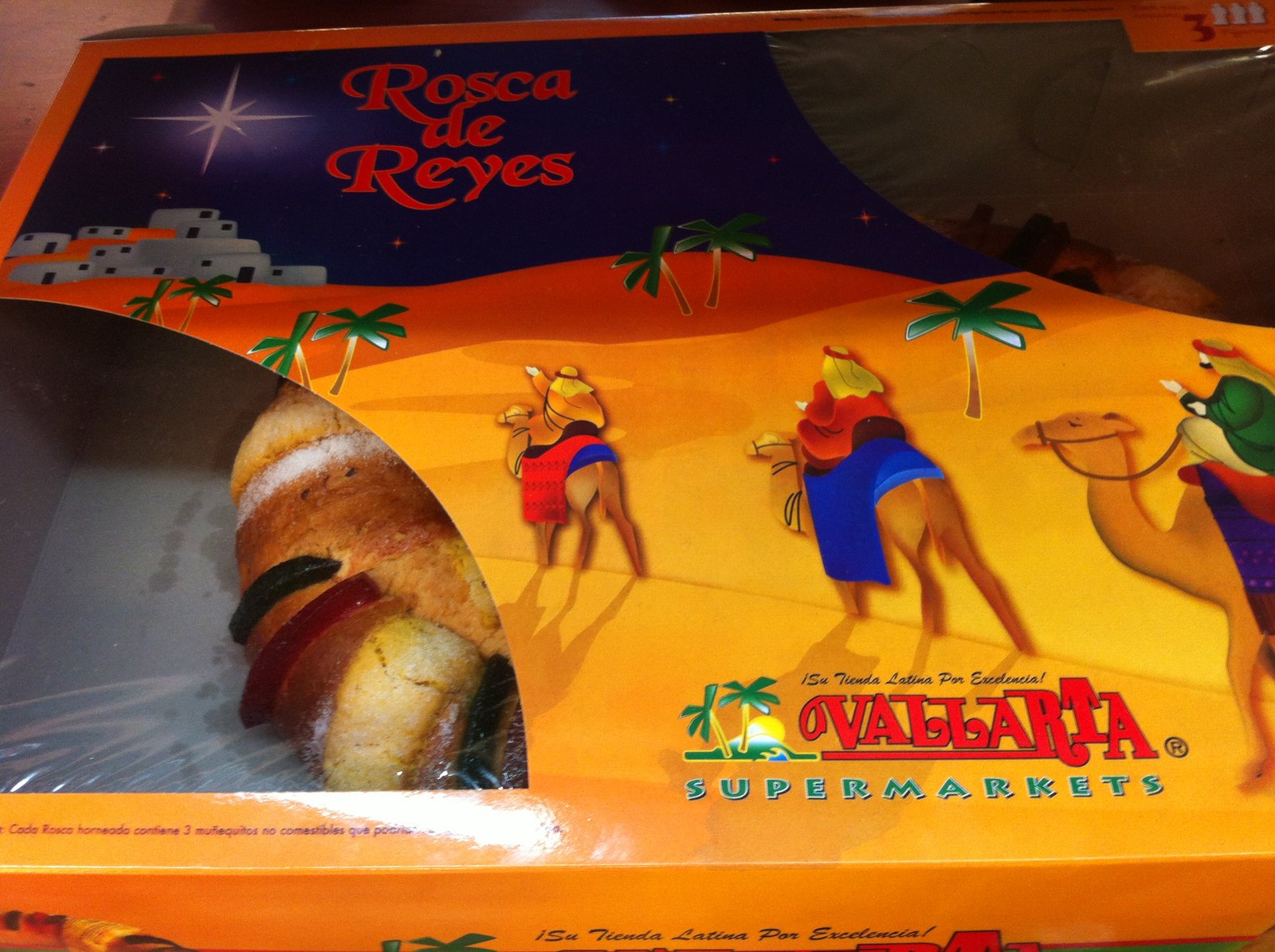
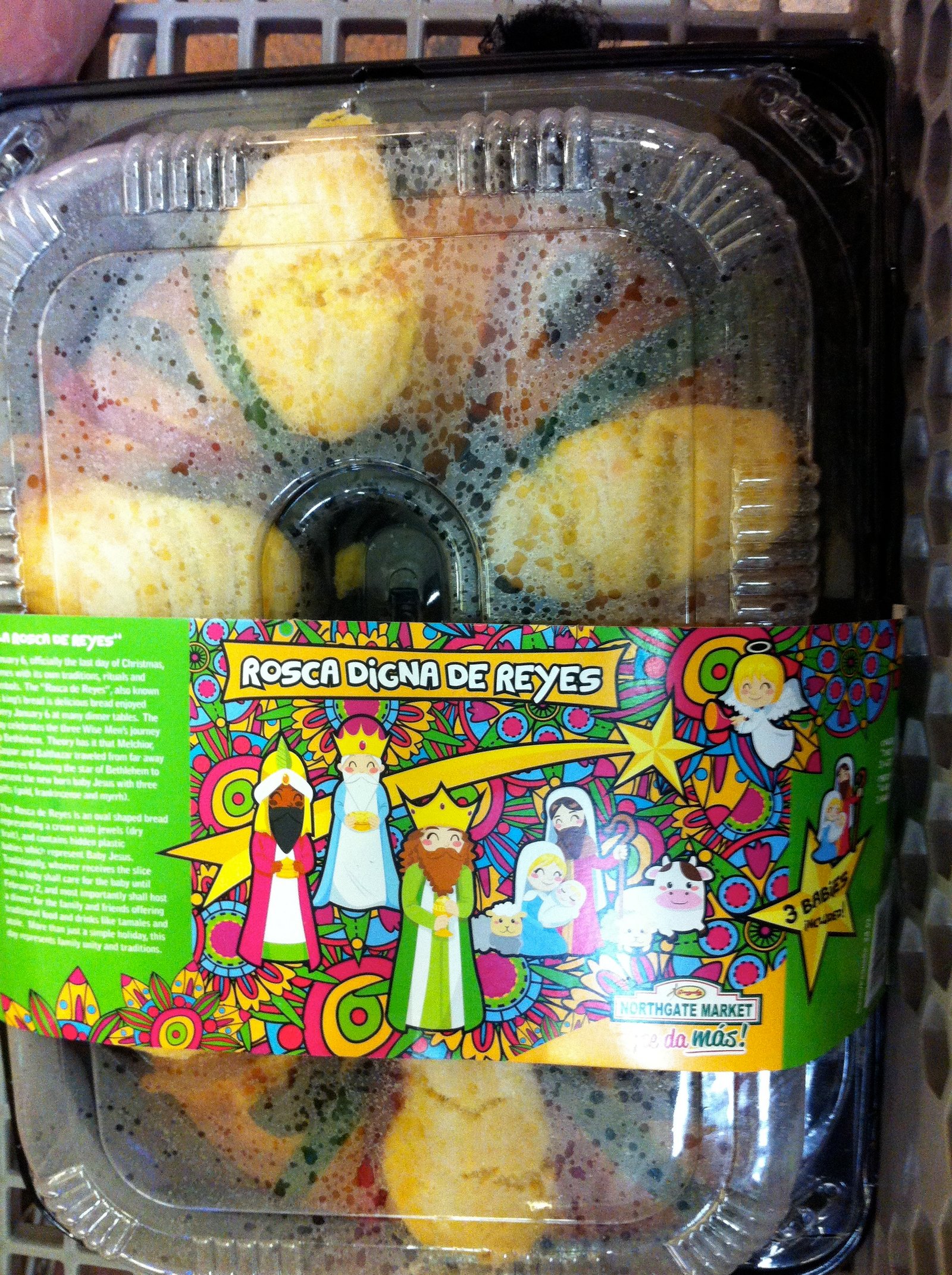
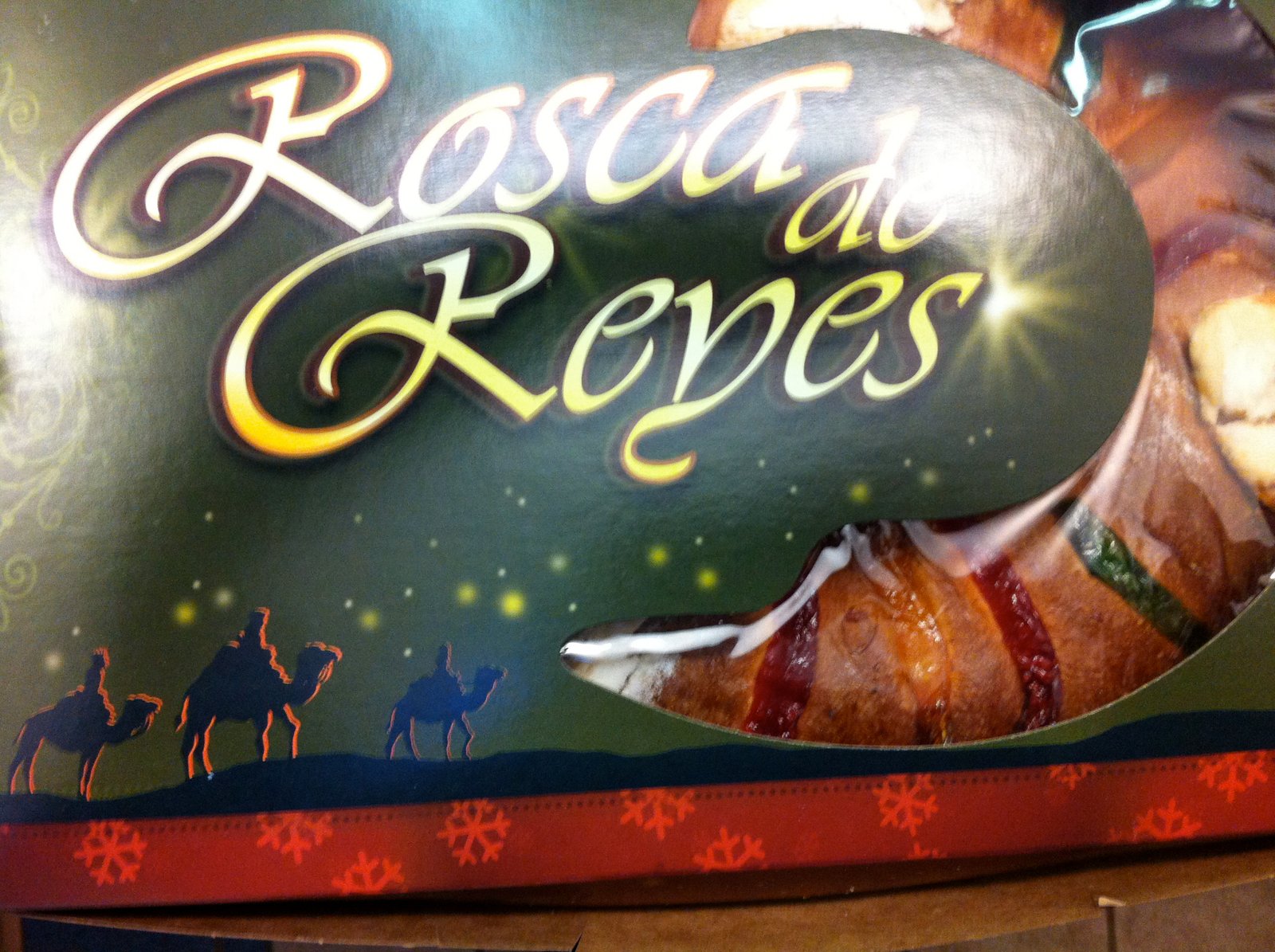
The Roscas come in various sizes and prices.
The in store bakeries are very busy, baking many, many roscas for rapid turnover in sales.
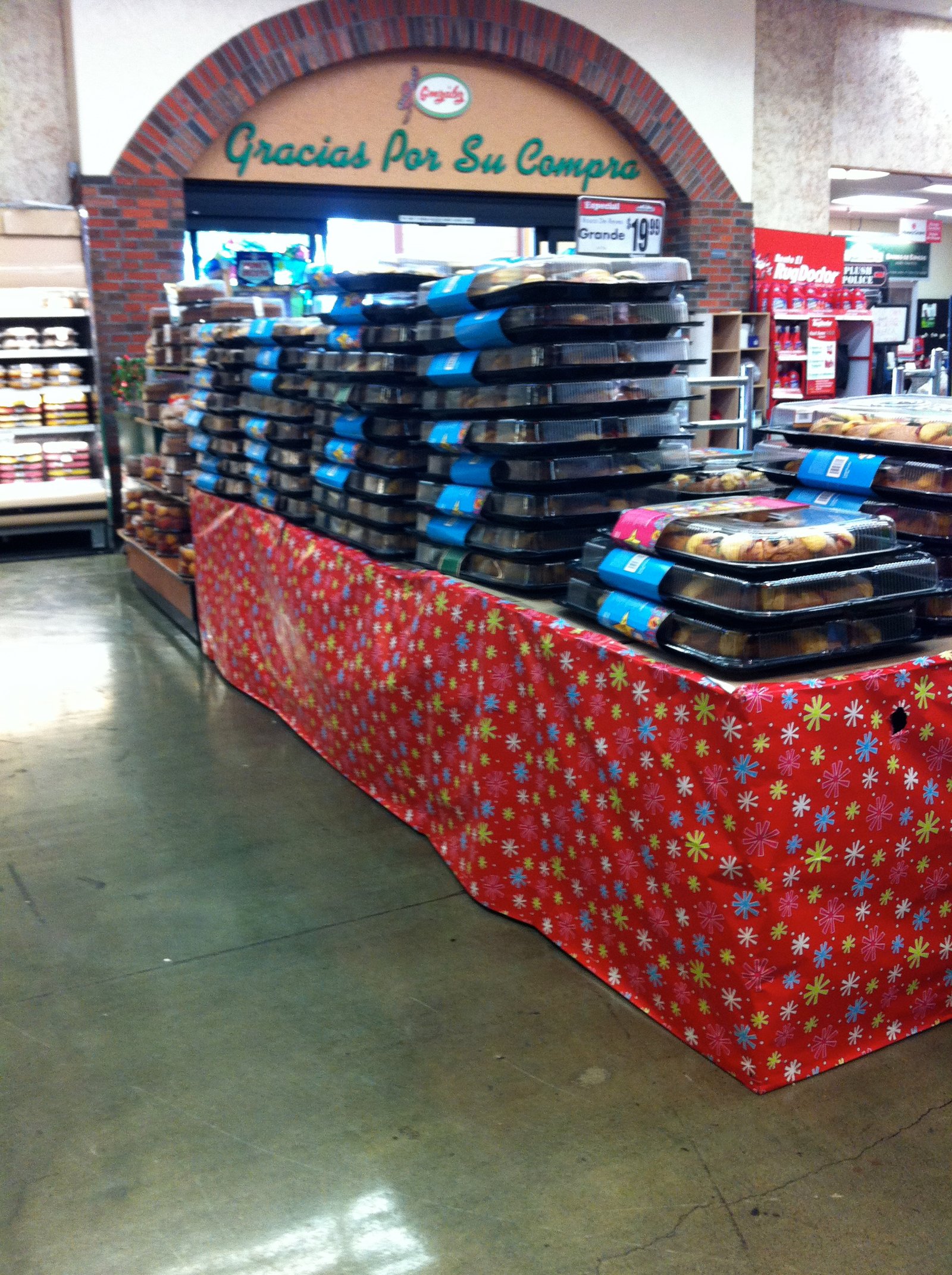
Northgate Gonzalez Market this year advertised various flavors of Roscas and had them for sale on tables throughout the market.
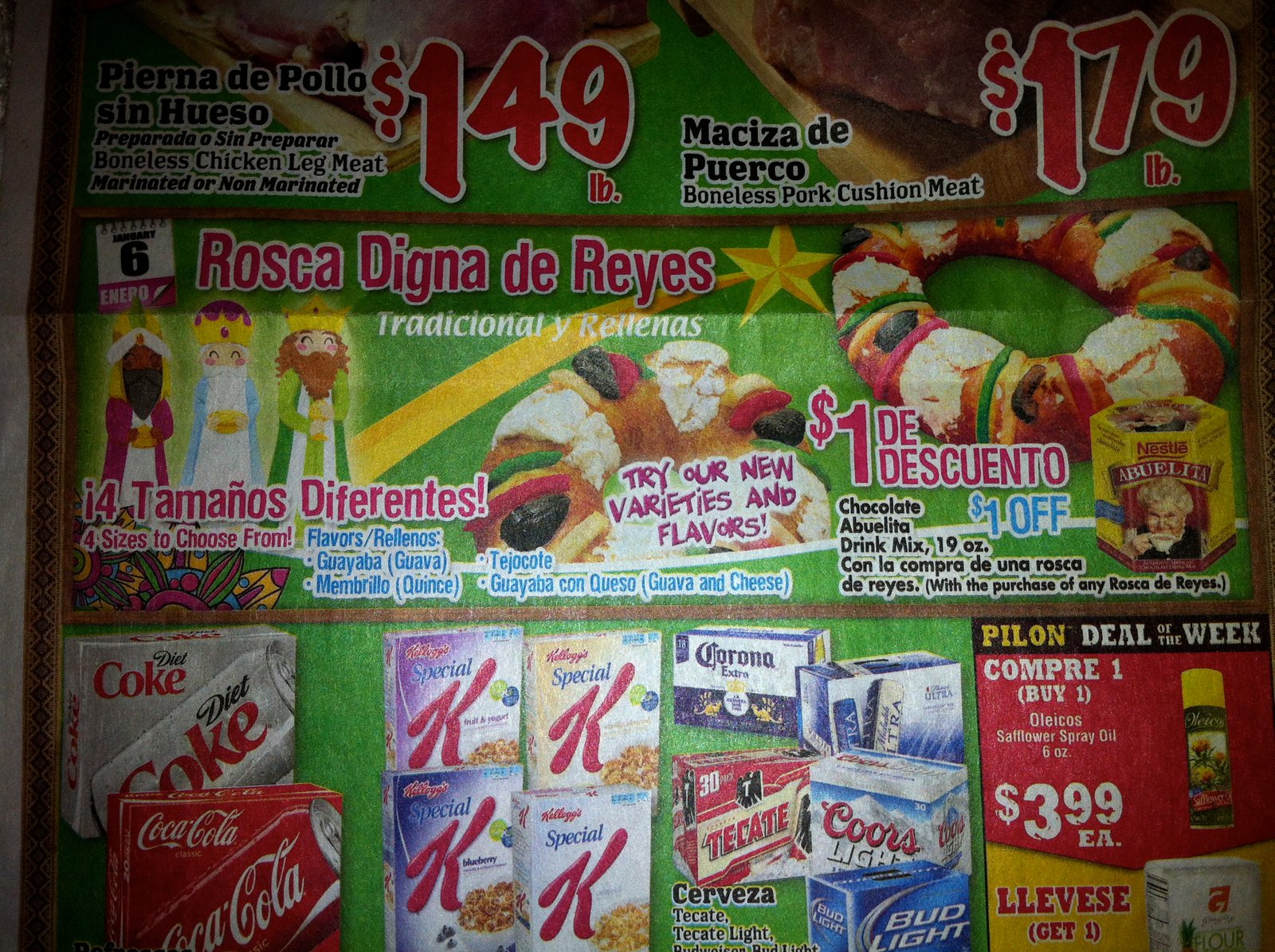
I ended up with the traditional flavors.
 The Northgate Gonzalez was a heavier bread topped with a variety of dried and candied fruit. Dates!
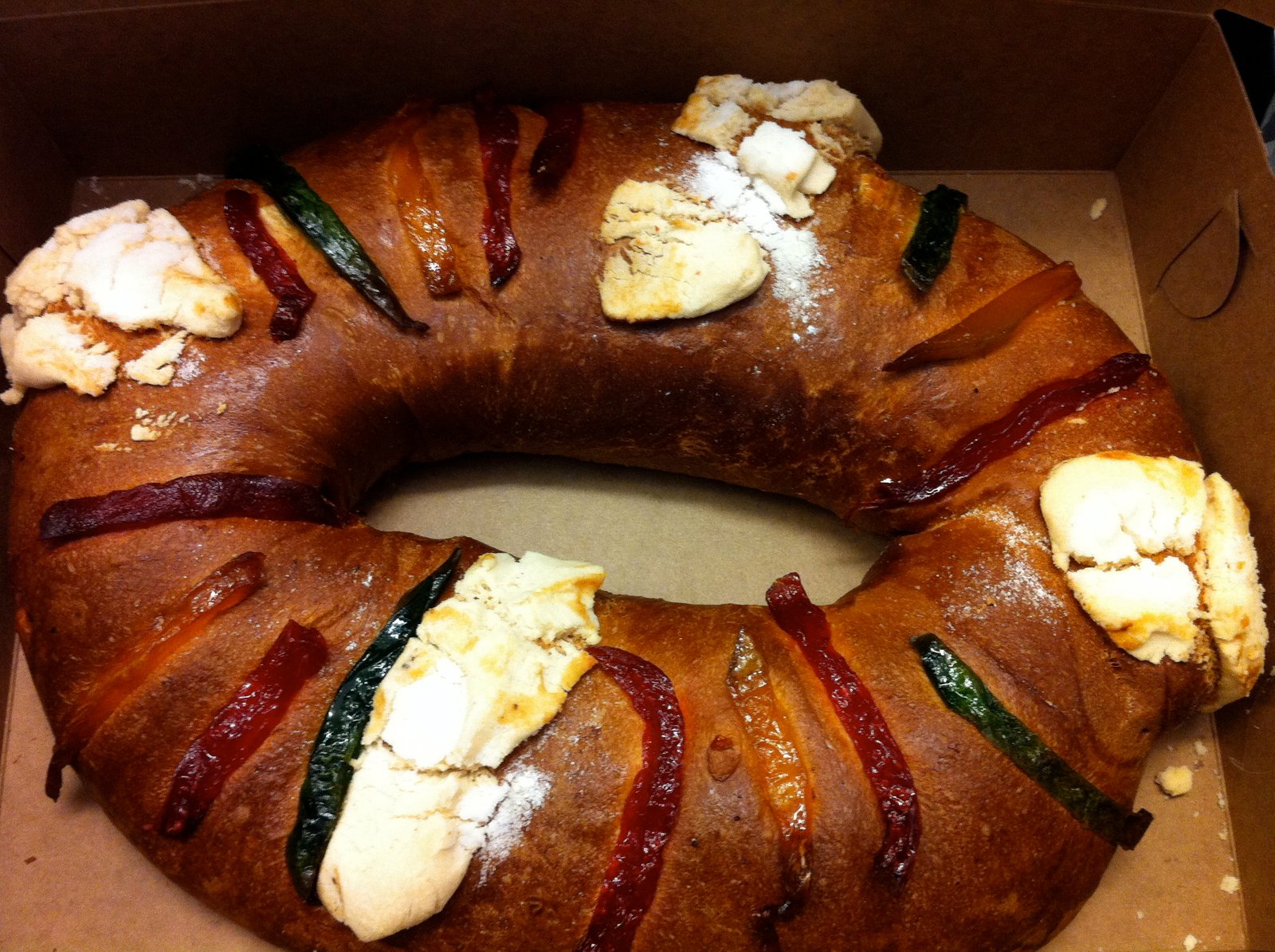 The morning of the 6th, I walked into Kaelin's Mi Pueblo (my favorite East County Mexican Market for both groceries and a quick meal) and the Roscas were hot from the oven.
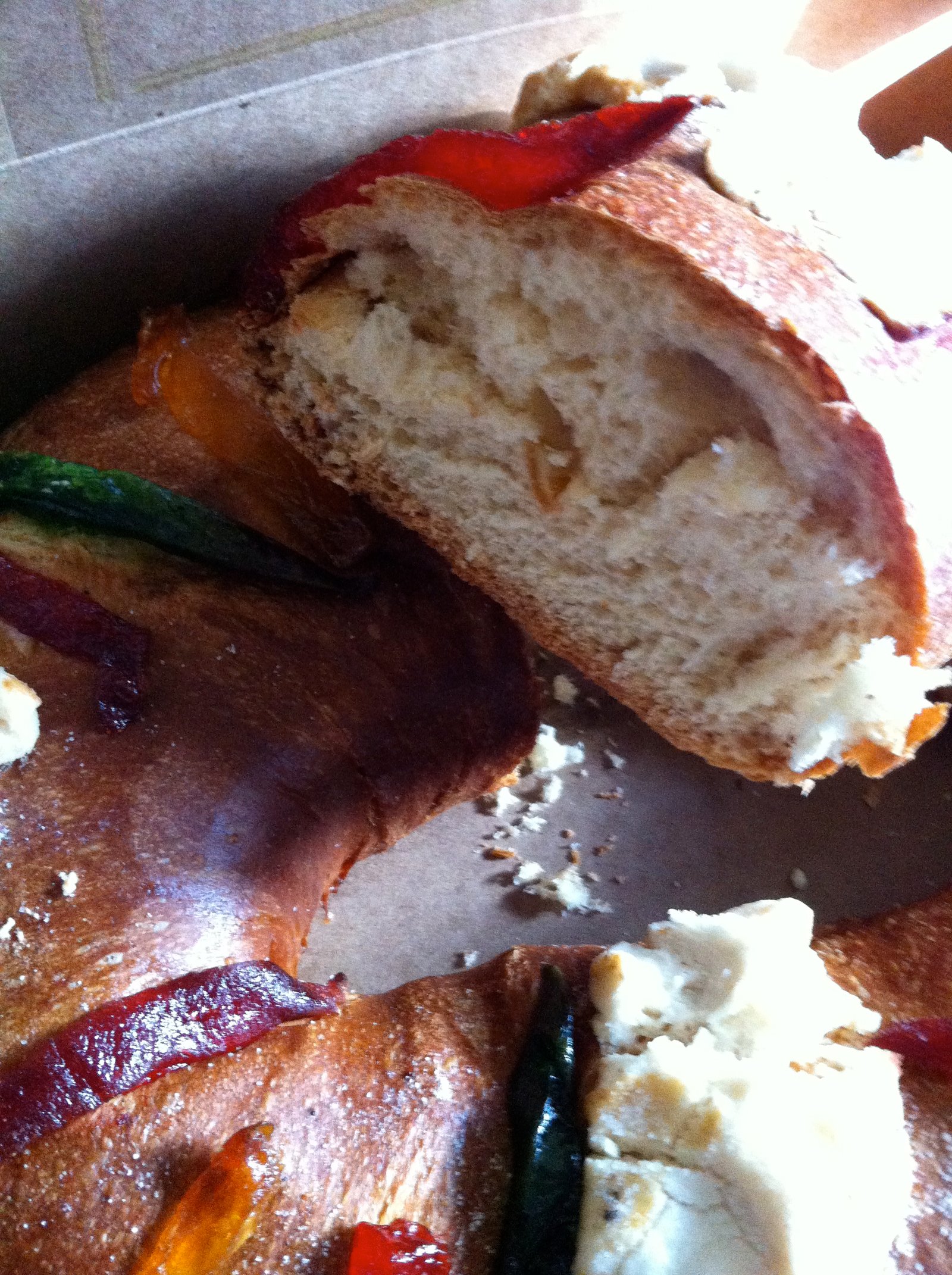 You can see it's a light, fluffy eggy bread with some bits of citrus peel interspersed…but the surprise interspersion:
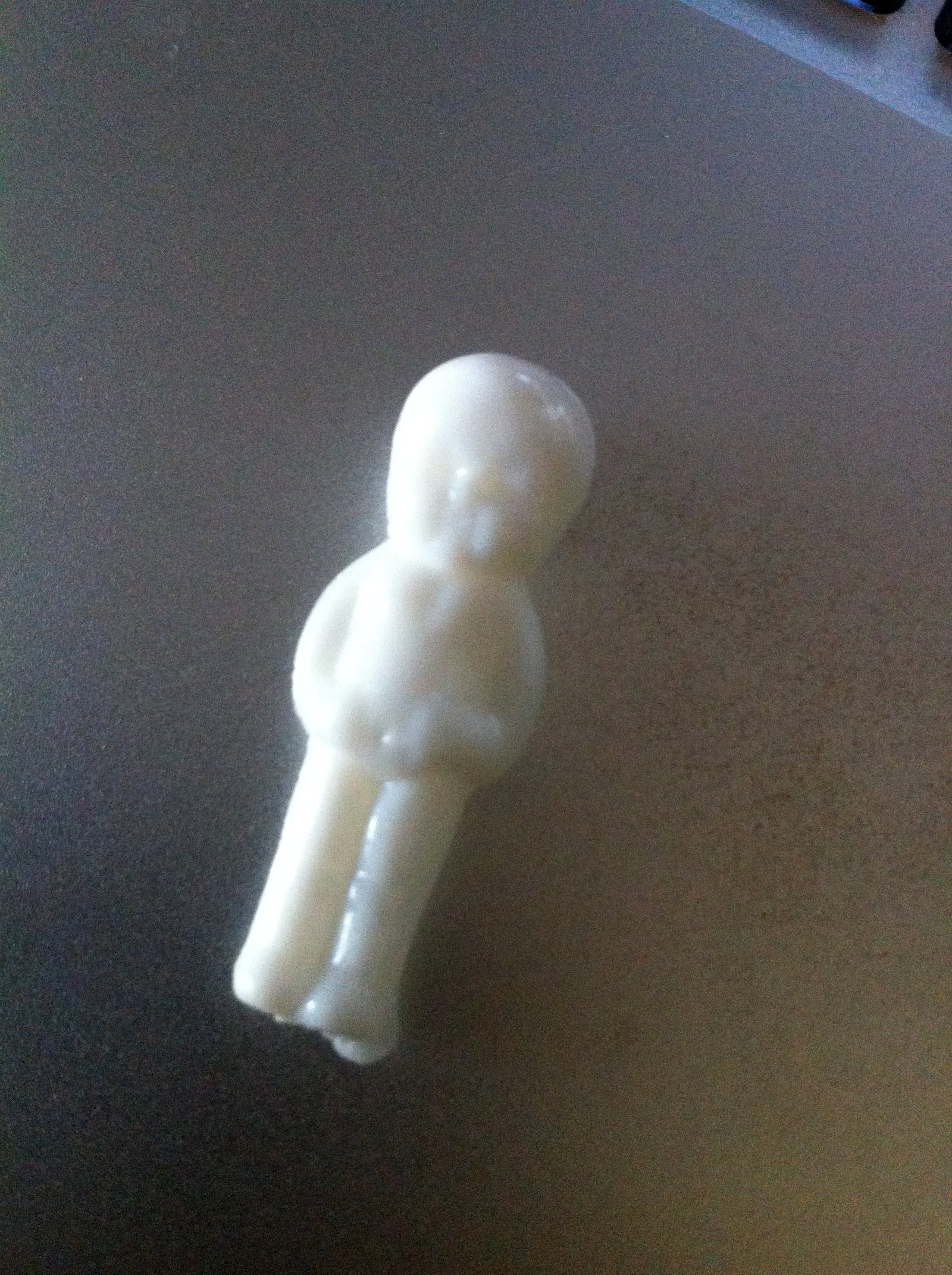
A small plastic baby Jesus is baked in the bread. There are actually three of these trinkets in the small breads and more within the larger breads. The meaning of the hidden baby is of the Holy Family's flight from King Herod's plan to kill all male babies who could possibly be the Messiah. Tradition is that each person cuts a slice of the bread themself, symbolizing the danger the baby is encountering. The people who get the figurine in their slice are in charge of throwing a party on February 2 (Candelamas Day) and provide tamales and atole (a hot corn-based beverage) to all the guests.
What an excellent roundup Cathy! I liked seeing the different calendars and the roscas from the various Mexican supermarkets. Interesting that Vallarta’s calendar would have the Christ the Redeemer statue. The baby in the post looks different than the one I had last year and this year.
That’s a great calendar collection!
I love the calenders you collected. How do they bake those baby Jesus figurines without melting them in the bread (from the heat)? I love your traditions – you must look fwd to them every year.
I hadn’t realized the varying toppings from each place until I looked at the photos, cc…all have royal colors, but each is unique. Vallarta calendars had several different designs of places around the world (I only got one Christ the Redeemer and my brother has it in his cubicle at work)(I have Golden Gate Al Atardecer). Rosca babies must come from several bakery suppliers.
Thanks, Soo. It’s something I do.
Thank you, Faye. I know that the plastic babies in cake are pushed in after it is baked (because they would sink in batter and hit the metal cake pan), but these are definitely baked in…perhaps because the interior of bread doesn’t get to such a high heat level (like meat has to) combined with the plastic being one solid hard piece. I’d like to think that we all have customs that are comforting and part of our culture, even if it’s changing up our own or our home decor or eating special foods at different times of the year.
Very cool.
Thanks.