Usually, Kirk is at the helm of mmm-yoso; some days, Cathy steers the ship; today, ed (from Yuma) takes his turn at the tiller.
I don't make it to a city with excellent sushi as often as I would like. Last month I celebrated being in San Diego by having back-to-back sushi experiences at two of my favorite sushiyas.
Kaito
Since my first day in town was a Tuesday, and everyone knows that Tuesday is the best day to visit Kaito (fish delivery day with fewer customers), I rolled into the appropriate stripmall complex and drove around for a while before I finally located Kaito: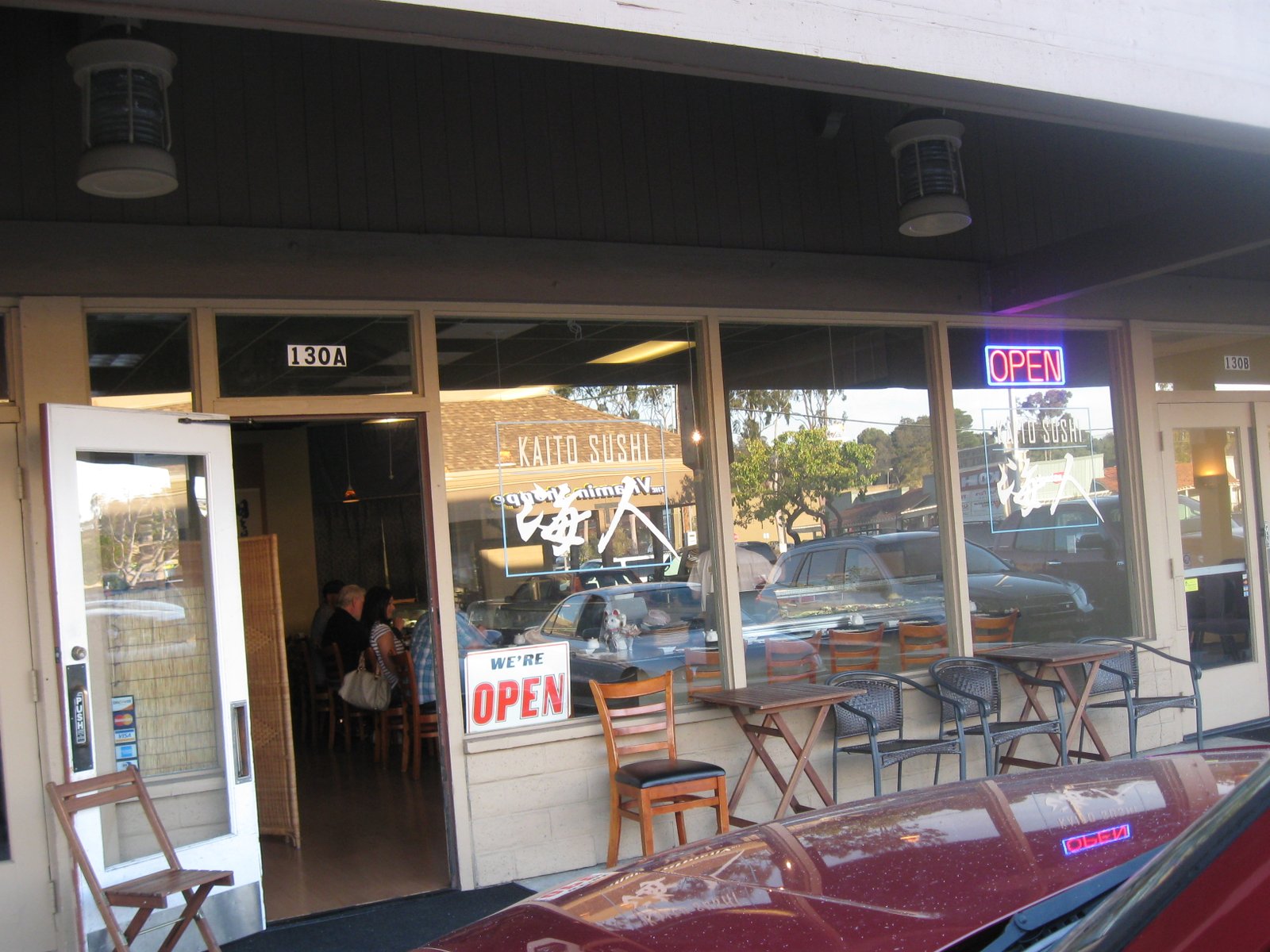
I sat at the far end of the bar, and Morito-san seemed to have some vague memory of my previous visits. My meal started off with a fancy sunomono, featuring thinly sliced cucumber, krab threads, and some cooked whitefish – all very tasty and refreshing: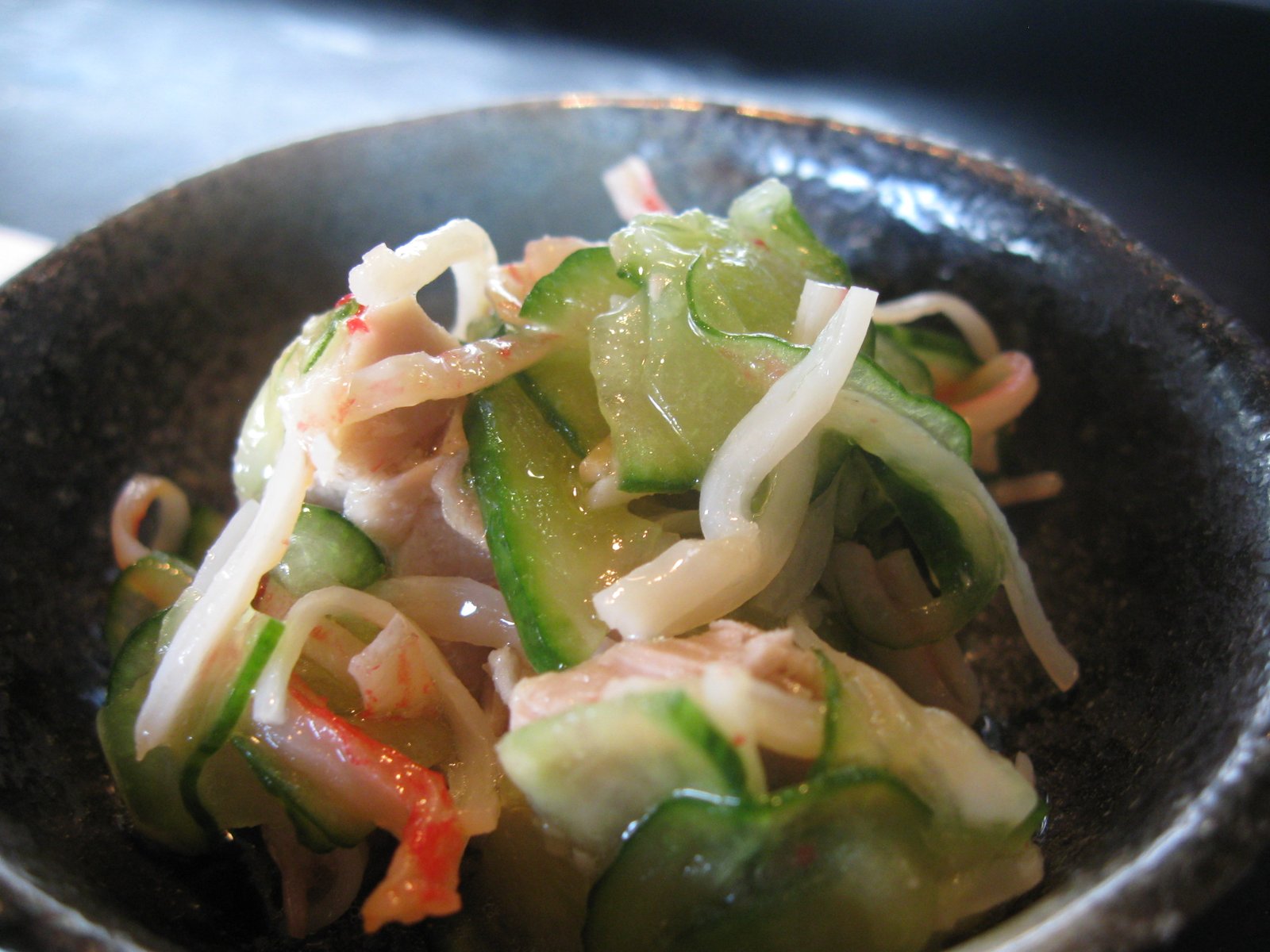
After I let Morito-san know of my desire for things new, interesting, unusual, and good, he apologized because he said that he didn't have many items that were unusual. I got over my disappointment as soon as gari and wasabi showed up on a tray: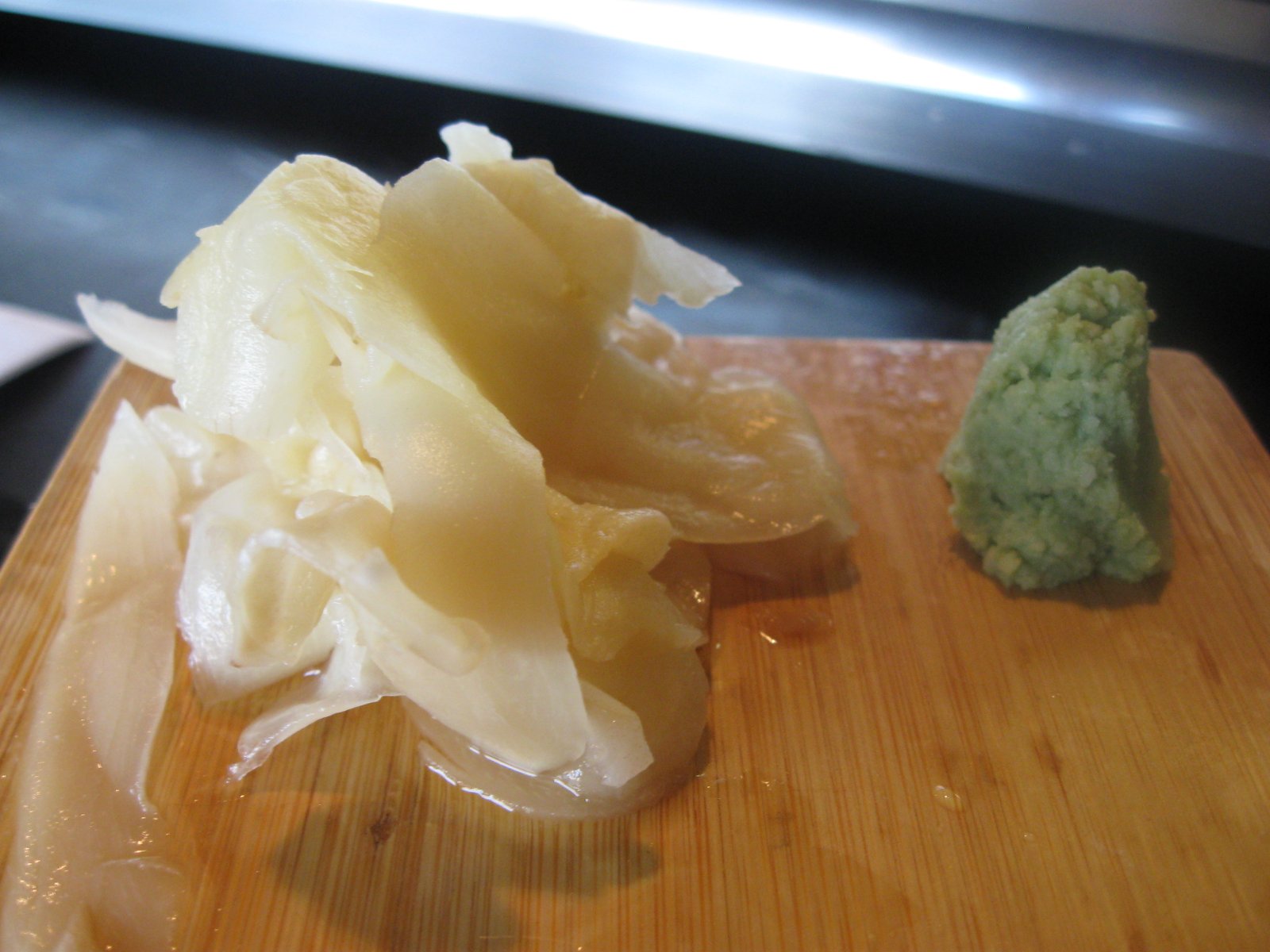
The pickled ginger is pretty good, but the wasabi is truly outstanding. This is not your standard horseradish paste with food coloring. If you look closely, you can see the little bits of actual real wasabi root. That alone is almost worth the trip to Encinitas.
The meal began with warm, freshly cooked East Coast razor clams, very simply prepared: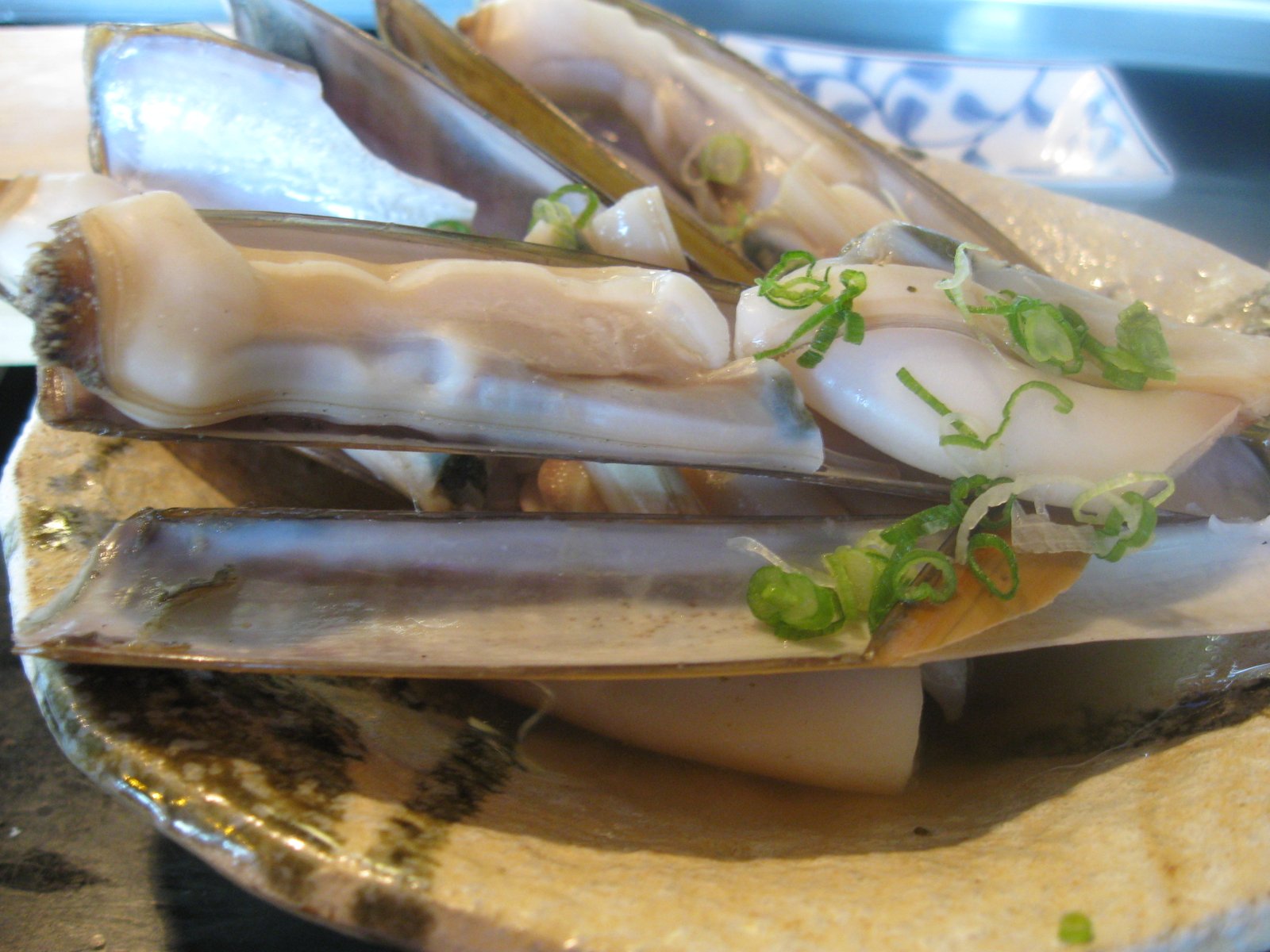
I'm of two minds about these clams. I had never had them before in a sushi bar, so I was pleased by something unusual. On the other hand, though they were redolent of wonderful clammy flavor, there was not a whole lot else going on. Simple and focused.
Needle fish followed. This was something else new, and I admired the presentation, the long thin fillets wrapped back upon themselves with a sprinkle of caviar in the concavity thus created: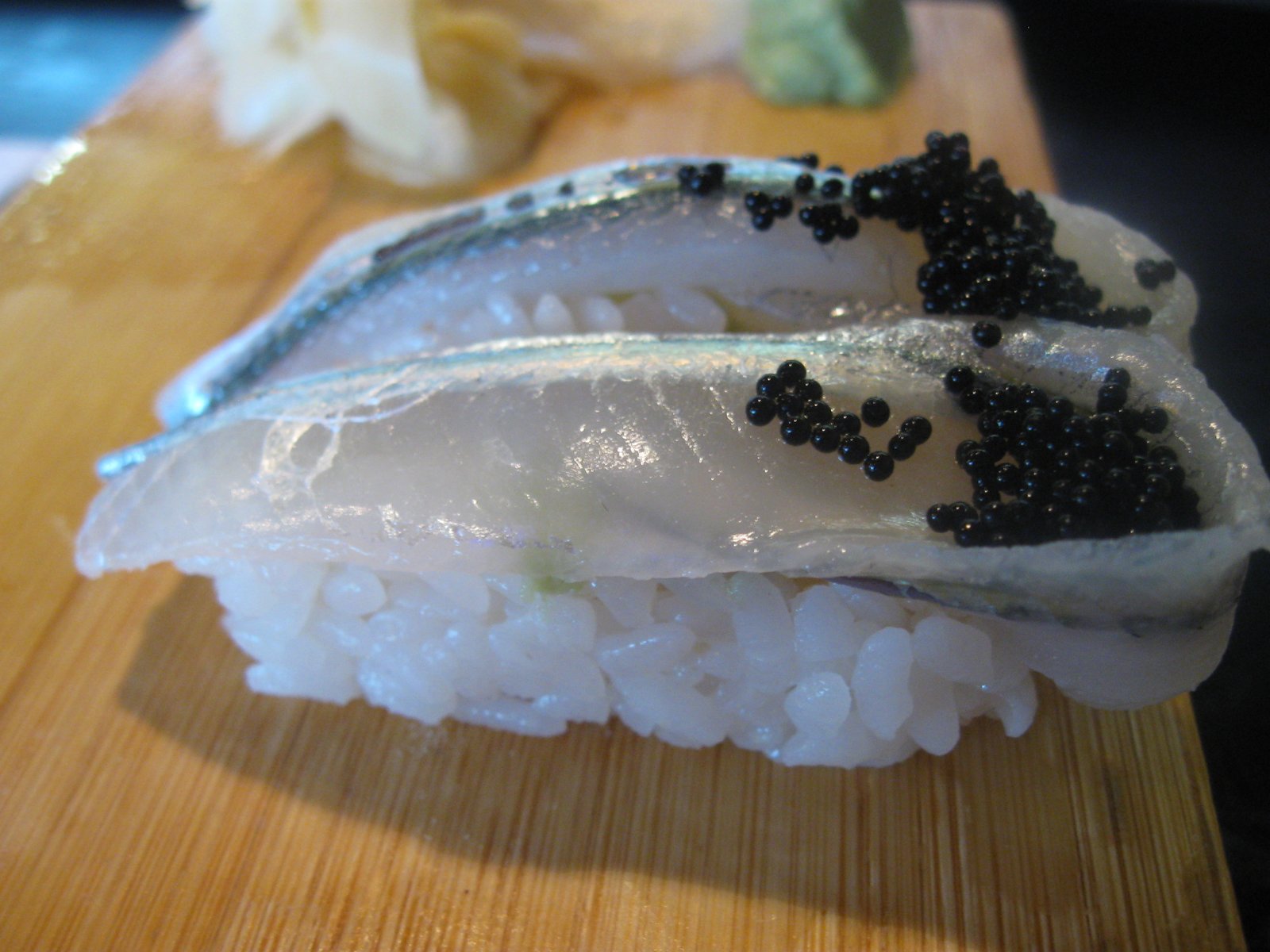
My favorite item of the night then descended upon my plate, the hirame: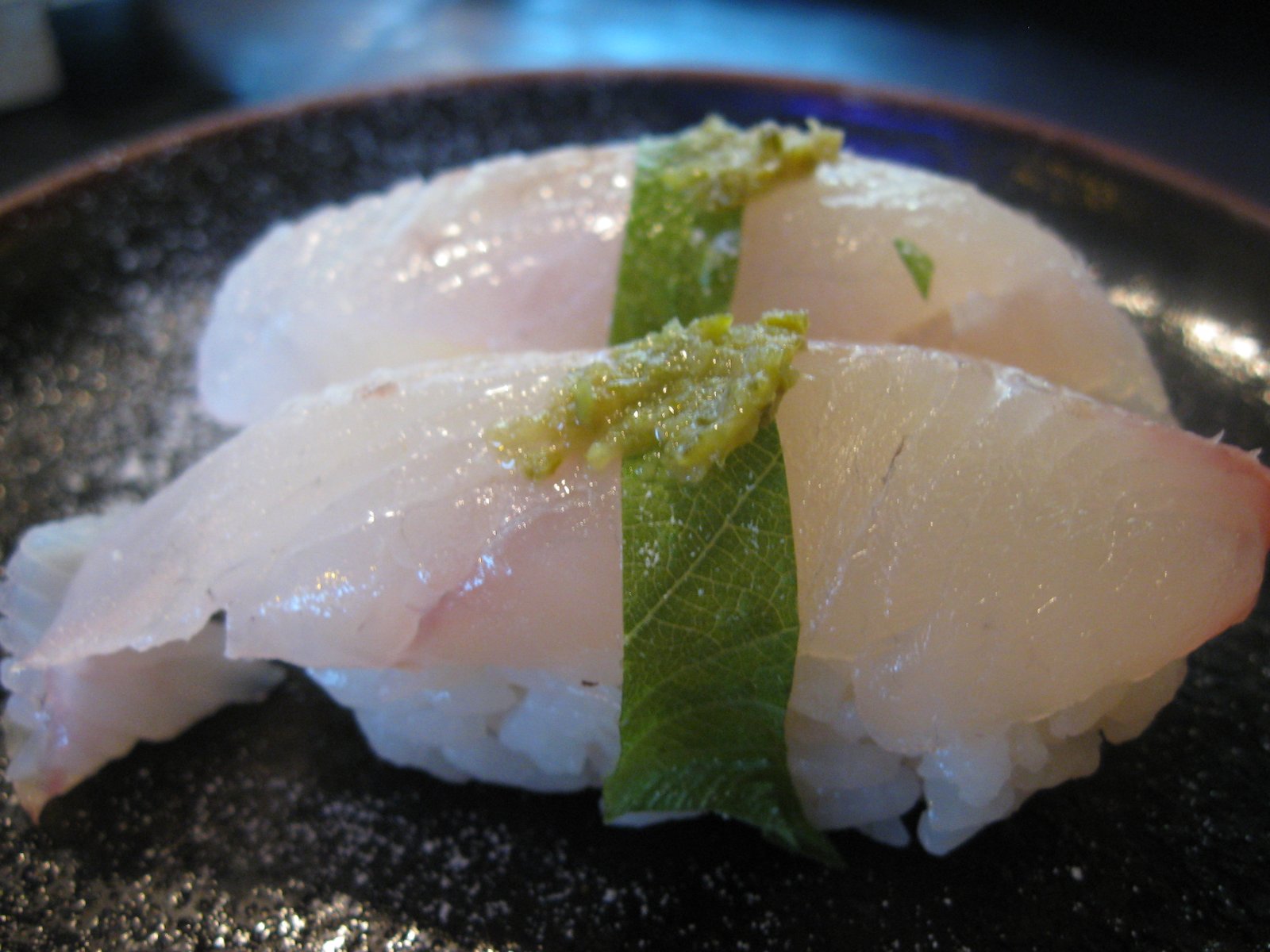
This item showed off the chef’s skill wonderfully. Both the sushi rice and the flatfish were impeccable. The green strip-wrappers were slices of shiso leaf. The lime colored pulpwas some sort of spicy green chile relish yuzu kosho (see comments) – spicy and sour. A light dusting of finely grated salt finished the pieces. Layers and layers of flavor here. A lot of taste notes playing some kind of complex culinary jazz.
The next item was also an unusual presentation. Two pieces of maguro (one of which mysteriously disappeared before I could take a picture of it) were marinated in soy sauce, topped with a crunchy thin slice of mountain yam and a few sprouts, all held in place by a strip of nori: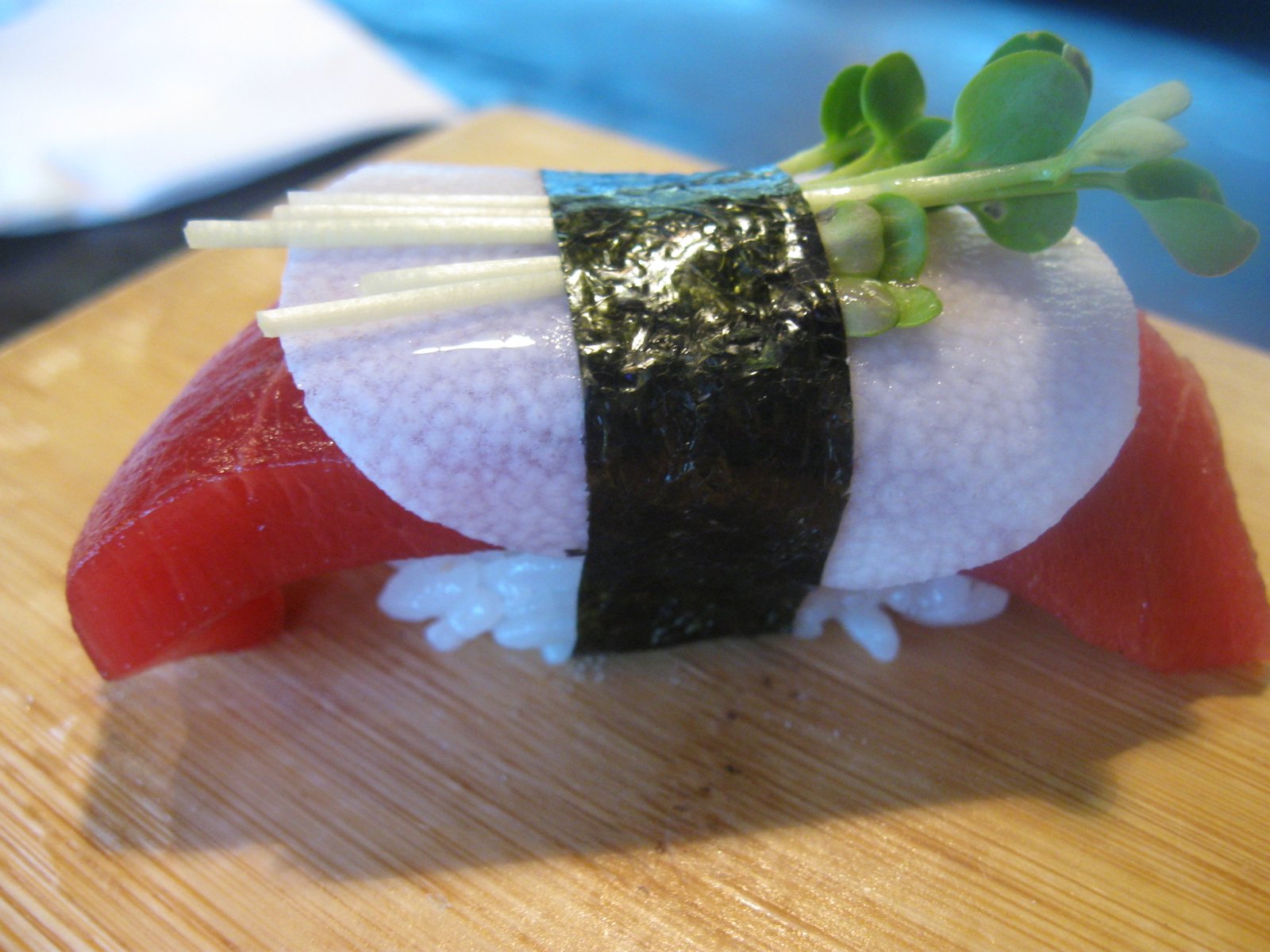
The marinated tuna is a regular item at Kaito, but I had never had it combined with a slice of mountain yam – in fact, I don't know that I'd ever had a slice of mountain yam before. Usually when I think of tuna and mountain yam, I picture the dark red chunks of fish covered with a thick white gooey slime, so this was a refreshing change.
Uni followed: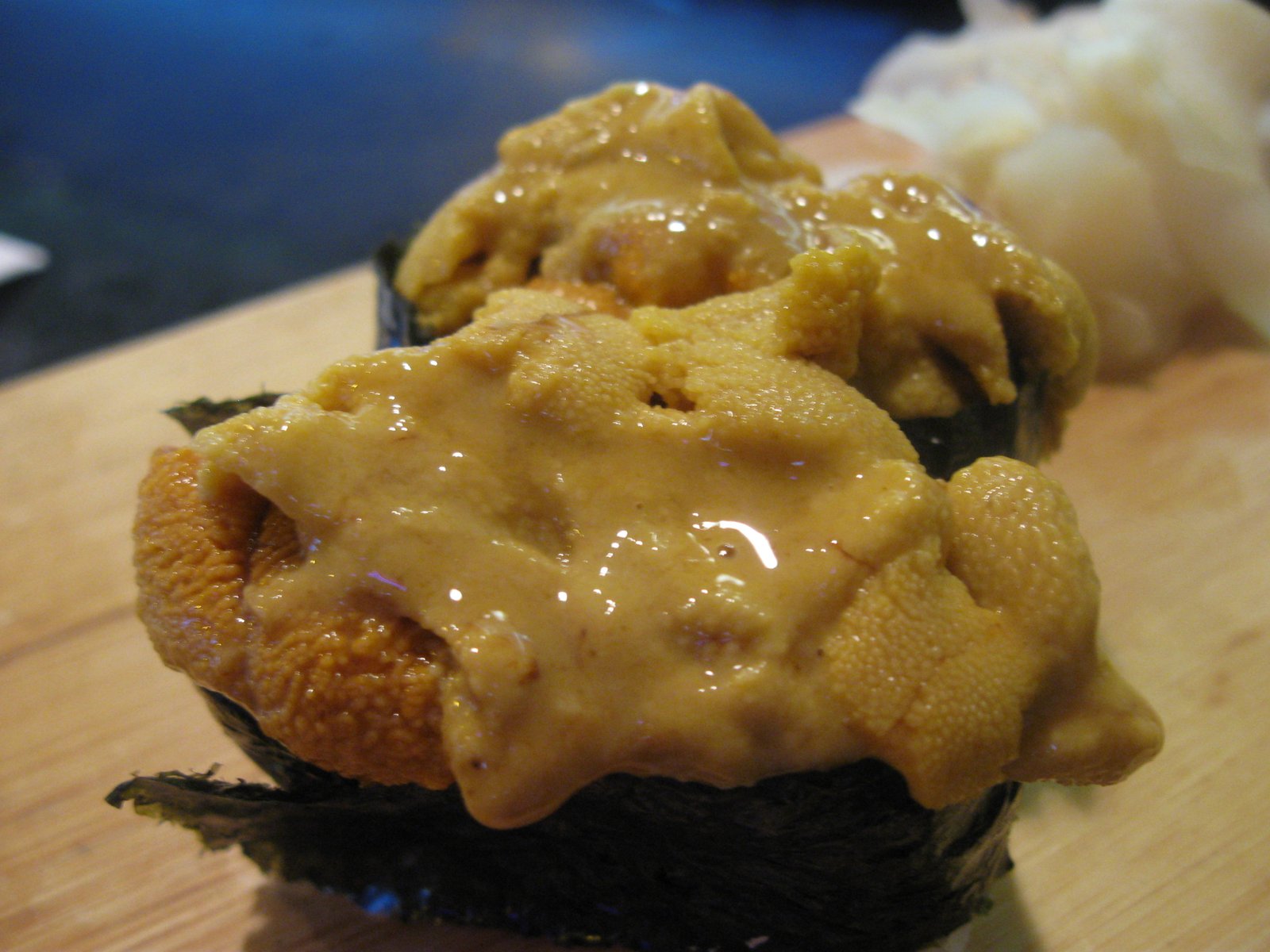
Those of us who eat sushi in Southern California are truly spoiled by the quality of the local sea urchin. This version was exceptionally moist, fresh, and custardy.
The chutoro was next: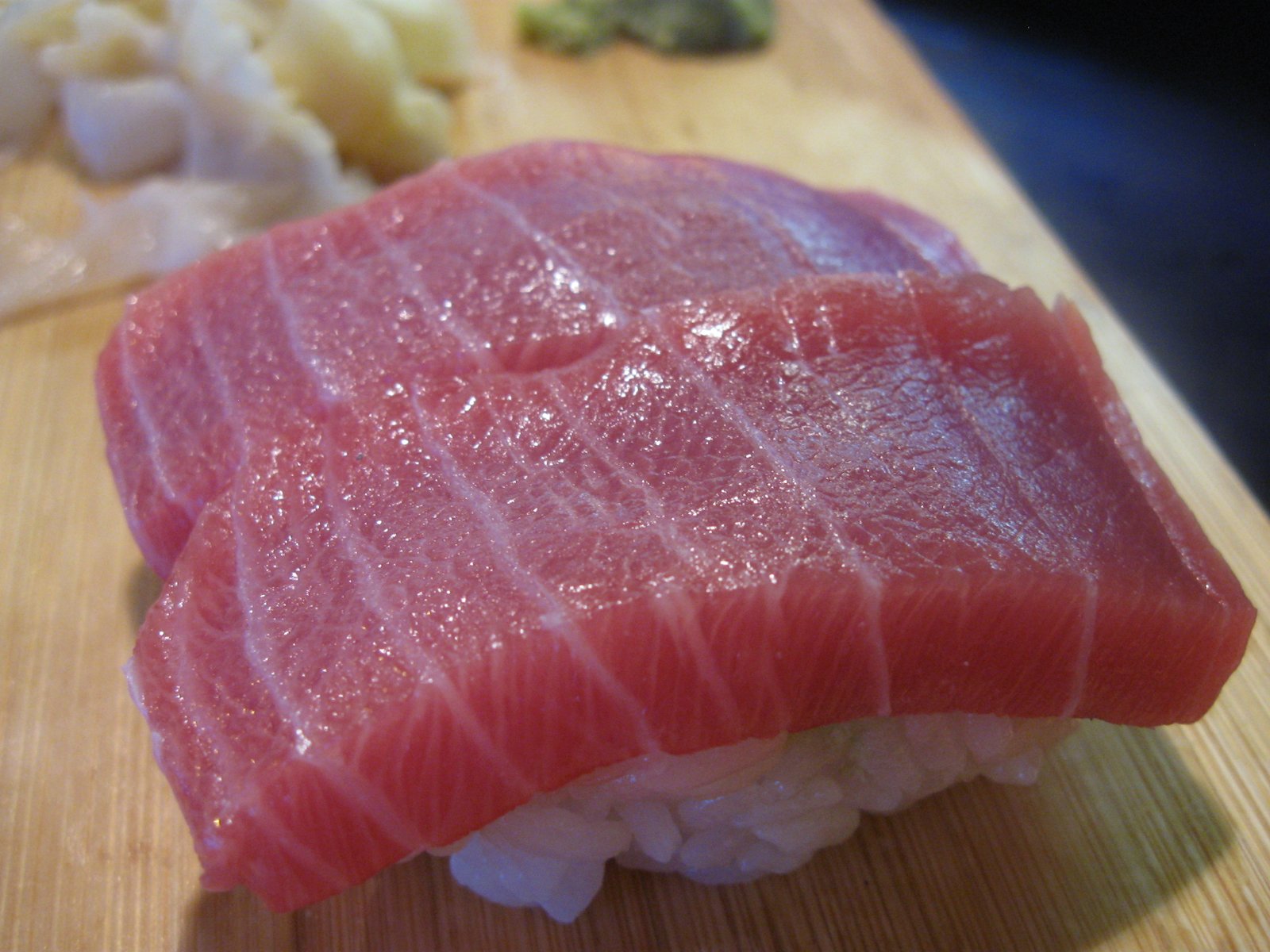
Words alone cannot express how doggone good this was. More than just rich – it was wonderfully flavorful as well. I also appreciated the firmness of its texture.
In contrast, I can remember very little of the kampachi: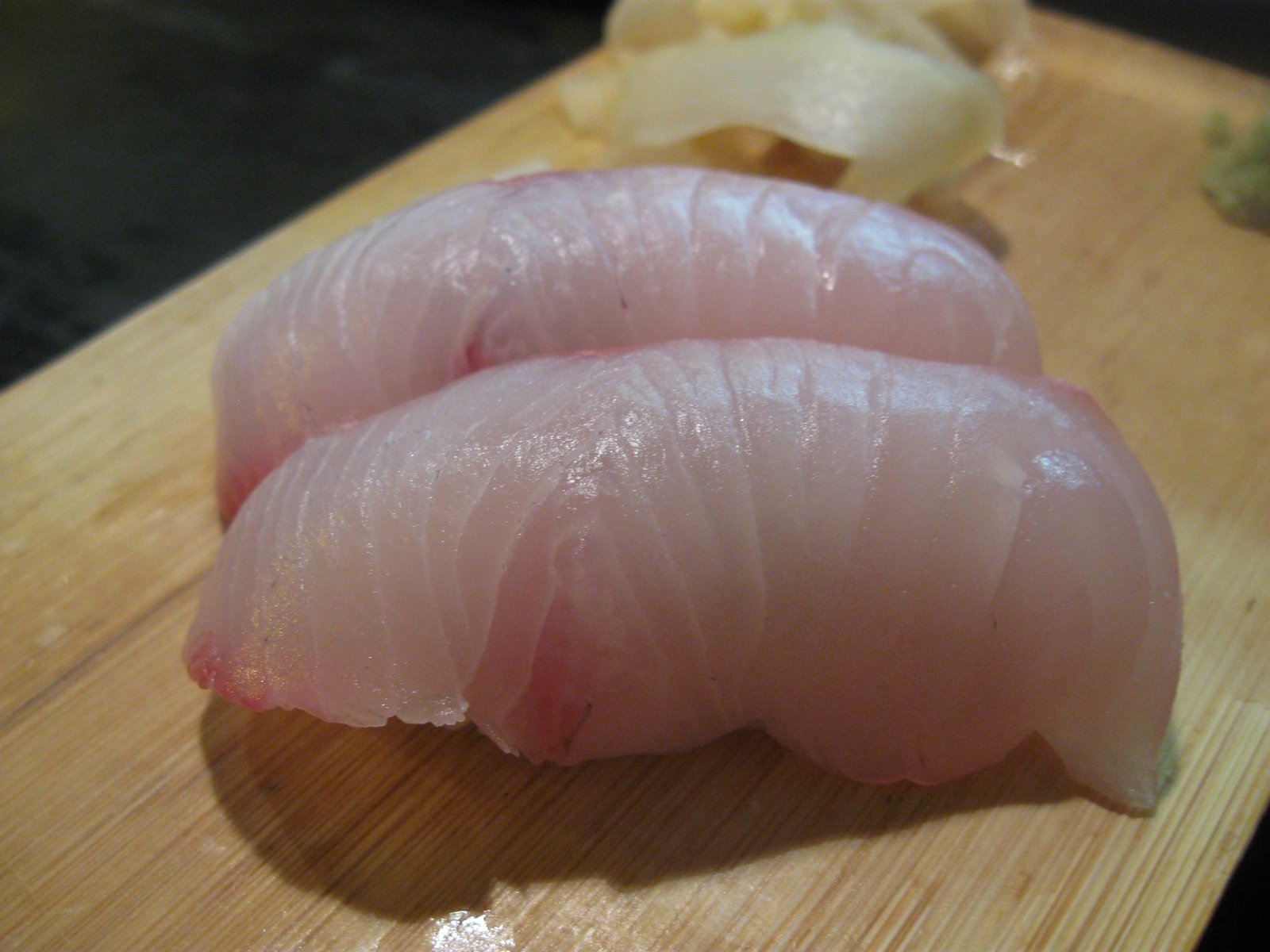
The meal closed with anago: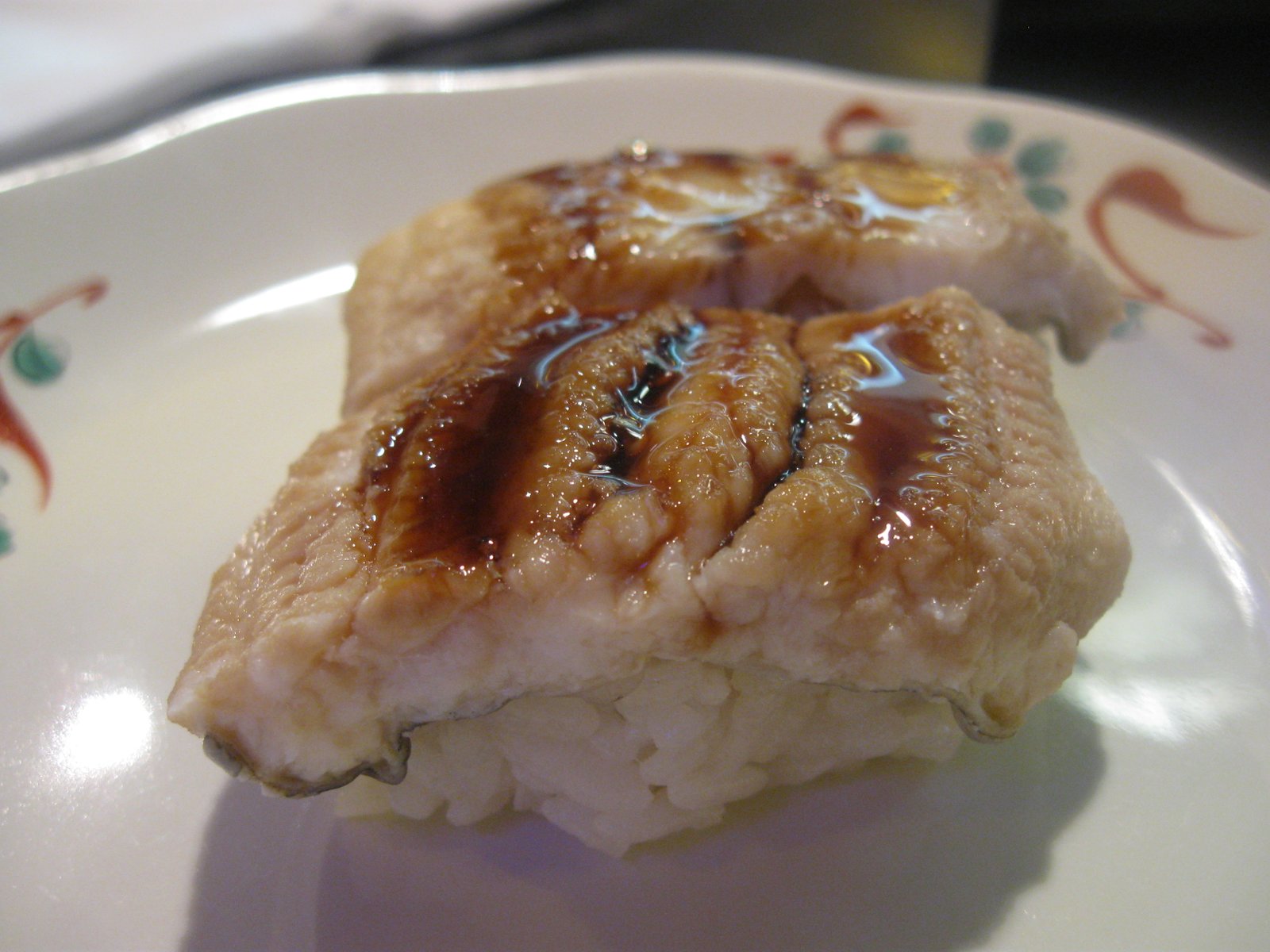
This was an excellent conclusion. Unlike the previous versions of anago that I have eaten at Kaito, this was served at a cool room temperature. Morito-san explained that it had been cooked that day, so he did not want to reheat it. I thought it was perfect – very moist and flavorful. The light brushing of sauce stayed in the background, letting the eel present the dominant flavor.
All of this generally wonderful sushi and a glass of moderately priced cold sake came to $77.22.
Shirahama
The next night I arrived at Shirahama thinking I’d be the only person in the small sushi bar not speaking Japanese. However, unlike what I had expected, English was the dominant language in the house that night. I sat down next to a very pleasant couple from Sinaloa, Mexico, who said that they visited Shirahama several times a year, as it was their favorite sushi bar anywhere. In addition to being friendly, they were working on a bottle of cold sake and soon offered me a glass of the wonderful stuff, which they kept refilling: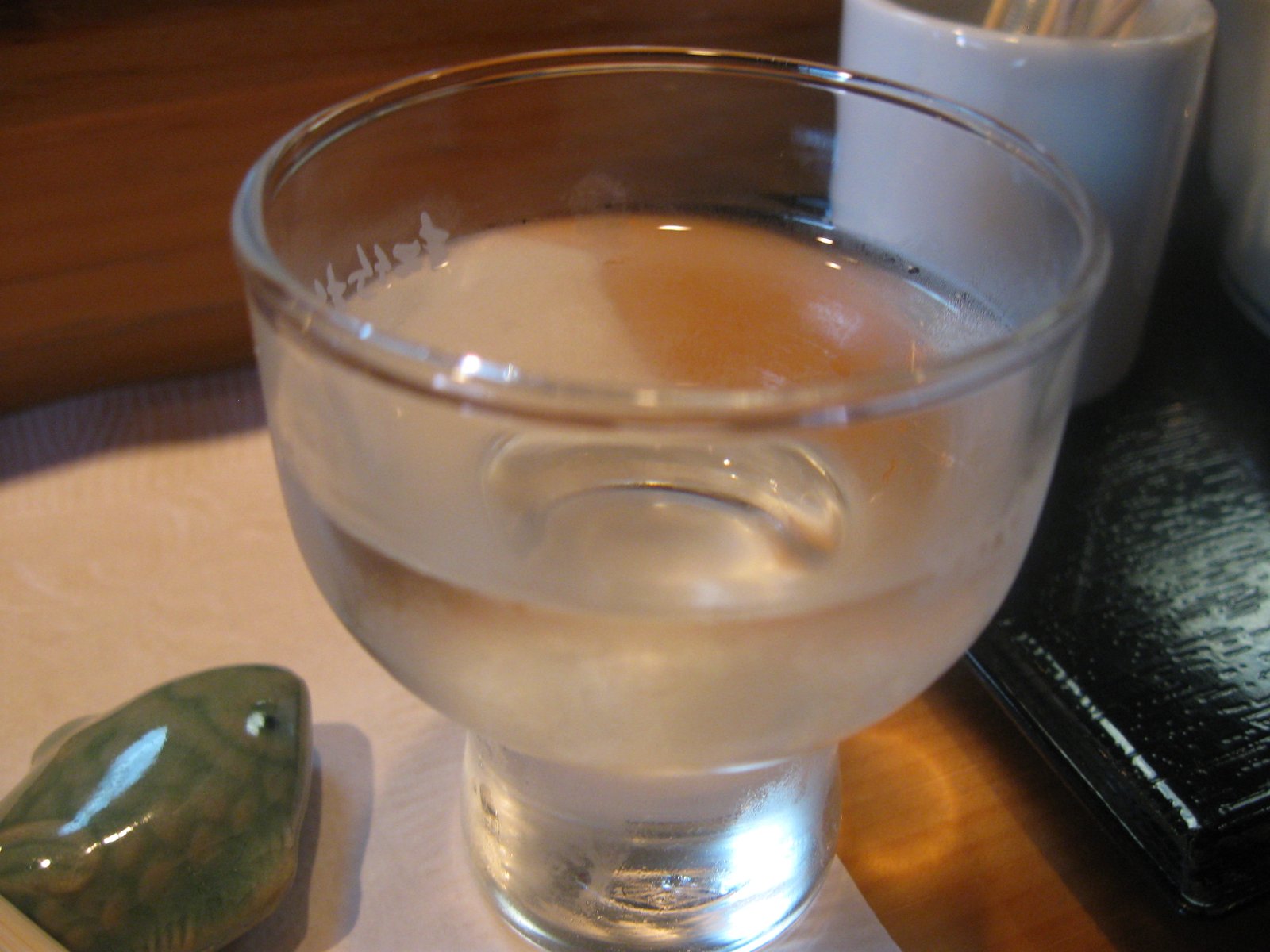
After I explained my desires to koji-san, he told me that he had such a wide selection this evening that he would be serving me individual items as opposed to the usual two pieces of each fish. Sounded great to me.
The meal began with (as the chef called them) fluke and bluefin: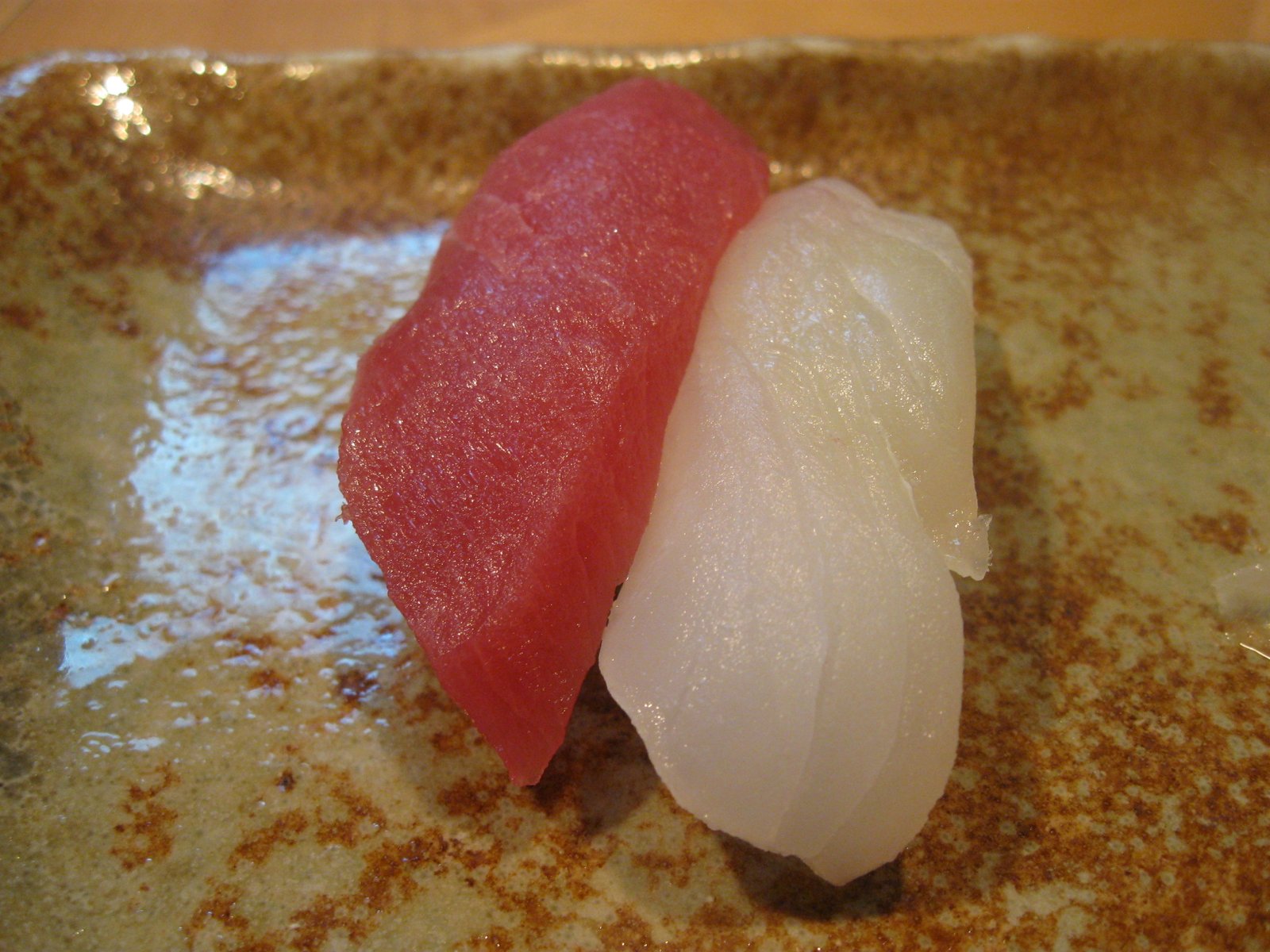
The tuna was very good, the sushi rice excellent, but that hirame was outstanding – flavorful fish with a blast of wasabi.
Then came the kind of like scallop but not really scallop shell fish and a piece of sea bream: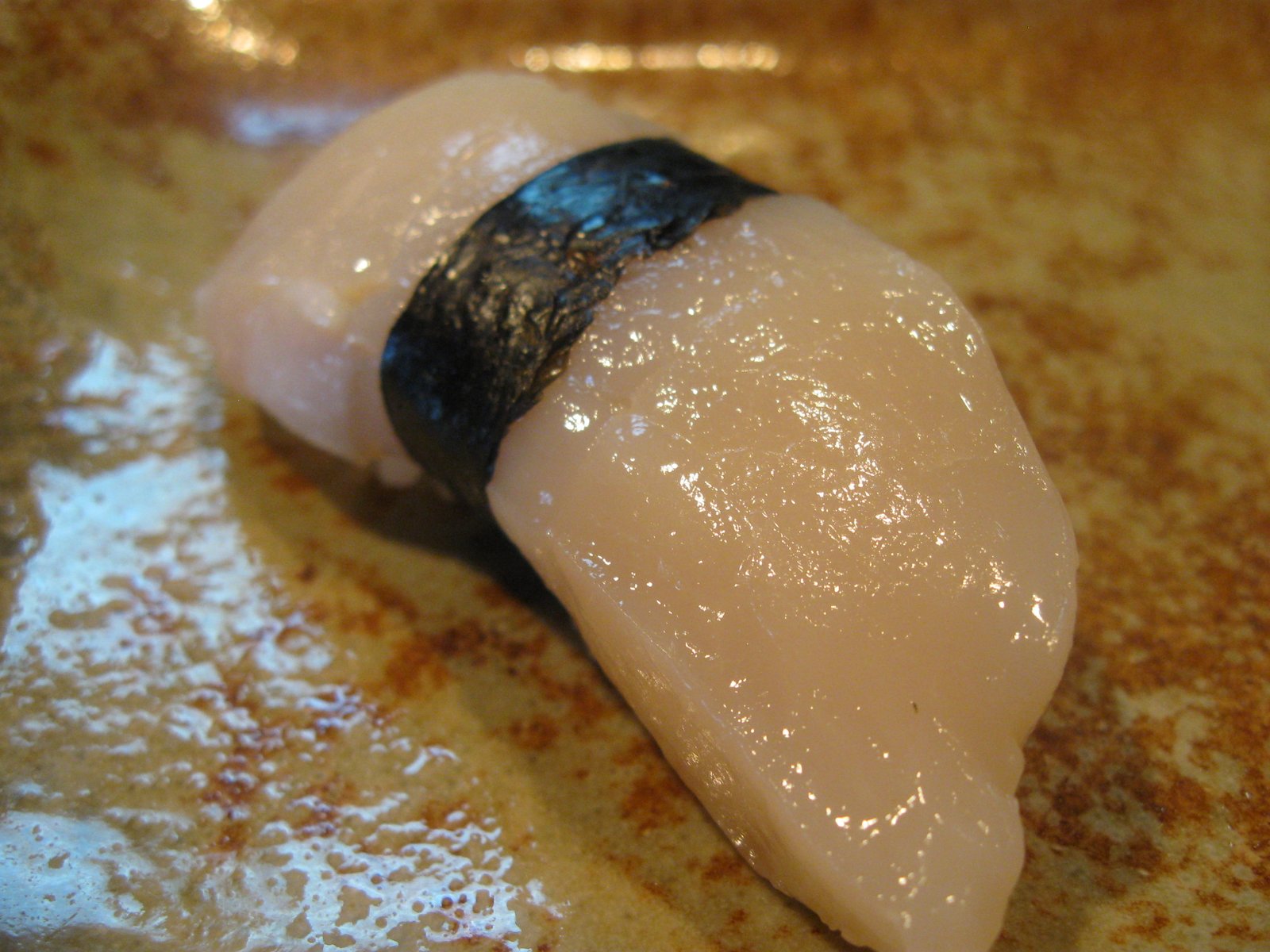
The shellfish did resemble scallop in its tenderness and mild flavor. It complemented the mildly fishy sea bream perfectly. Sea bream? What sea bream, you may ask. Well, the sea bream that I ate before I remembered to take a picture. Oops! So later in the meal I requested another piece of sea bream which was paired with kohada: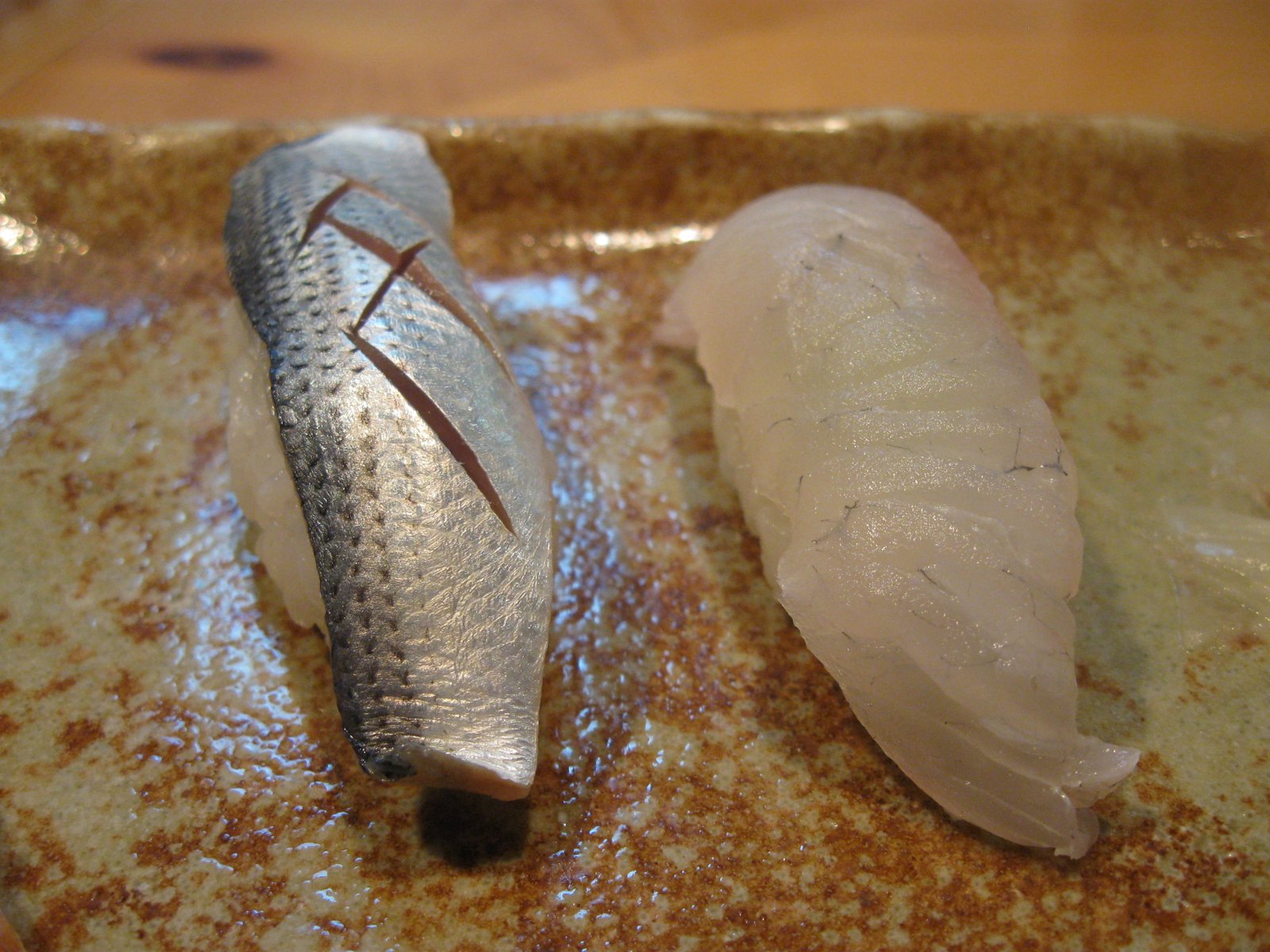
It was a reminder to me that the organization of an omakase meal is not a random list. A good sushi chef will know which items to present early in the meal – and which to feature later. When I originally had the bream, it was excellent and the subtlety of its flavor matched the scallopy thing perfectly. Later in the meal, these two items were good, but out of place.
Following the sea bream/non-scallop, I was served yellowtail and real crab: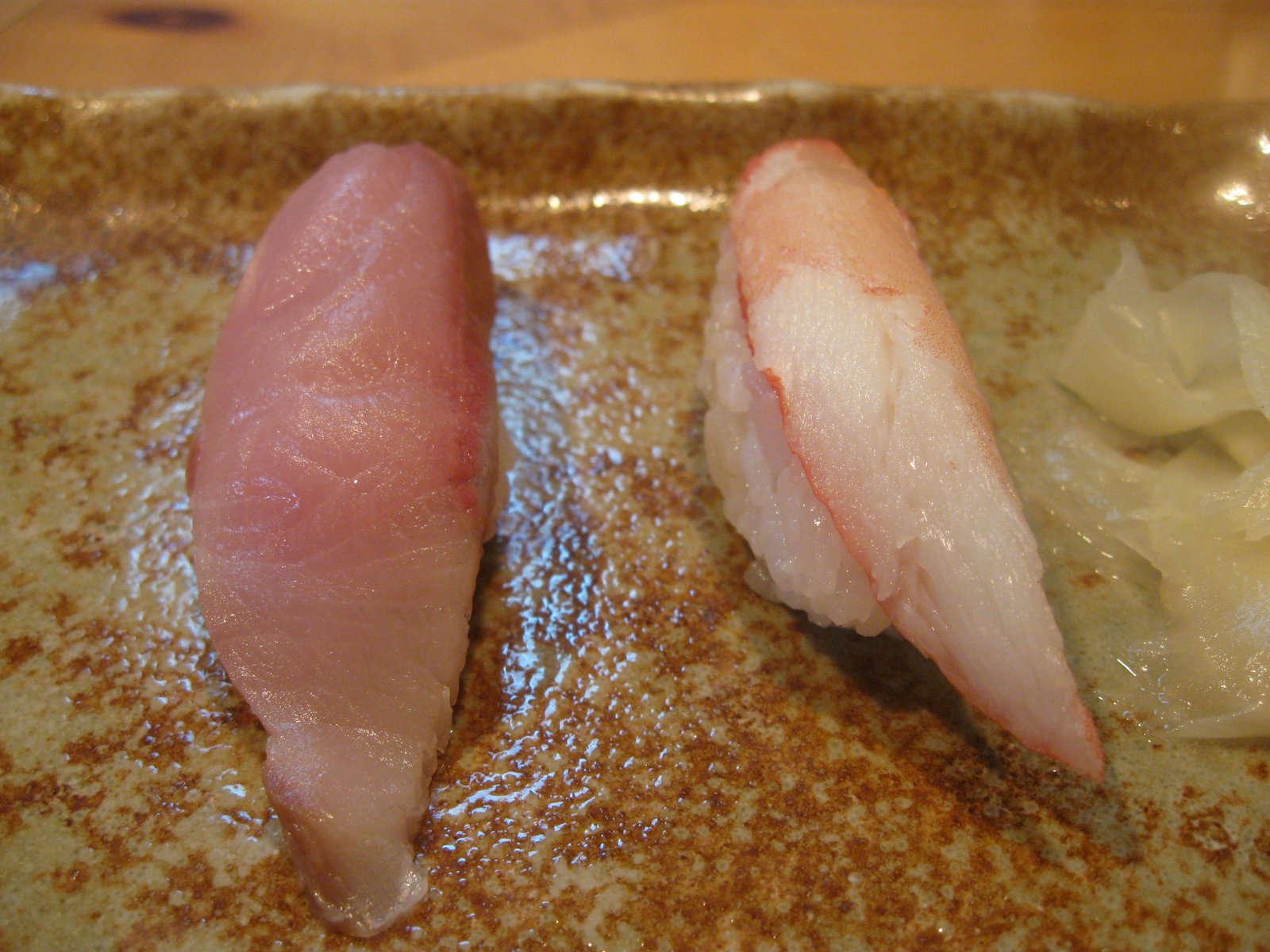
The kani was a solid piece of real crab. Not quite as spectacular as on my last visit, but still very very good. The yellowtail was rich, smooth, and full of flavor.
Then ama ebi and some kind of clam:
The shrimp was extremely good, shrimpy and tender, and the clam was well flavored, though it lacked the amazing texture of mirugai.
Amberjack and Spanish mackerel: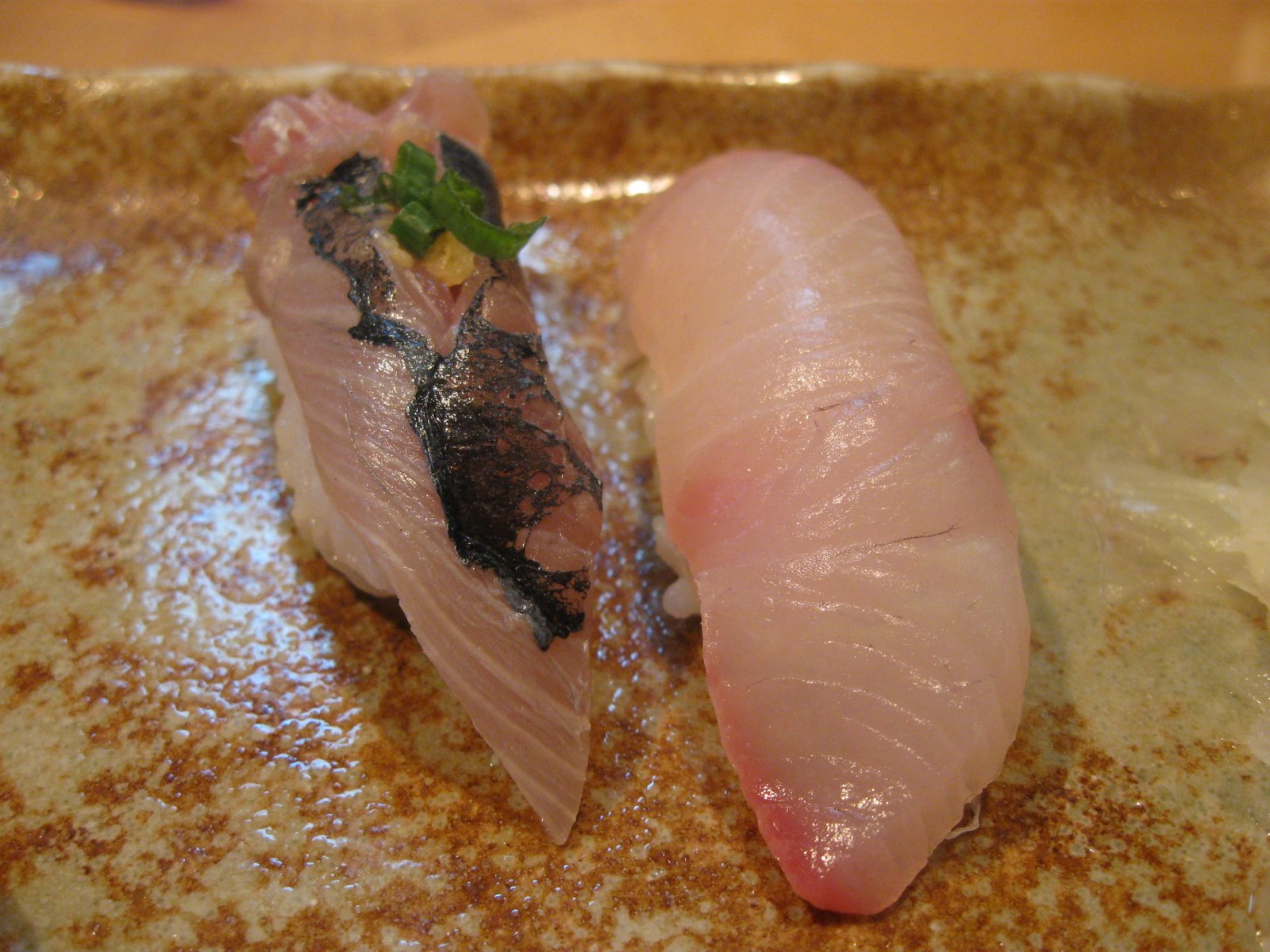
People who are used to farmed hamachi (which itself is a really good thing, in my opinion), are usually amazed tasting wild amberjack for the first time – I certainly was. Here the richness is balanced with fish flavor.
Similarly, the piece of aji was equally outstanding. Its flavor seemed especially concentrated and deep, and it made me wonder if perhaps the fish had been aged for a couple of days to intensify the flavors – which contrasted with the thin slices of green scallion inserted into it.
Next came toro and yellow jack: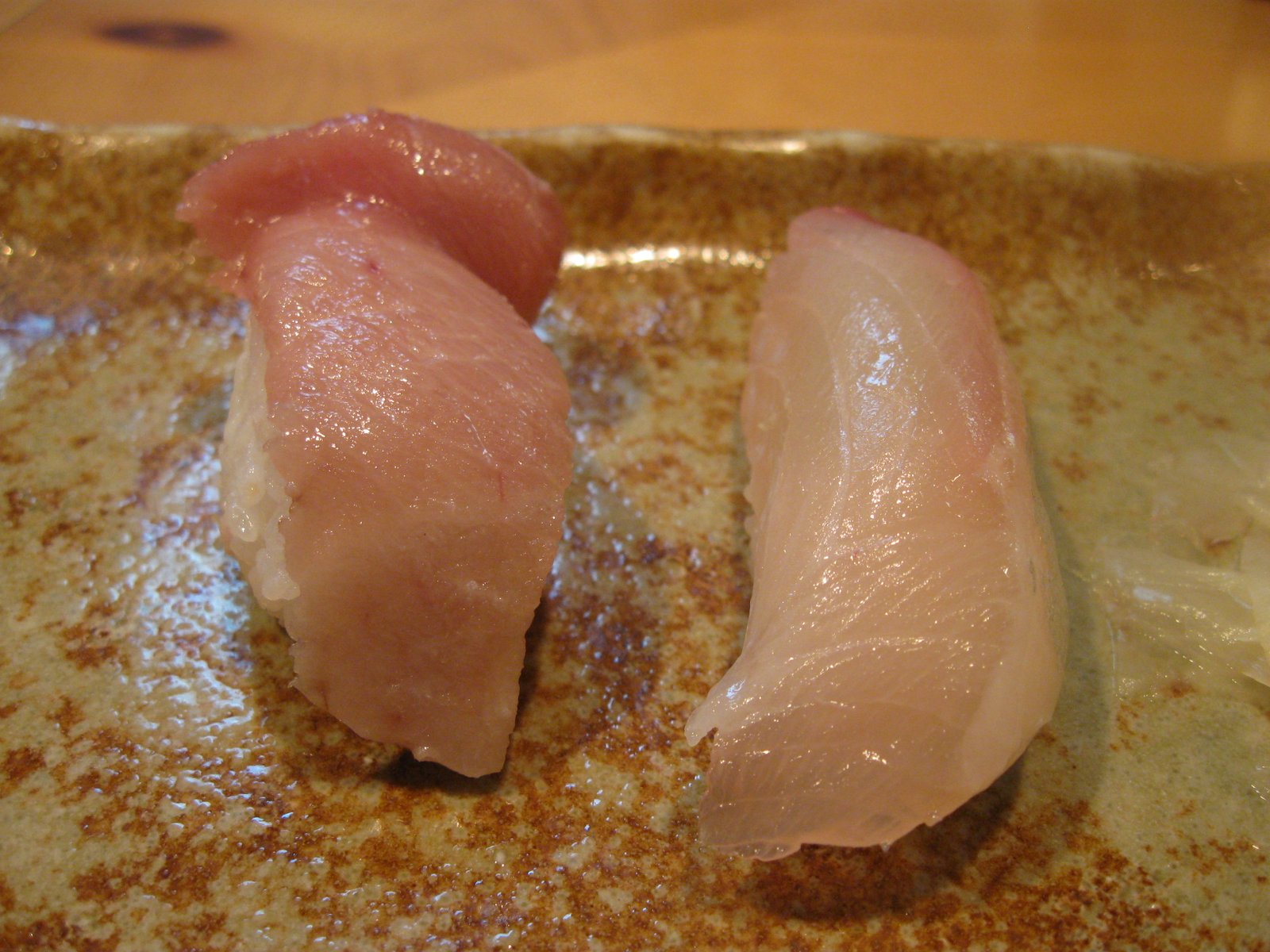
Both were rich and creamy. The toro was not quite as good as the chutoro from Kaito, but the yellow jack may have been the best of the yellowtail/jacks of the evening.
The meal concluded with uni: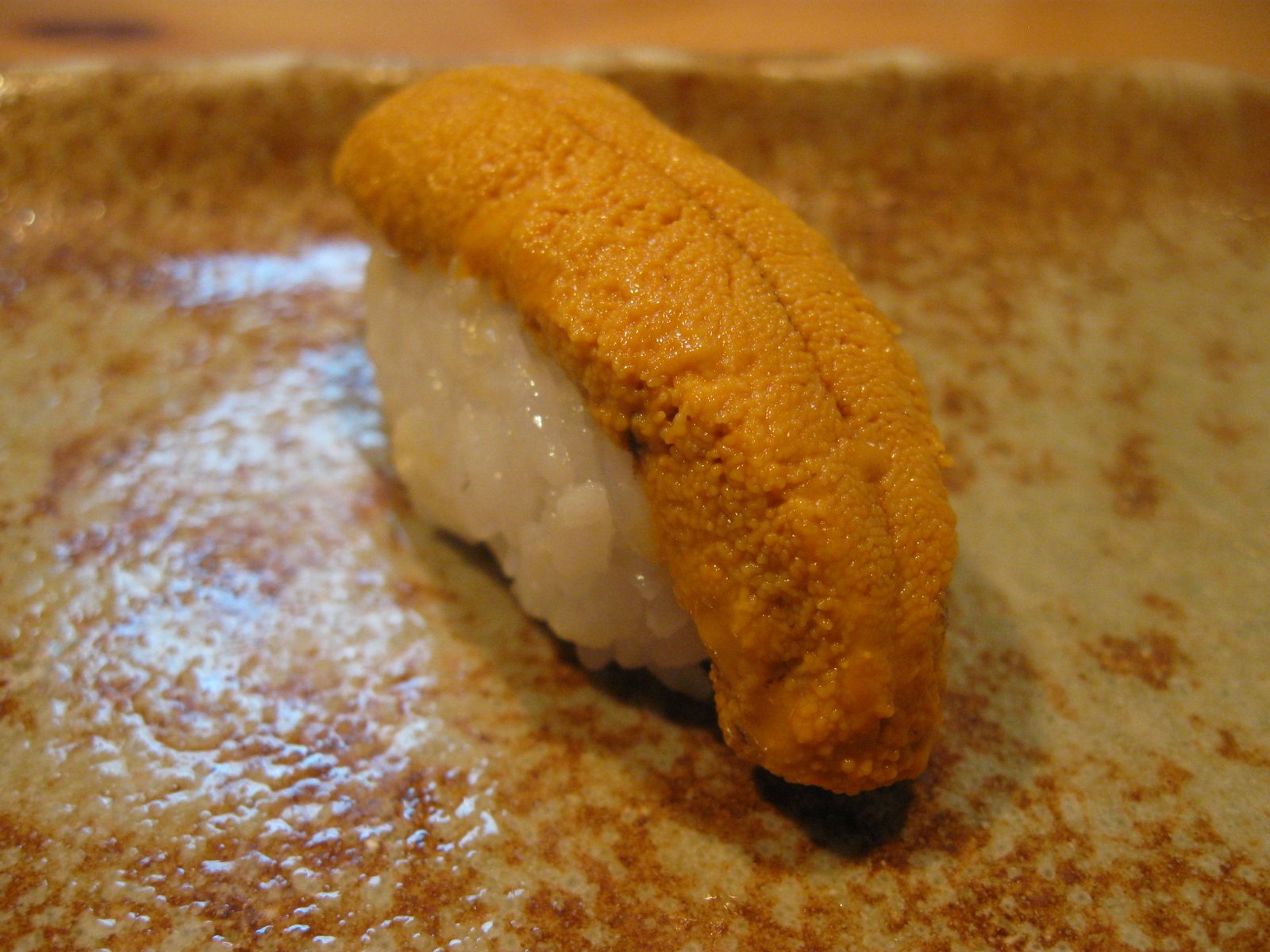
In contrast with the uni at Kaito, this uni was firmer and deeper in flavor intensity. Notice that it is presented on the rice ball with no surrounding border of seaweed. I asked if the uni came from Japan – since it was different than standard San Diego uni – but Koji-san said that local uni was better than anything from Japan. So clearly it is his treatment of the uni that makes it subtly more flavorful than what I am used to.
Two wonderful sushi meals in two days. Was one better than the other? Which cuisine reigns supreme (sorry about that)? I'm not sure that better/worse is applicable here. They both had wonderful ingredients that are well outside what I am used to. Both prepared the sushi extremely well. Morita-san may be more creative with a broader palette of flavor colors, much like modern art. Koji-san is the master of the traditional and old school and understated. Like a rock garden. Yes they were different, but they were very much the same in quality. And, oddly enough, almost the same in price. The dinner at Shirahama (where I drank OP’s sake for free) was $77.58. Overall difference 36 cents. Seems right to me.
Kaito, 130-A N. El Camino Real, Encinitas, CA 92024 (760) 634-2746; Shirahama, 4212 Convoy St, San Diego, CA 92111 (858) 650-3578.
Wow two nights in a row? That’s got to be the best back-to-back dinner ever!
All in the name of research?
I’ve been to Shirahama (it’s been a couple of years), but I haven’t been to Kaito. Nice comparison of the two, and it would have been fun to add Sushi Ota to compare.
On the hirame at Kaito: I had a similar dish at another sushi restaurant. The chef said the lime colored stuff was yuzu, and he showed me the jar. To me, it was a puckering sour-hot, rather than spicy-hot, which makes sense since yuzu is like a grapefruit.
Yes, paulina, I was spoiling myself.
You might be right, Sandy, though I do remember a spicy note. Perhaps wasabi under the hirame? And I do need to go to Ota again. It has been years, and back then I wasn’t having omakase.
What a terrific way to indulge yourself!
I will always pick omakase meals at good restaurants over a stay at a four/five star luxury hotel.
Based on your recent experience, is there a clear favorite or are they tied?
Gypsy Jan
Wonderful post Ed. That does look like yuzu kosho on the hirame…..
great reports! I still need to make it to Shirahama, but after my stellar Katio experience it’s hard to want to go anywhere else.
Gypsy Jan, they are both stellar in my book, but it depends on my mood. In the past, I would go to Sakura if I wanted more than just sushi or sashimi or Yaro (or one of Sammy’s previous spots) if I wanted to watch sports on TV or enjoy a party atmosphere.
You should give Shirahama a try; it is a different experience, RodZ. Oddly, I’ve always felt that I have missed the ultimate Kaito experience. It’s always very good, but my timing of visits is based on my schedule so I feel that I have missed some things that other folks rave about. On the other hand, I was really nervous about Shirahama the first time, but my experiences there have been better than I anticipated. However, I suspect that Shirahama may have a more limited range of items and preparations ultimately.