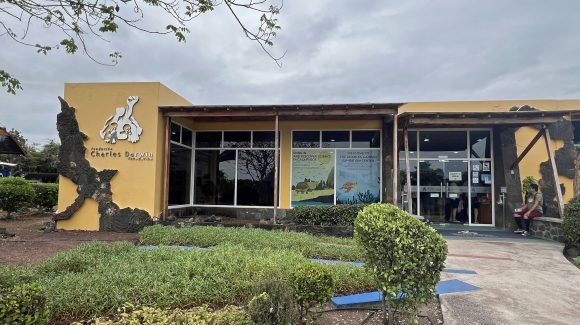
After lunch and a short break we headed back to Puerto Ayora. This time we were in the town of Puerto Ayora itself. With a population of over 12,500 Puerto Ayora is the most populous town in the Galapagos. Our destination was the Charles Darwin Research Station.
Established in 1959 by the Charles Darwin Foundation, it’s basic function is that of research and conservation.
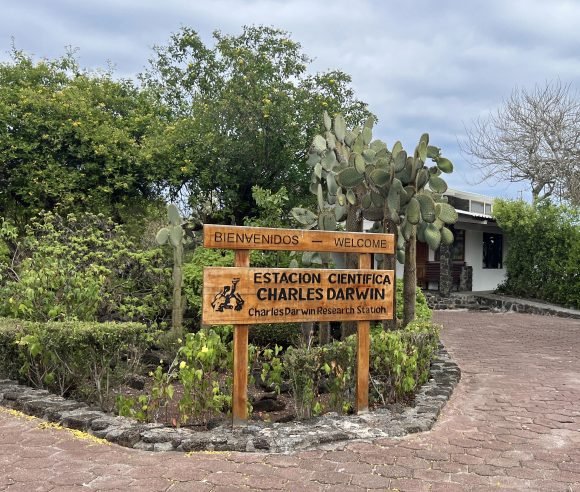
There are several areas that are open to visitors. We were first led to the Fausto Llerena Breeding Center, whose purpose is to restore endangered tortoise and land iguana populations. The center collects hatchlings and eggs of the 12 unique species of tortoises, raising them until they can released on their respective islands.
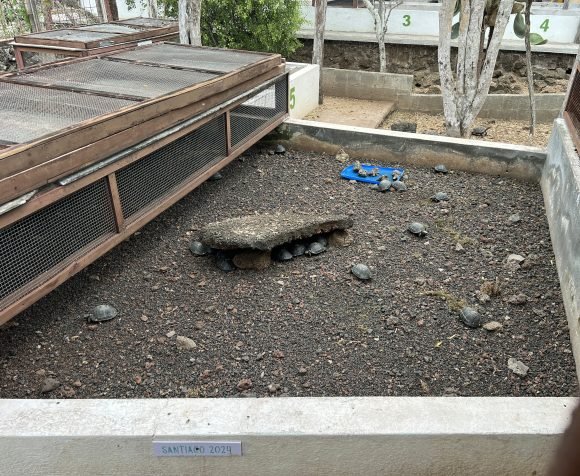
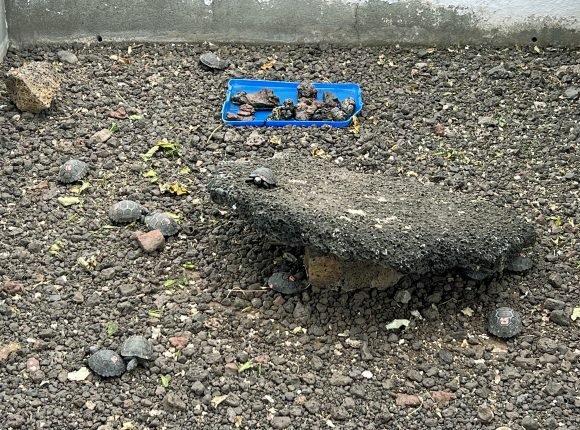
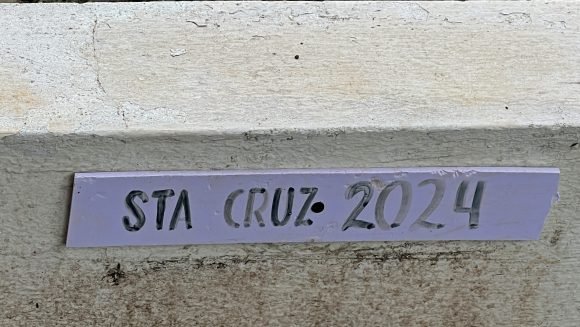
It was quite amazing to see!
There are also adult tortoises that are endangered and are being preserved to keep the species going.
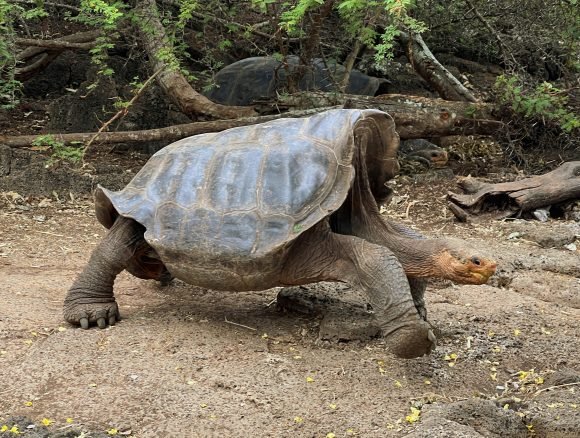
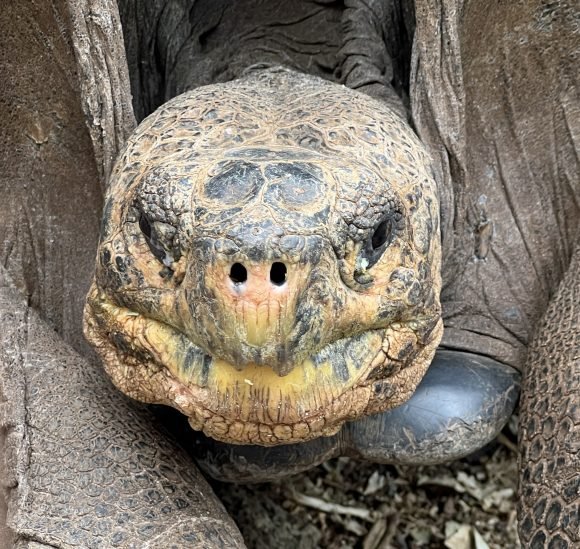
I also got to chat with our guide about Diego. You know that story, right? Back during one of the expeditions in 1934 several tortoises from Española Island were sent to the San Diego Zoo. In the 1960’s, the rather new Galapagos National Park Service from the Charles Darwin Research Station did a survey of the island and found only 14 of this species of tortoises left on the island! The 12 females and 2 males were sent to the Charles Darwin Research Station to start a breeding program. It was then that a male of the species was found at the San Diego Zoo and in 1977 returned to the Galapagos. The rest is history as the breeding program released over 1,800 hatchlings back in Española Island. According to this post by the Galapagos Conservation Trust, genetic testing revealed that the tortoise, now named Diego “fathered almost 60% of all the captive-bred hatchlings”. In 2020 Diego along with the other 14 were returned to Española Island to enjoy their retirement! And according to this Diego is still enjoying his retirement! So there you have it, a San Diego connection!
We were told that over 200,000 tortoises were taken from the Galapagos for food and other purposes.
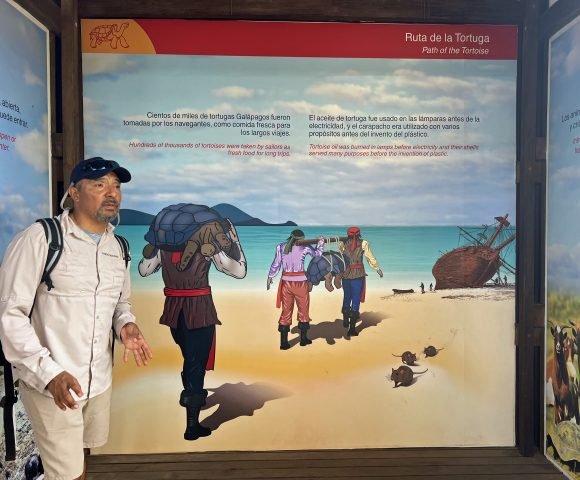
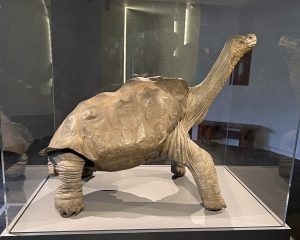
And then there’s the story of Lonesome George, who was the last of the Pinta Island Tortoises.
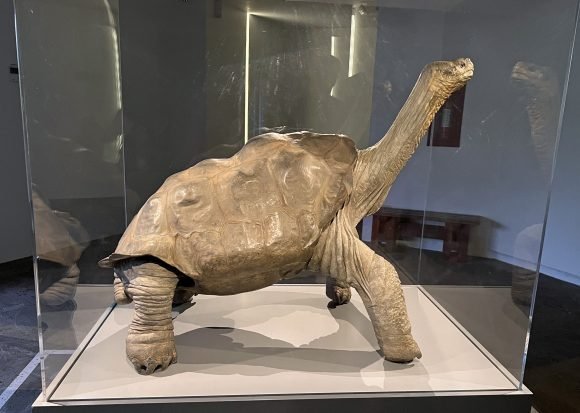
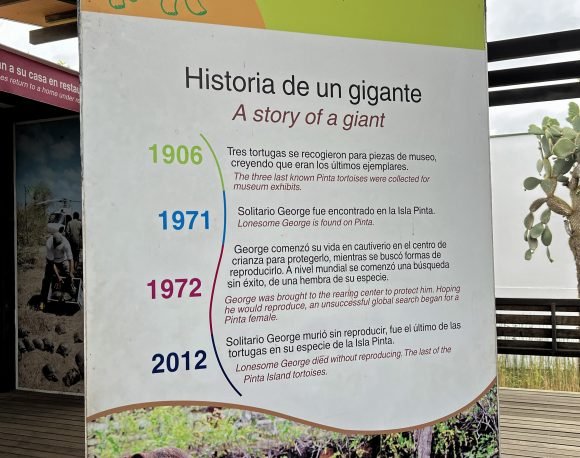
Tortoises were taken as food and then goats were introduced to Pinta Island. And by the mid 60’s Pinta Island Tortoises were thought to be extinct. And then in 1971 George was discovered and in 1972 was moved to the Breeding Center. Further expeditions were done and inquiries were made around the world, but no other Pinta Island Tortoises were to be found. Attempts to have George mate with Volcán Wolf giant tortoise which are the closest match genetically to Pinta Island Tortoises failed. And in June of 2012 George died, the last of his kind.
After his death he was sent to the American Museum of Natural History and their team of Taxidermists went to work. He was then on display there until 2017 when we has returned to the Galapagos and the Fausto Llerena Breeding Center where he now resides.
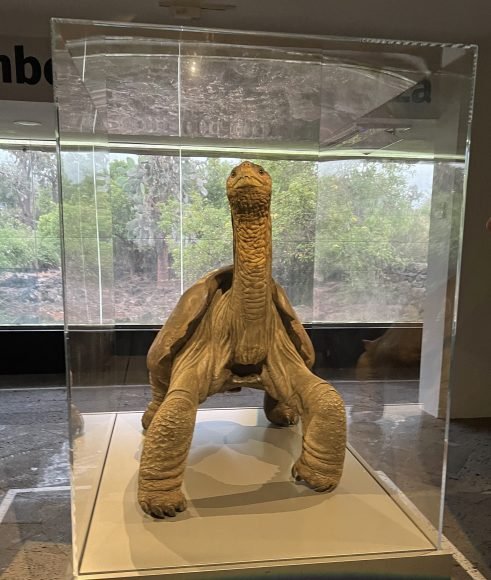
On the panel outside the display are these words: “Whatever happens to this single animal, let him always remind us that the fate of all living things on Earth is in human hands.”
We spent a bit more time checking out the displays and things at the research center.
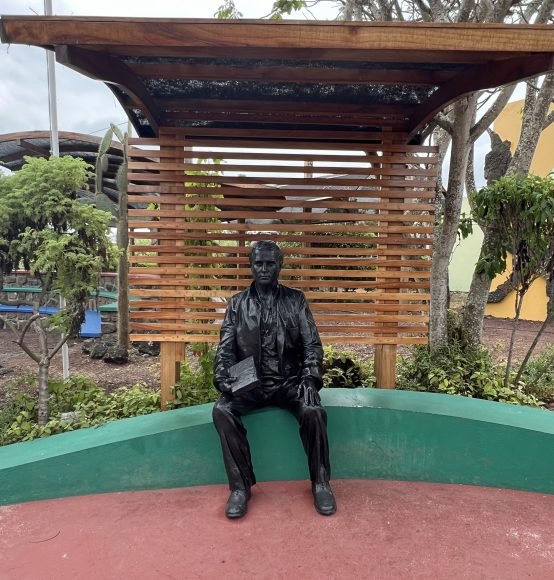
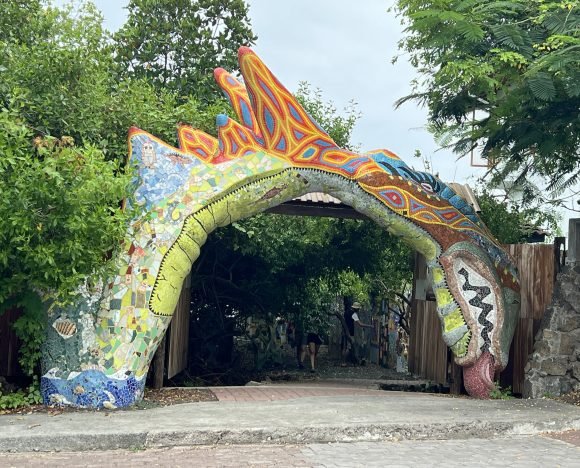
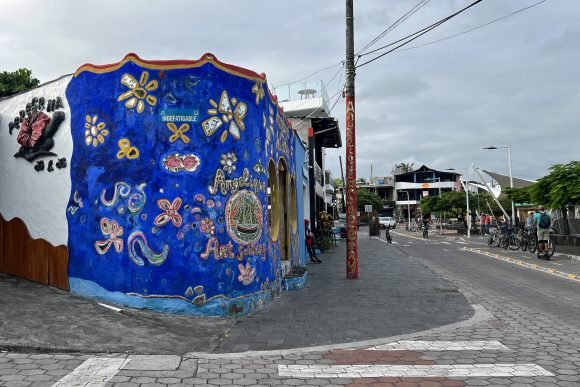
We then walked back to Puerto Ayora where we did some shopping and explored a bit.
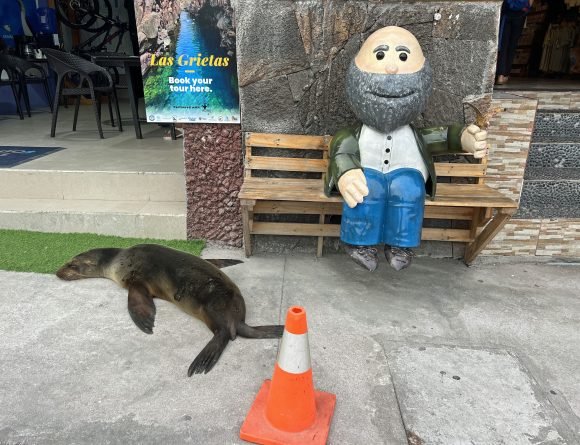
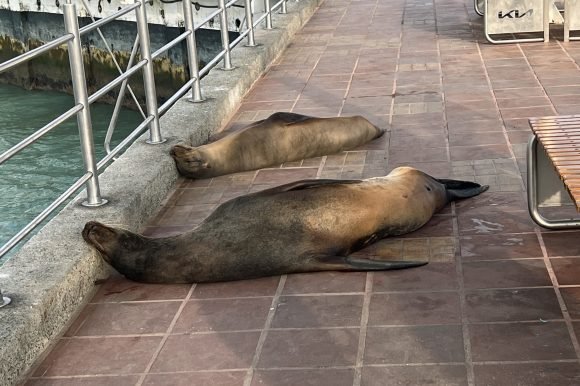
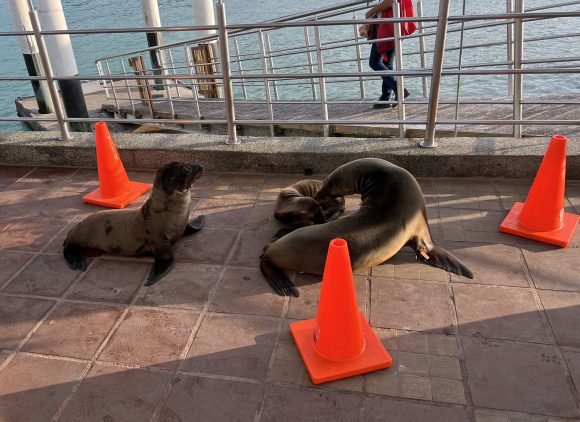
We noticed that folks used cones to mark off where the sea lions were located.
And we headed back to the port at our assigned time for the ferry back to the Evolve.
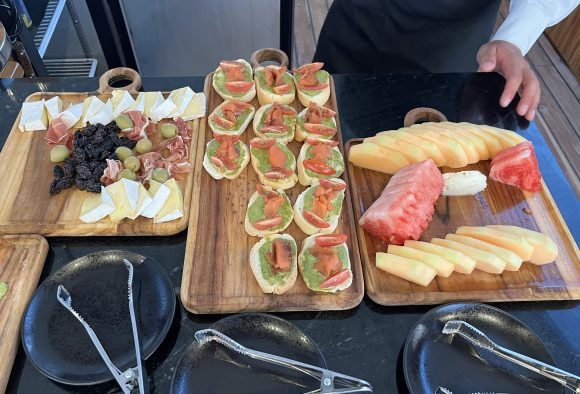
Back on board we had a nice cocktail hour.
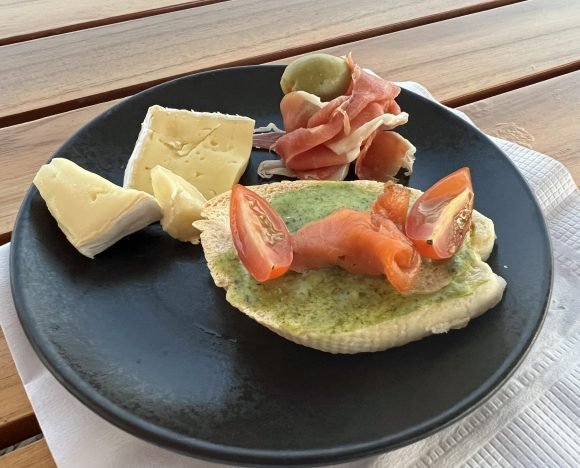
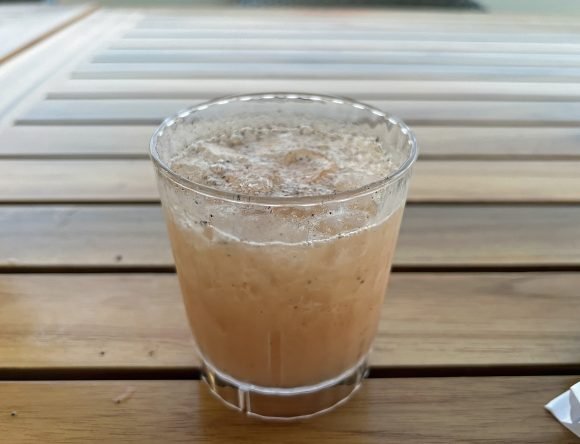
And got to watch the sunset over Puerto Ayora.
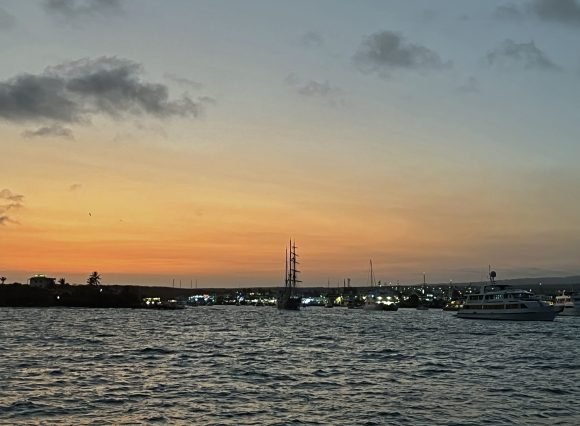
Then freshened up before meeting everyone on deck for a lovely farewell cocktail with the crew.

Hard to believe that this was out last evening in the Galapagos!