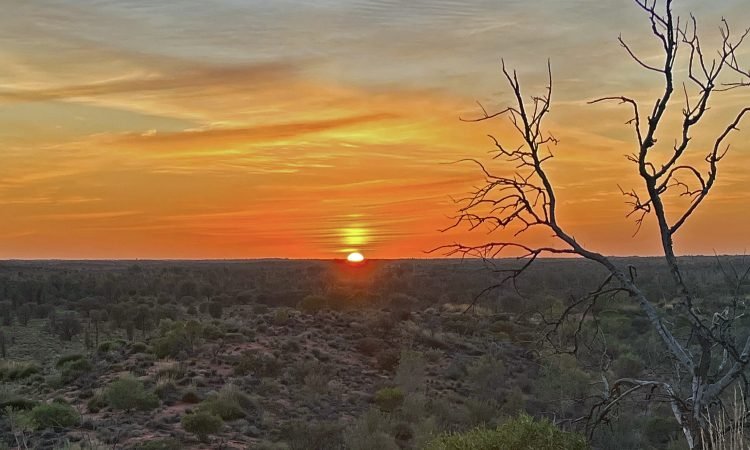
**** No food in this one. But if you’re interested in a huge monolith in the Northern Territory, held sacred by the Indigenous people of this area, please read on.
We woke at a bit after 4am on the morning of our one full day in the area. You see, having been so intrigued by Uluru, I just wanted to learn more about it. Even though we had done the Winiji Winu Sunset Dinner the evening before, that seemed more of a dining experience – show. I wanted to learn a bit more. So, I booked the Desert Awakenings Tour. This tour consisted of a early breakfast, a view of the sunrise, followed by a session on the flora and fauna of the area, and most importantly, at least for me a guided tour at the base of Uluru.
Since pick-up was an hour before sunrise, we had to be at the designated spot ten minutes before departure. This meant being ready at the spot at 445am. Our four wheel drive van picked us up and left at exactly 455am! We were transported to a platform on a dune……I was told they feature a fine dining experience here called Tali Wiru during the evenings. Of course, it was pitch dark when we arrived, led by lantern to the platform.
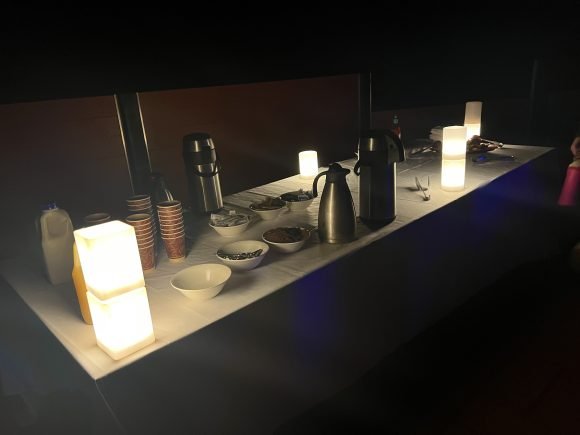
Breakfast were pastries, bacon and egg rolls, coffee, and tea.
Then we settled in for the “show”.
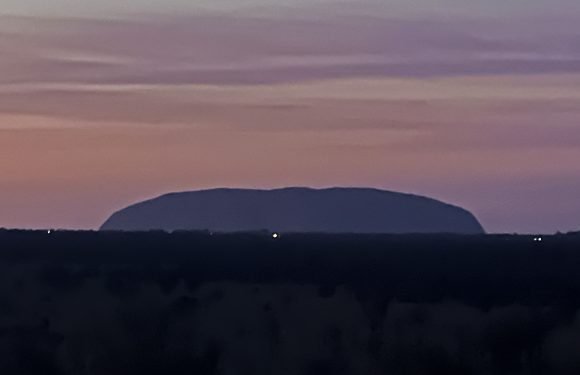
As the great monolith came into view…….and the darkness transitions to the red of the Outback.
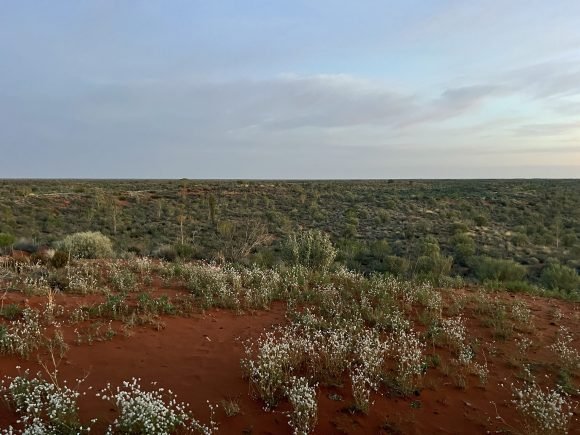
You just need to take photos!
Sometimes with our guide……
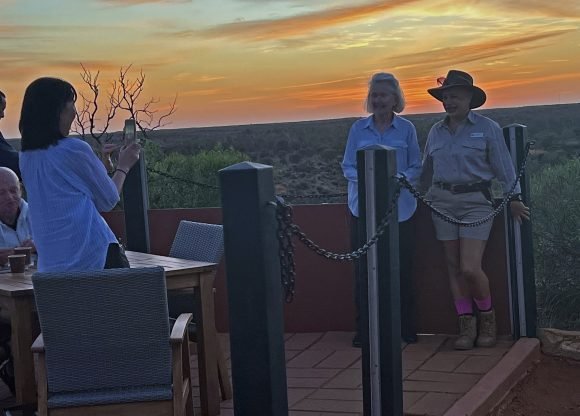
But mostly of the desert awakening.
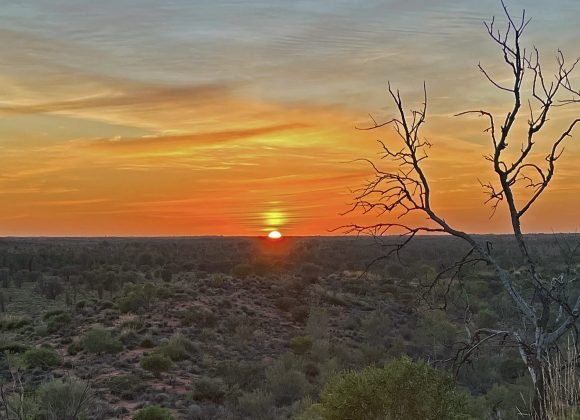
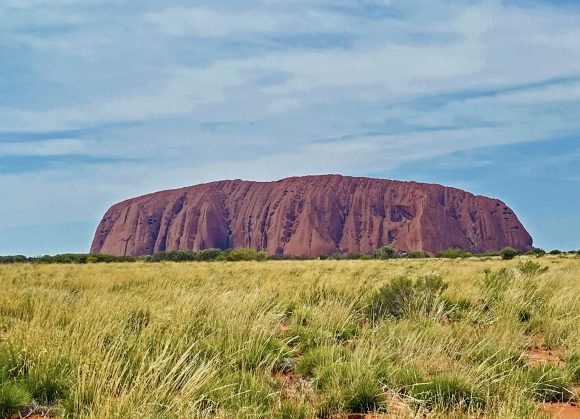
And Uluru shifts from a dark foreboding presence, to the bright red it is known for.
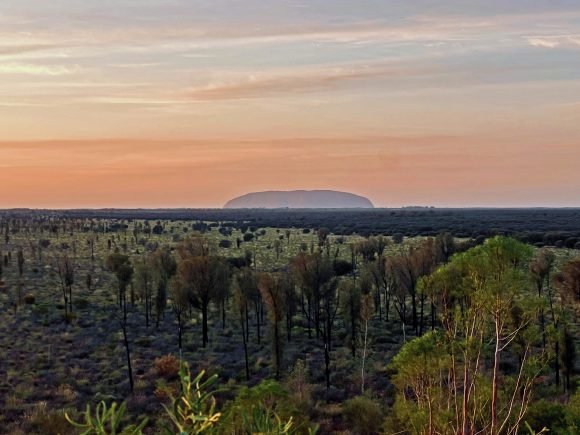
We are briefed on the flora and fauna of the area; it’s history, and what we’d be seeing during the day.
And then we were headed back to our transport and off to Ulura!
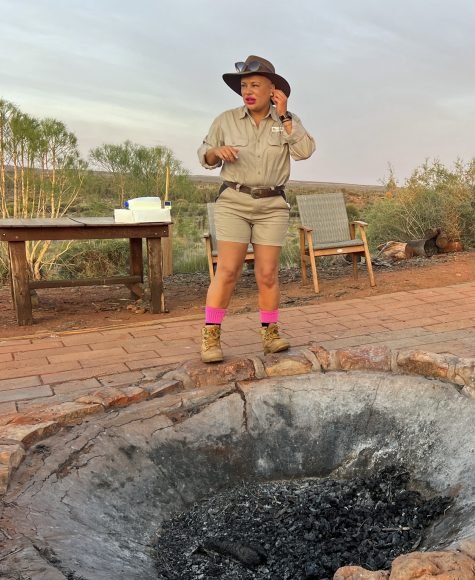
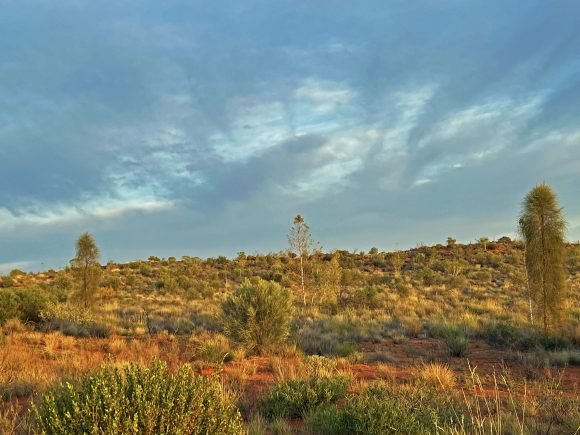
Once we reached Uluru and our transport parked in the lot, we were off.
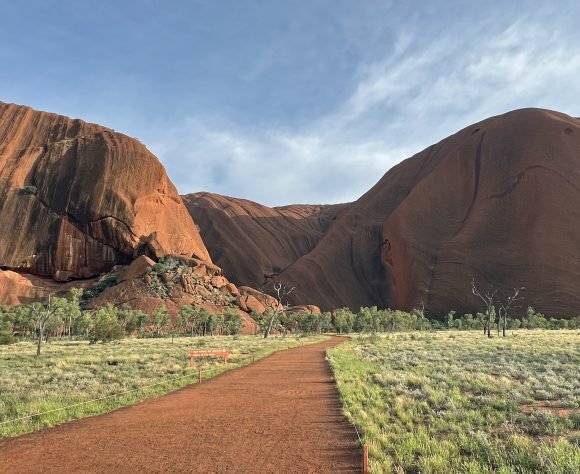
This is the short Kuniya Walk. We were told the story about Wati (Male) and Minyma (Female) Kuniya – which are Woma Pythons, and Liru, known as the Poisonous Snake People crossed paths and battled. Minyma had brought her eggs back to be buried in the sacred ground of Uluru. Meanwhile the Liru had started attacking the Kuniya. And you can see the scars from the battle as you walk toward Uluru.
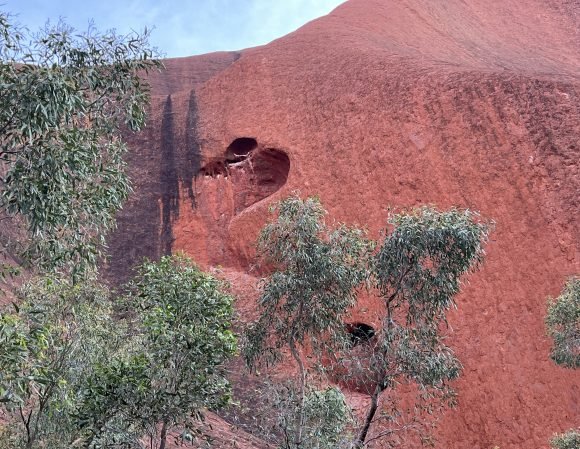
While Minyma was burying her eggs, her nephew was attacked. She caught up to them at Mutitjulu Waterhole and struck them dead. You can see the giant cracks in the face of Uluru which was caused by Minyma’s digging stick.
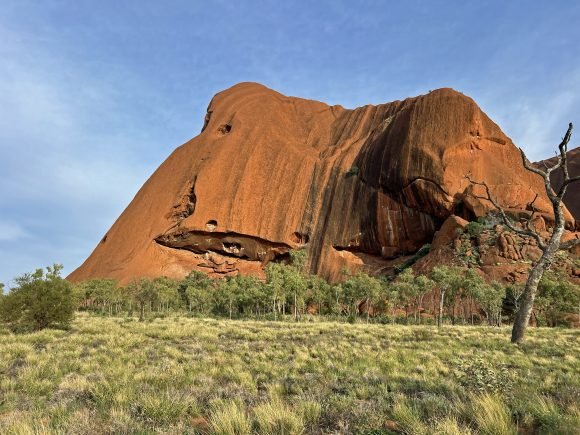
And soon we arrived at Mutitjulu Waterhole.
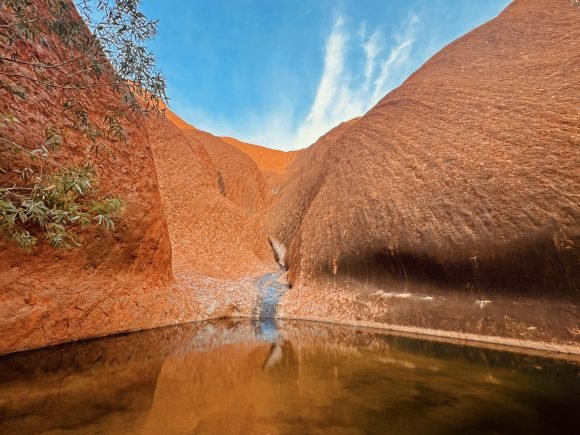
It was quite surprising to see such a large waterhole in a place that seemed so desolate. This is where Minyma and her nephew’s spirit were combined and together they formed the Wanapi, the water serpent who guard all the water sources and Mutitjulu Waterhole was formed!
There are many caves along the way.
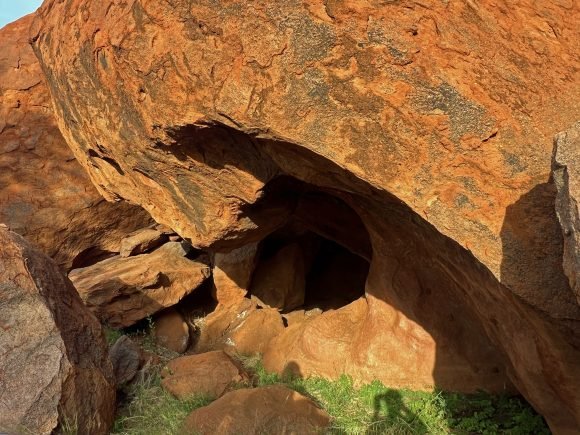
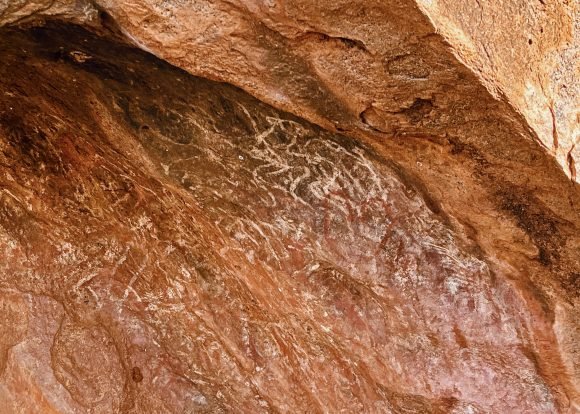
Many with rock art!
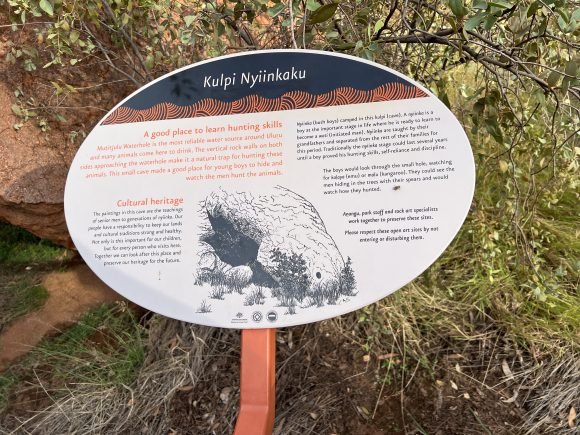
They have different uses in their community.
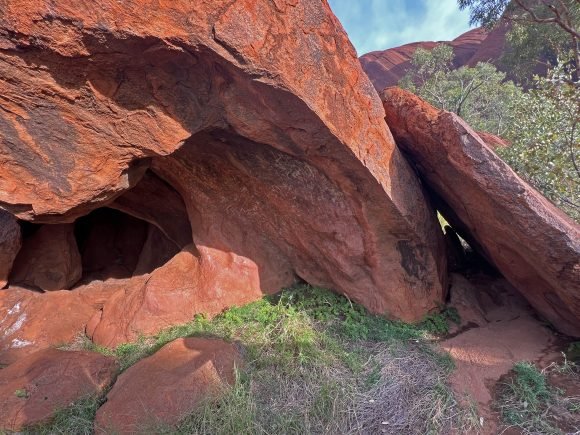
We then headed back to our vehicle and proceeded east.
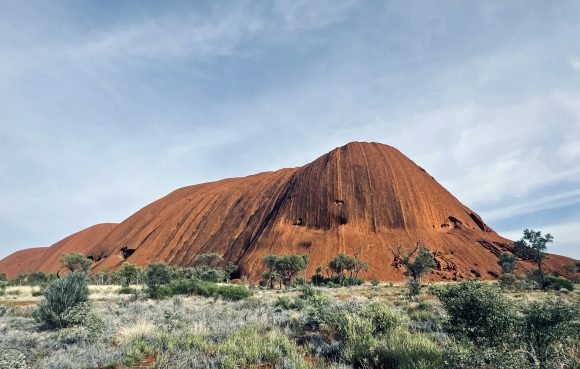
And were taken around the North side of Uluru.
This area is considered sacred by the Anagu People and thus we were asked to not take photos. We were happy to oblige. This area features many sacred locations from Tjukurpa stories, basically the creation, morals, and laws of the Anagu People.
Once on the west side of Uluru, our transport parked and we were off on the Mala Walk. This is where the Mala people settled from the North. You can read their story here.
There are several impressive caves on this walk.
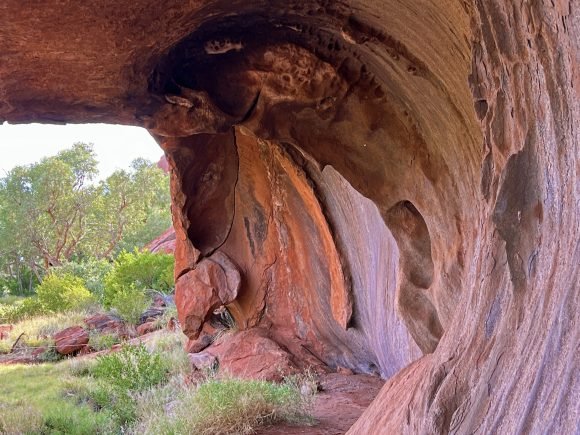
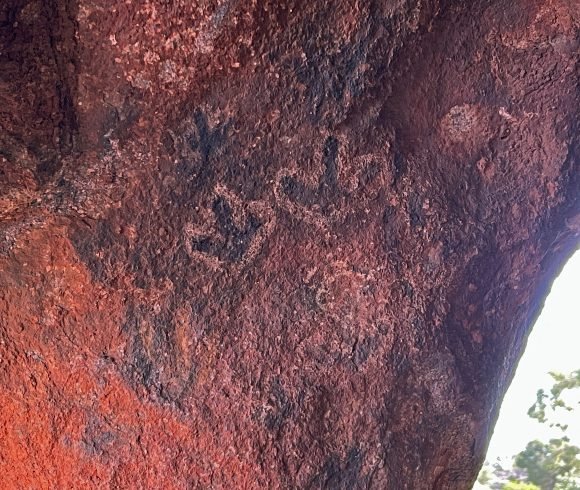
Like the Kulpi Minymaku, the Kitchen Cave. This is where the Mala Women prepared food and meals and where young girls were taught those skills.
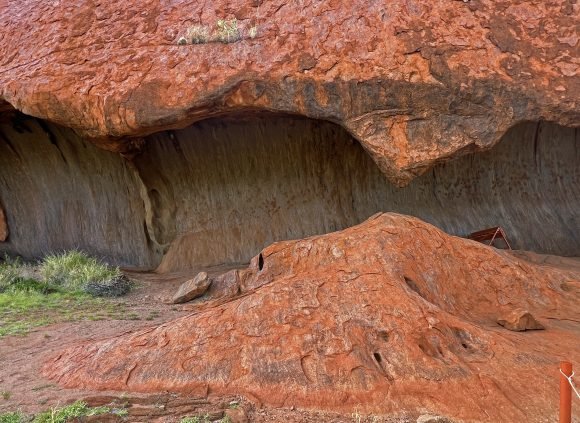
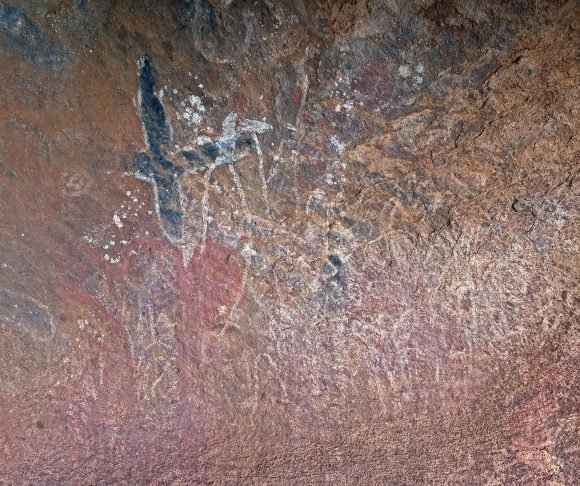
Each cave had it’s function and place in society.
Tjilpi Pampa Kulpi, where the old people would sit and socialize.
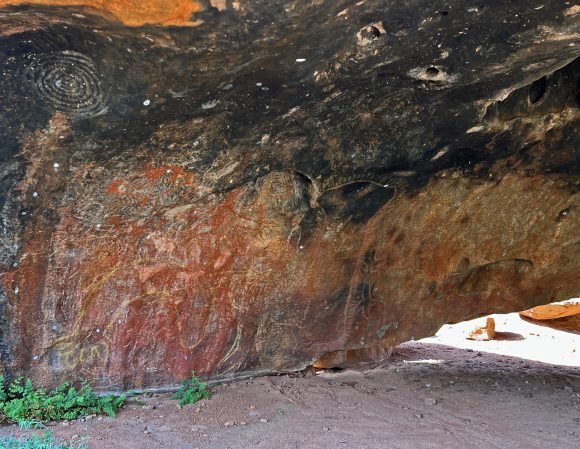
We walked northwards….
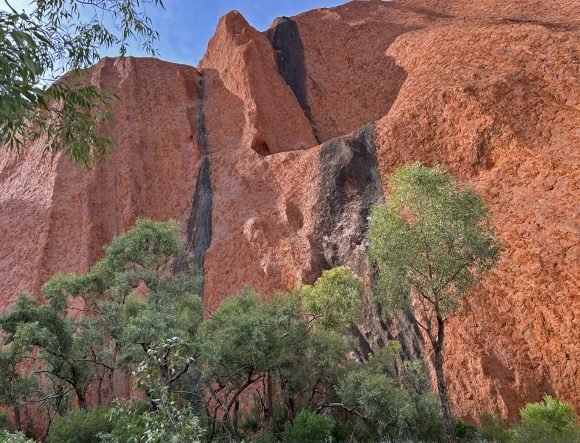
And into Kantju Gorge. A very serene and peaceful walk between soaring cliffs high above.
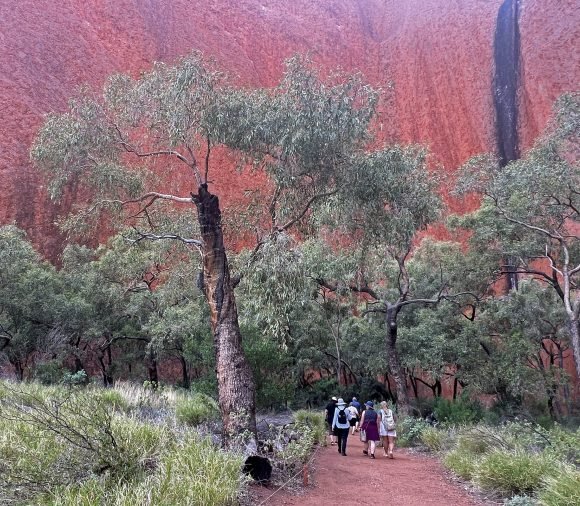
We were told that this is a place of quiet and peacefulness and were asked to respect that. At the end is a waterfall and a waterhole. This being the dry season; the waterfall wasn’t running.
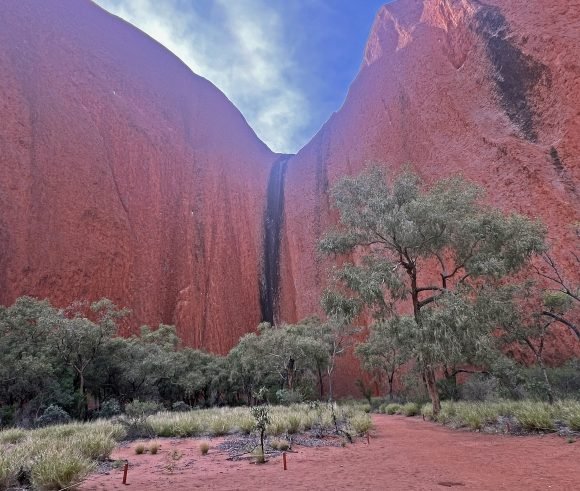
Once back out, we headed back on the Mala Trail. With more stops at caves.
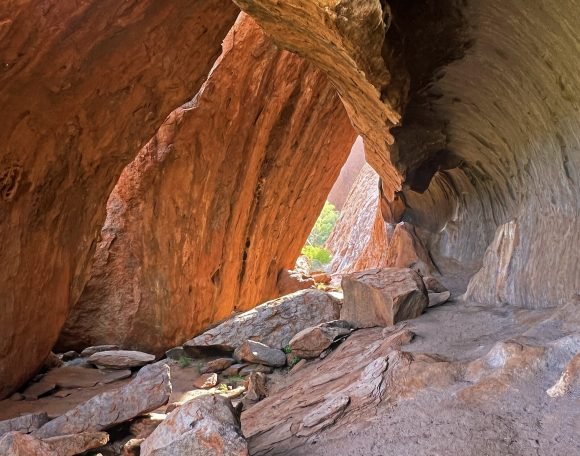
This one is Kulpi Nyiinkaku, the Teaching Cave. It is where “nyiinka” (bush boys) are taught the skills to become a productive man.
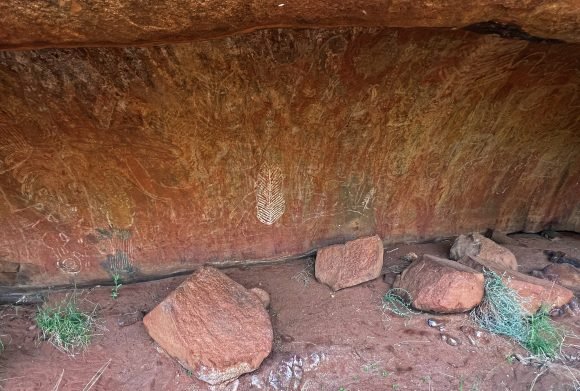
There’s just so much to see and even more to learn here! This is just a bit of what was covered…..
This one was interesting…..
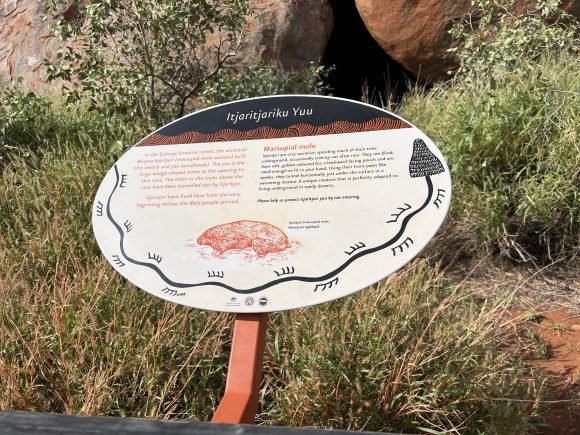
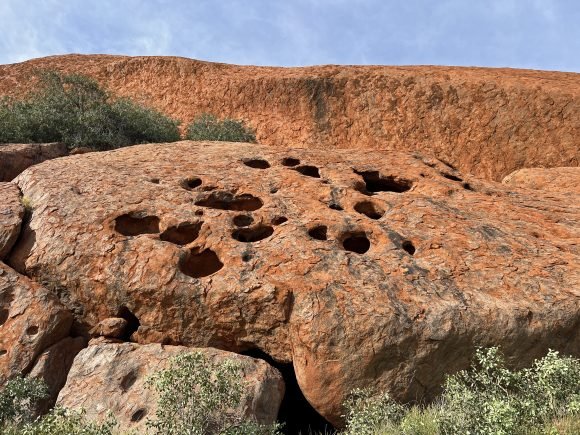
So, a mole dug out these holes in the boulders?
From here we were taken back to the main parking lot.
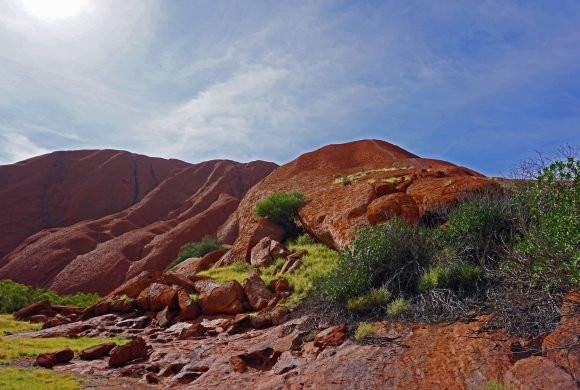
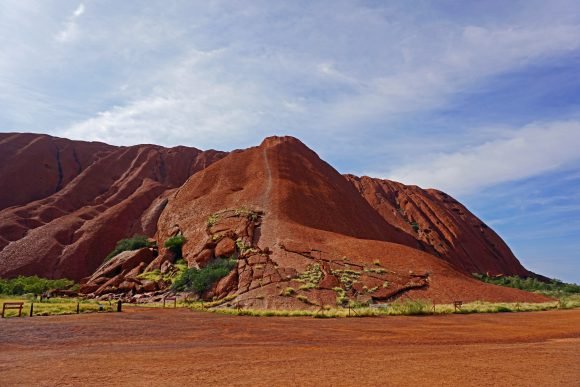
And was shown the location of the now closed Uluru Climb, which was closed on October 26, 2019 in respect of the sacredness of Uluru to the Anangu People.
From the parking lot we were driven to the Cultural Center and then back to Yulara. In all, the tour took 6 hours. It seemed like a full day already and it was not even noon yet!
It was such a wonderful experience…one that we’ll never forget.
Though right now….it was time for lunch!